The Initial Detection of Mycotoxins Released and Accumulated in the Golden Jackal (Canis aureus): Investigating the Potential of Carnivores as Environmental Bioindicators
Péter Fehér, Zsófia Molnár, Mihály Péter Pálfi, Anikó Pálfiné Lábadi, Patrik Plank, István Lakatos, Miklós Heltai, László Szemethy, Viktor Stéger, Zsuzsanna Szőke

TL;DR
Golden jackals in Hungary show high mycotoxin levels, suggesting they can act as bioindicators for environmental contamination.
Contribution
Demonstrates the potential of golden jackals as bioindicators for mycotoxin exposure in ecosystems.
Findings
All golden jackal liver samples tested positive for multiple mycotoxins, with DON, FB1, and ZEN being most prevalent.
Mycotoxin concentrations varied significantly by age and sex, with higher levels in adults and females for certain toxins.
Oxidative stress indicators correlated with specific mycotoxins, suggesting potential health impacts.
Abstract
This study investigated the presence and levels of five key mycotoxins—aflatoxins (AFs), deoxynivalenol (DON), fumonisin B1 (FB1), ochratoxin-A (OTA), and zearalenone (ZEN) and its metabolite alpha-zearalenol (α-ZOL)—in liver samples from 19 golden jackals (Canis aureus) in southern Hungary. Golden jackals, as apex predators with a diverse diet encompassing both plant and animal matter, can serve as valuable bioindicators of environmental mycotoxin contamination. Genetic analysis confirmed the canid samples as coming from golden jackals, excluding the possibility of domestic dogs or hybrid individuals. All samples tested positive for at least three mycotoxins, with multiple mycotoxins frequently co-occurring. DON was detected in 95% of the samples, followed by FB1 (79%) and ZEN (42%). ZOL, AFs, and OTA were present in all samples. Significant differences in mycotoxin concentrations were…
Genes, proteins, chemicals, diseases, species, mutations and cell lines named across the full text — each resolved to its canonical identifier and authoritative record.
Click any figure to enlarge with its caption.
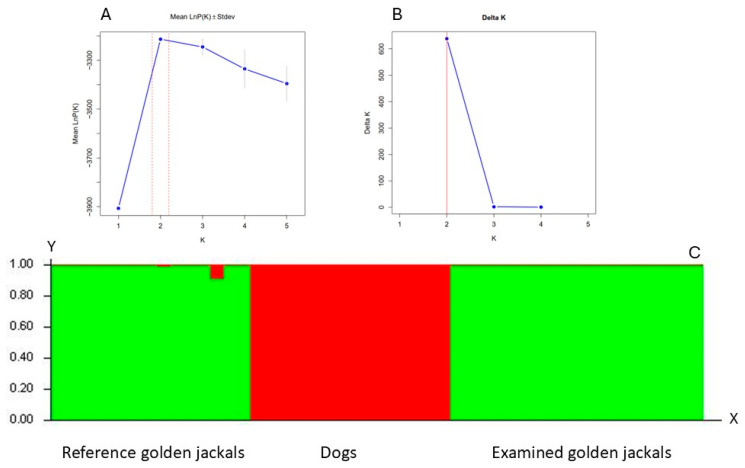 Figure 1
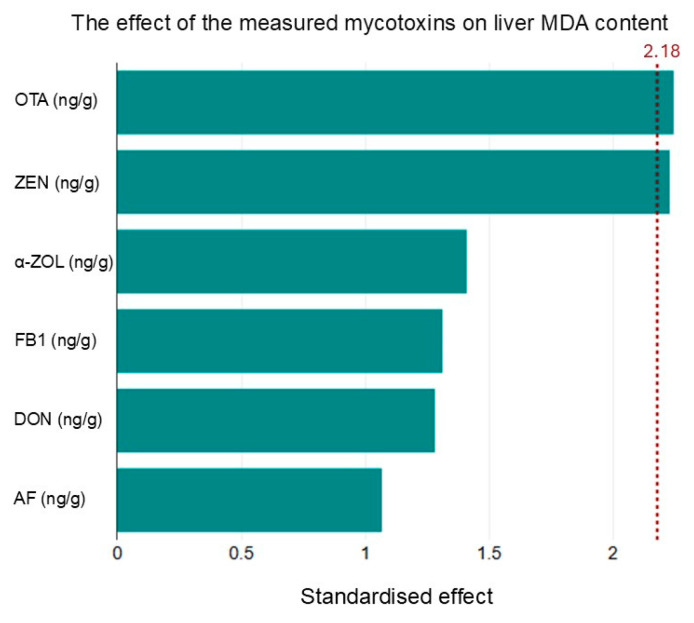 Figure 2
Peer Reviews
No public reviews on file for this paper yet. If you reviewed it on a platform where reviews are public (OpenReview, ICLR, NeurIPS, ICML), you can paste yours below so the community can read it here.
Videos
No videos yet. Explain this paper in a talk, walkthrough, or lecture? Add one.
Taxonomy
TopicsMycotoxins in Agriculture and Food · Microbial infections and disease research · Plant and fungal interactions