Environmental Factors Exacerbate Parkinsonian Phenotypes in an Asian-Specific Knock-In LRRK2 Risk Variant in Mice
Zoë Bichler, Sarivin Vanan, Zhiwei Zhang, Qianying (Sally) Dong, Jolene Wei Ling Lee, Chengwu Zhang, Liting Hang, Mei Jiang, Parasuraman Padmanabhan, Wuan Ting Saw, Zhidong Zhou, Balázs Gulyás, Kah Leong Lim, Li Zeng, Eng King Tan

TL;DR
This study shows that an Asian-specific LRRK2 gene variant in mice leads to Parkinson's-like symptoms that worsen with environmental stress.
Contribution
The study introduces a novel mouse model with an Asian-specific LRRK2 risk variant to investigate PD progression under environmental stress.
Findings
KI mice showed Parkinsonian features like locomotion impairment and constipation.
Dopamine transporter levels were reduced in key brain regions of KI mice.
KI mouse cells were more vulnerable to oxidative stress in vitro.
Abstract
Parkinson’s disease (PD) is a neurodegenerative disorder affecting nearly 10 million people worldwide, and for which no cure is currently known. Mutations in the Leucine-Rich Repeat Kinase 2 (LRRK2) gene, age, as well as environmental factors such as neurotoxin exposure and stress, are known to increase the risk of developing the disease in humans. To investigate the role of a specific Asian variant of the LRRK2 gene to induce susceptibility to stress and trigger PD phenotypes with time, knock-in (KI) mice bearing the human LRRK2 R1628P risk variant have been generated and studied from 2 to 16 months of age in the presence (or absence) of stress insults, including neurotoxin injections and chronic mild stress applied at 3 months of age. Pathophysiological and behavioural phenotypes have been measured at different ages and primary neurons and fibroblast cells were cultured from the KI…
Genes, proteins, chemicals, diseases, species, mutations and cell lines named across the full text — each resolved to its canonical identifier and authoritative record.
Click any figure to enlarge with its caption.
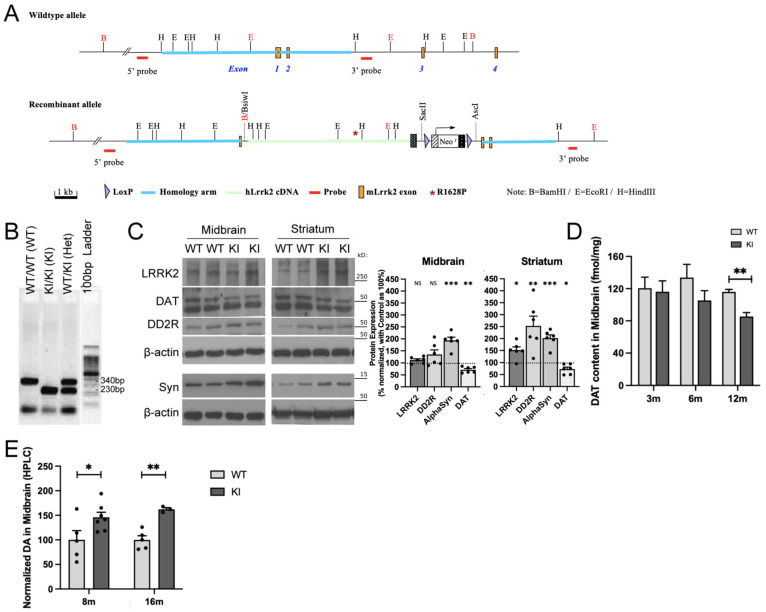 Figure 1
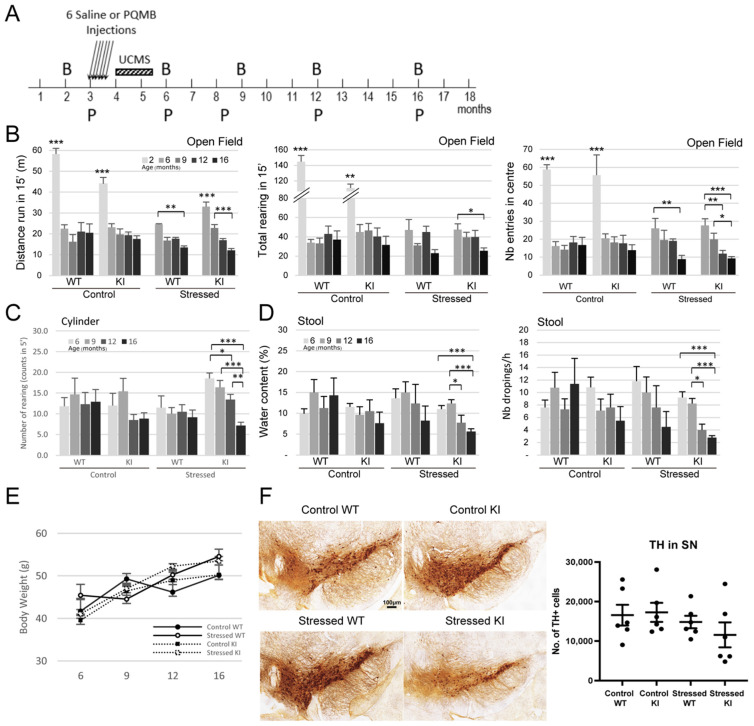 Figure 2
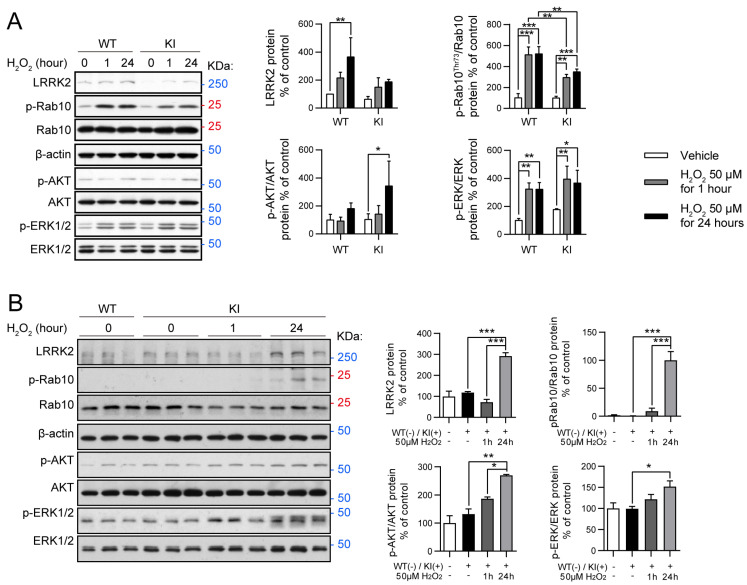 Figure 3
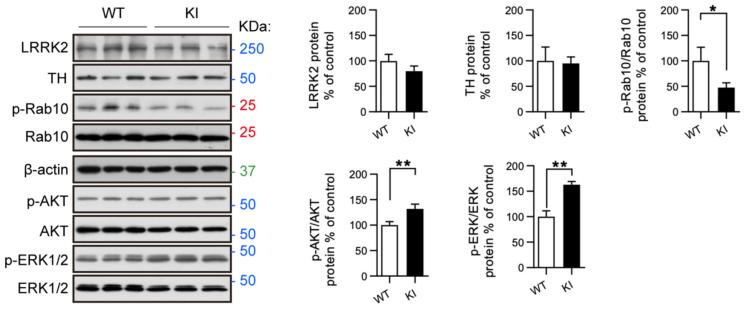 Figure 4
Peer Reviews
No public reviews on file for this paper yet. If you reviewed it on a platform where reviews are public (OpenReview, ICLR, NeurIPS, ICML), you can paste yours below so the community can read it here.
Videos
No videos yet. Explain this paper in a talk, walkthrough, or lecture? Add one.
Taxonomy
TopicsParkinson's Disease Mechanisms and Treatments · Alzheimer's disease research and treatments · Nuclear Receptors and Signaling