Discovery of Novel APOC3 Isoforms in Hepatic and Intestinal Cell Models Using Long-Read RNA Sequencing
Kara Farstad-O’Halloran, Anuradha Sooda, Tooba Iqbal, Steve Wilton, May T. Aung-Htut

TL;DR
This study discovers three new APOC3 gene variants in liver and intestinal cells using long-read RNA sequencing, suggesting broader roles for APOC3 in triglyceride metabolism.
Contribution
The discovery of three novel APOC3 isoforms expressed in both hepatic and intestinal cells expands our understanding of APOC3 transcript diversity.
Findings
Three novel APOC3 isoforms were identified in liver and intestinal cell models.
The isoforms differ in splicing patterns, including variations in exon 1 and the absence of exon 2 in one isoform.
These isoforms suggest that APOC3 regulation is more complex than previously understood.
Abstract
Background: Apolipoprotein C-III (APOC3) plays a crucial role in triglyceride metabolism and is closely associated with cardiovascular disease risk. Elevated APOC3 levels contribute to higher plasma triglycerides and increased risk of atherosclerosis, making APOC3 expression an attractive and logical therapeutic target. Methods: While studying various APOC3 transcript isoforms expressed in hepatoma cell lines (HepG2, Huh7) and healthy liver tissue using publicly available long-read RNA sequencing, we found three novel APOC3 isoforms. These isoforms were validated through RT-PCR and Sanger sequencing. Results: All three novel isoforms are splicing variants of the MANE transcript, APOC3-201. Isoforms 1 and 2 exhibit splicing patterns similar to APOC3-201 from exons 2–4; however, isoform 1 shares its exon 1 splicing pattern with APOC3-203, while isoform 2 features an extended exon 1 that…
Genes, proteins, chemicals, diseases, species, mutations and cell lines named across the full text — each resolved to its canonical identifier and authoritative record.
Click any figure to enlarge with its caption.
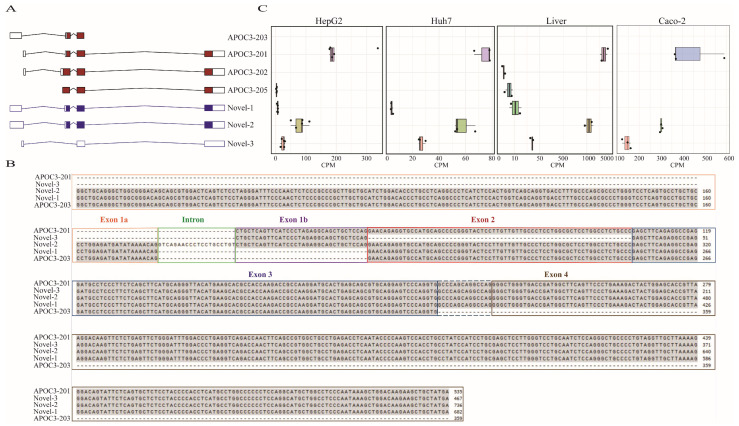 Figure 1
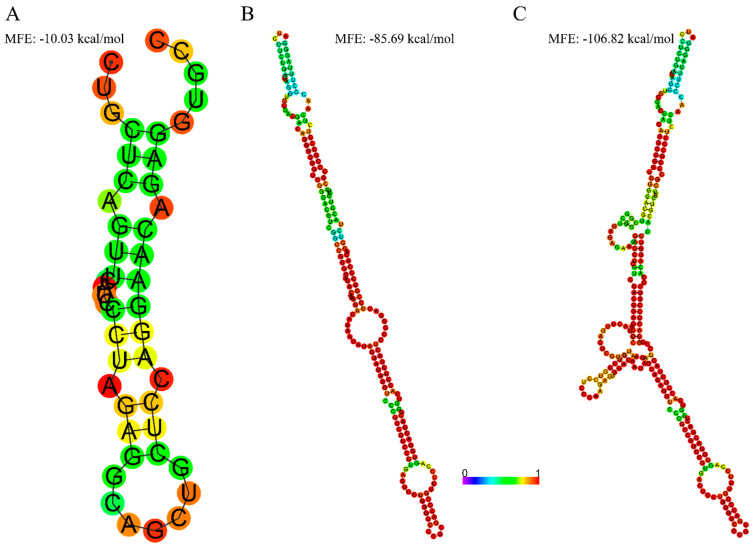 Figure 2
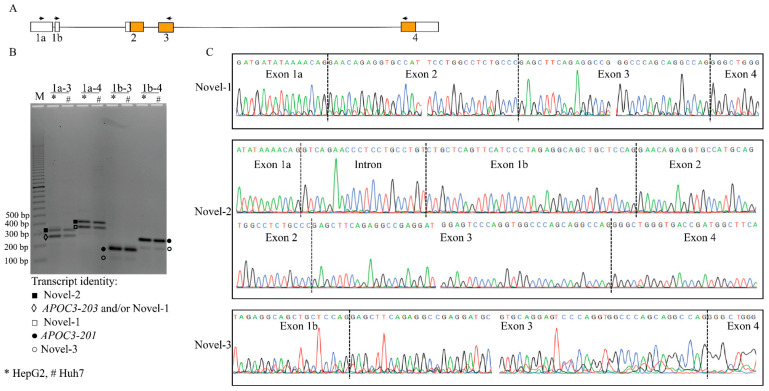 Figure 3
Peer Reviews
No public reviews on file for this paper yet. If you reviewed it on a platform where reviews are public (OpenReview, ICLR, NeurIPS, ICML), you can paste yours below so the community can read it here.
Videos
No videos yet. Explain this paper in a talk, walkthrough, or lecture? Add one.
Taxonomy
TopicsCancer-related molecular mechanisms research · RNA modifications and cancer · Caveolin-1 and cellular processes