Genetic and Genomic Analysis Identifies bcltf1 as the Transcription Factor Coding Gene Mutated in Field Isolate Bc116, Deficient in Light Responses, Differentiation and Pathogenicity in Botrytis cinerea
Virginia Casado-del Castillo, Vlad Paul Mihaila Novac, Alessandro Gabrielli García, José María García Fernández, Paula Iriondo-Ocampo, José María Díaz-Mínguez, Ernesto Pérez Benito

TL;DR
A study finds that a mutation in the bcltf1 gene in a natural strain of Botrytis cinerea causes reduced pathogenicity and altered growth under light.
Contribution
The paper identifies bcltf1 as the gene responsible for multiple mutant phenotypes in a field isolate of Botrytis cinerea using genetic and genomic analysis.
Findings
The Bc116 isolate shows reduced pathogenicity, delayed germination, and altered conidiation and sclerotia production under light.
A 2 kb deletion in the bcltf1 gene on chromosome 14 is responsible for the mutant phenotype in Bc116.
Restoring the bcltf1 gene in Bc116 restores wild-type phenotypes, confirming its functional role.
Abstract
Natural populations provide valuable information and resources for addressing the genetic characterization of biological systems. Botrytis cinerea is a necrotrophic fungus that exhibits complex responses to light. Physiological analysis of B. cinerea populations from vineyards in Castilla y León (Spain) allowed for the identification of isolate Bc116. This field isolate shows a reduced pathogenicity that is conditioned by the light regime. Light also delays germination and accentuates the negative effect it exerts on the vegetative growth of B. cinerea. Bc116 also displays a marked hyperconidiation phenotype and a characteristic sclerotia production pattern. Genetic analysis demonstrates that the alternative phenotypes regarding pathogenicity, conidiation, and pattern of sclerotia production co-segregate in the progeny of crosses between isolate Bc116 and a wild-type field isolate,…
Genes, proteins, chemicals, diseases, species, mutations and cell lines named across the full text — each resolved to its canonical identifier and authoritative record.
Click any figure to enlarge with its caption.
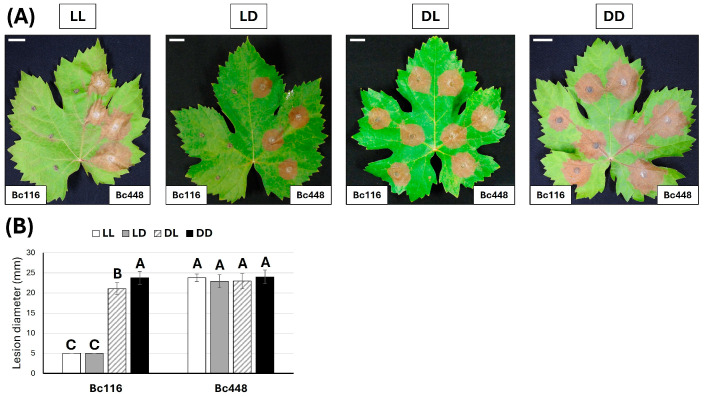 Figure 1
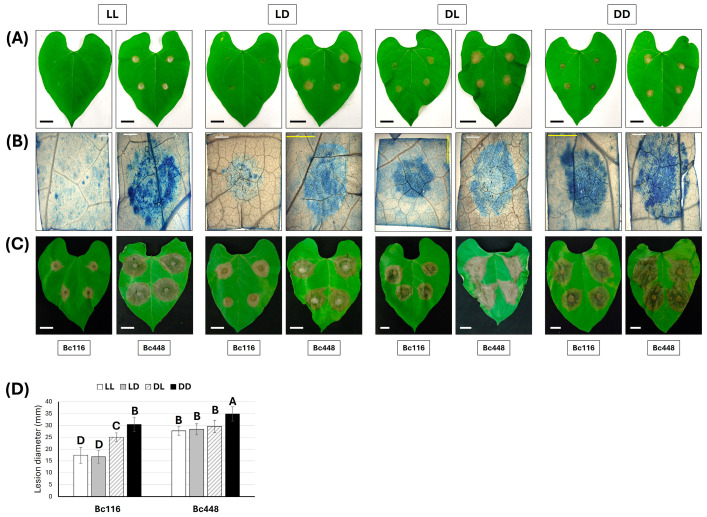 Figure 2
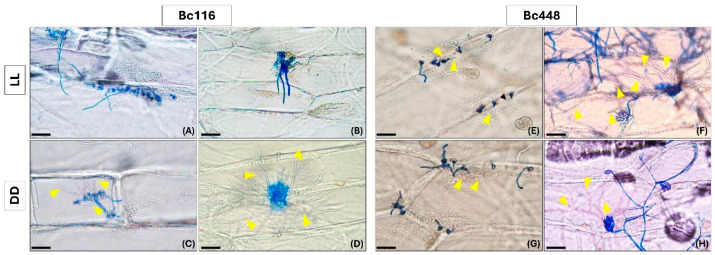 Figure 3
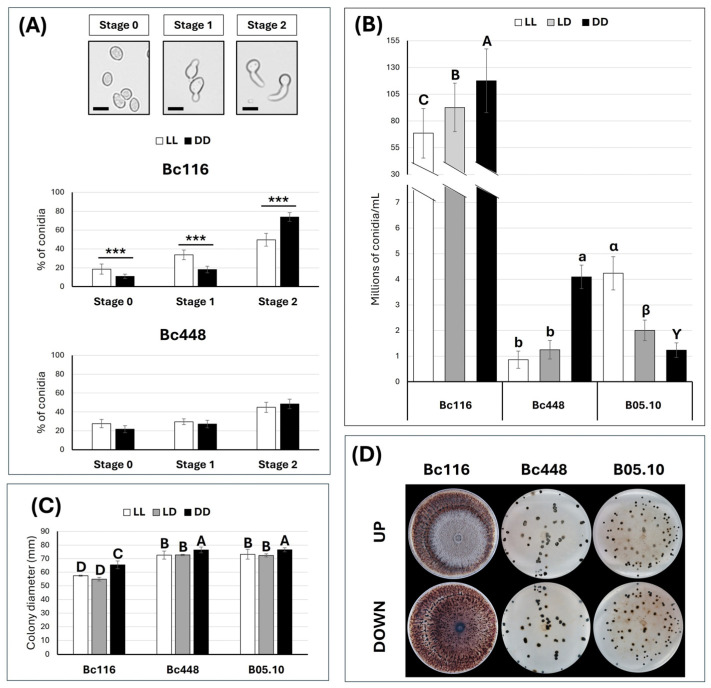 Figure 4
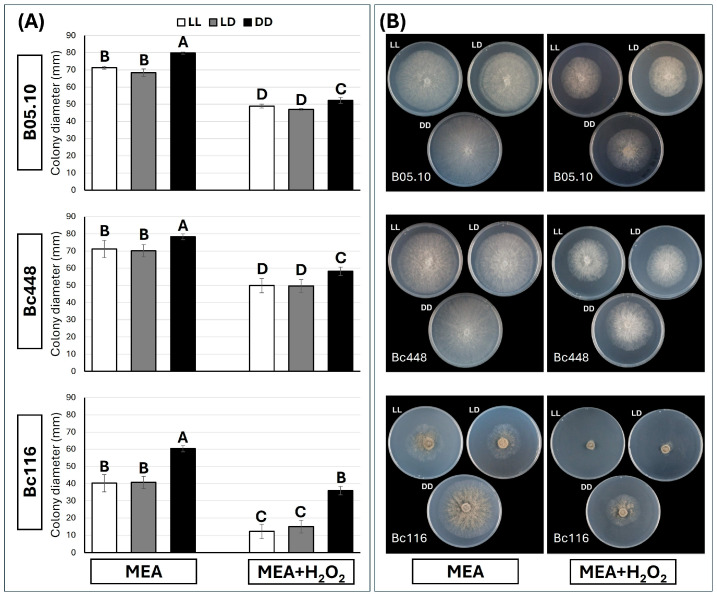 Figure 5
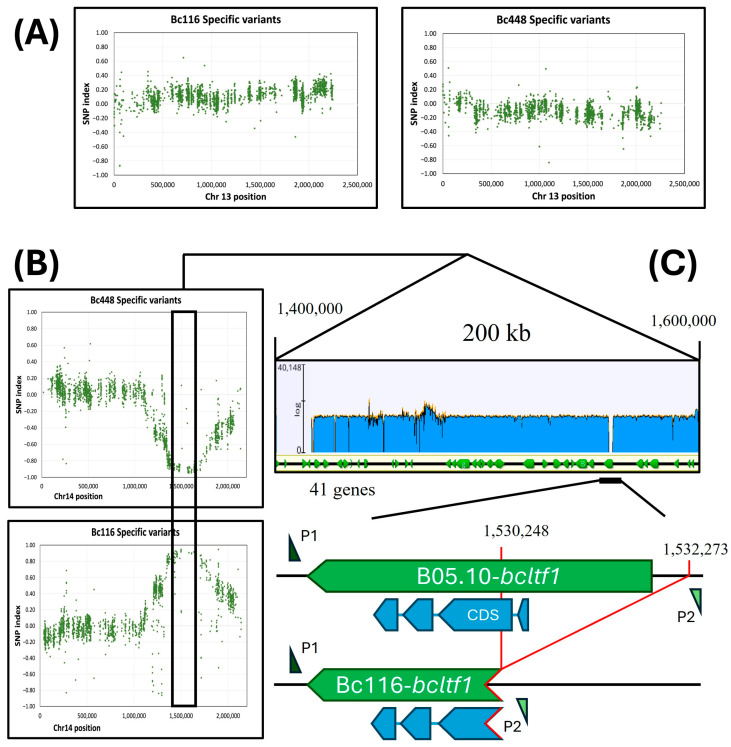 Figure 6
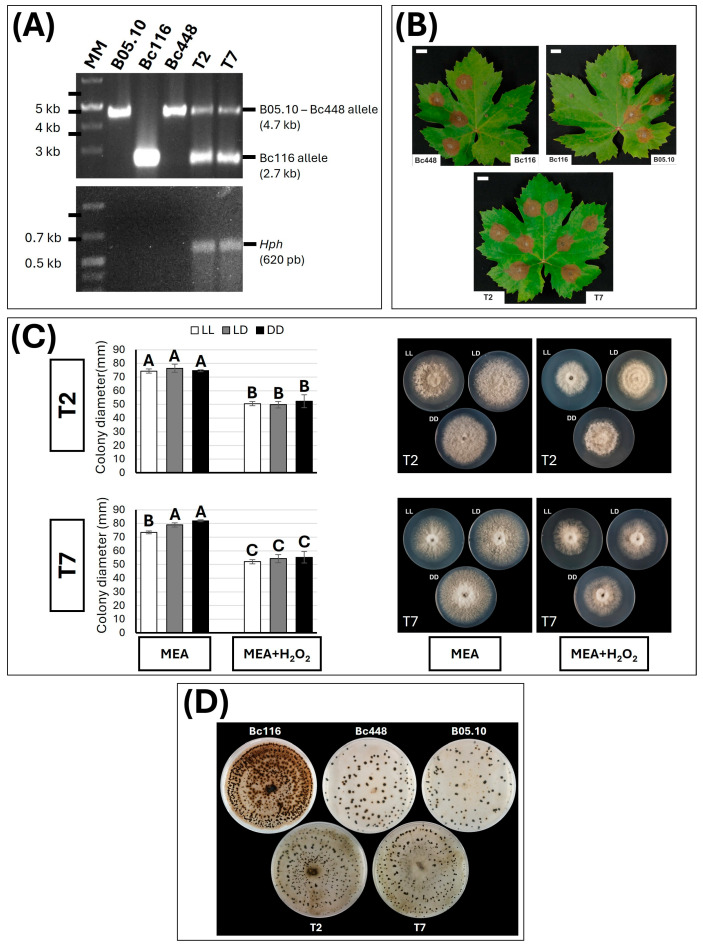 Figure 7
Peer Reviews
No public reviews on file for this paper yet. If you reviewed it on a platform where reviews are public (OpenReview, ICLR, NeurIPS, ICML), you can paste yours below so the community can read it here.
Videos
No videos yet. Explain this paper in a talk, walkthrough, or lecture? Add one.
Taxonomy
TopicsPlant Pathogens and Fungal Diseases · Fungal Plant Pathogen Control · Horticultural and Viticultural Research