Spatial Analysis of Tuberculosis, COVID-19, and Tuberculosis/COVID-19 Coinfection in Recife, PE, Brazil
Alene Bezerra Araújo Silva, Wayner Vieira de Souza, José Constantino Silveira Júnior, Juliana Silva de Santana, Ricardo Arraes de Alencar Ximenes

TL;DR
This study examines how tuberculosis, COVID-19, and their coinfection are distributed across neighborhoods in Recife, Brazil, and how income levels influence these patterns.
Contribution
The study provides new insights into the spatial and socioeconomic associations of TB, COVID-19, and coinfection in a Brazilian city.
Findings
Tuberculosis incidence increased as income decreased, showing a strong socioeconomic gradient.
Coinfection rates were lower in higher-income neighborhoods, suggesting a link between TB and increased vulnerability to COVID-19 in low-income populations.
The spatial distribution of all three conditions reflects the income inequality in Recife.
Abstract
Tuberculosis (TB) remains a public health problem, which the COVID-19 pandemic may have exacerbated. Scaling TB, COVID-19, and coinfection in area and socioeconomic contexts is an important way to detect more vulnerable groups. Objective: To verify, through the spatial distribution of cases of tuberculosis, COVID-19, and coinfection, the existence of an association between the risk of illness and income. Methods: An analytical ecological study was carried out in Recife, whose unit of analysis was the neighborhood, in the year 2020. The data were collected from the SINAN-TB, NOTIFICA-PE, and IBGE Information Systems. Neighborhoods were grouped into strata according to income through K-means analysis. Incidence rates were calculated. Marshall’s Local Empirical Bayesian Smoothing Method was used. Risk ratios were calculated to estimate the magnitude of association between income strata and…
Genes, proteins, chemicals, diseases, species, mutations and cell lines named across the full text — each resolved to its canonical identifier and authoritative record.
Click any figure to enlarge with its caption.
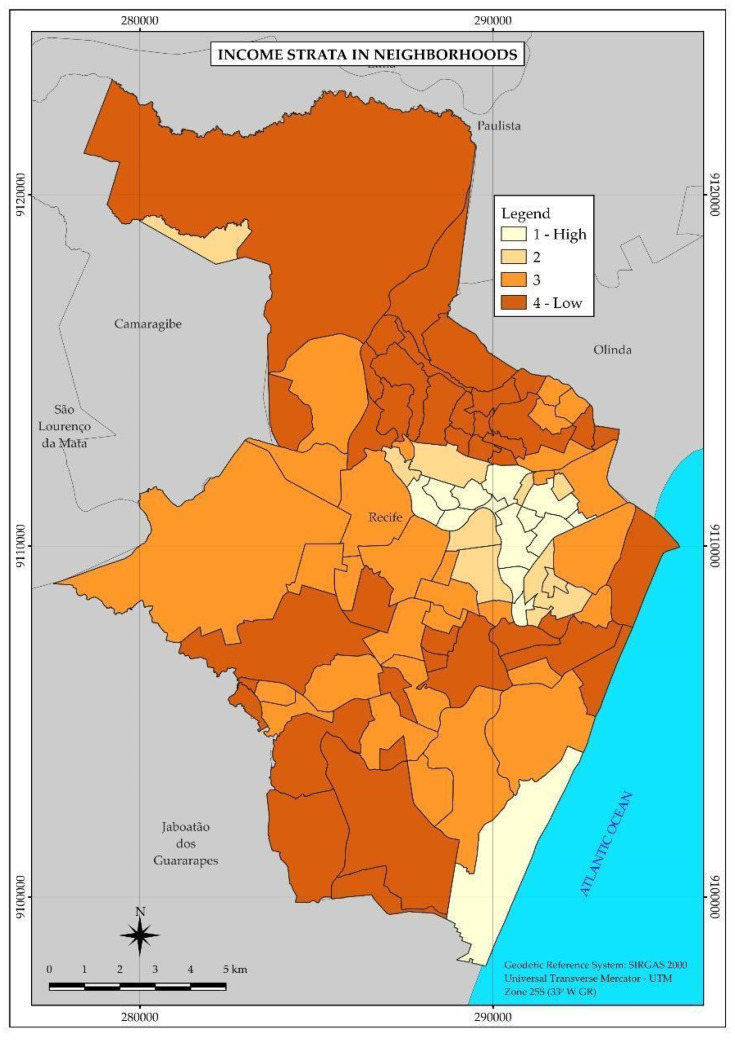 Figure 1
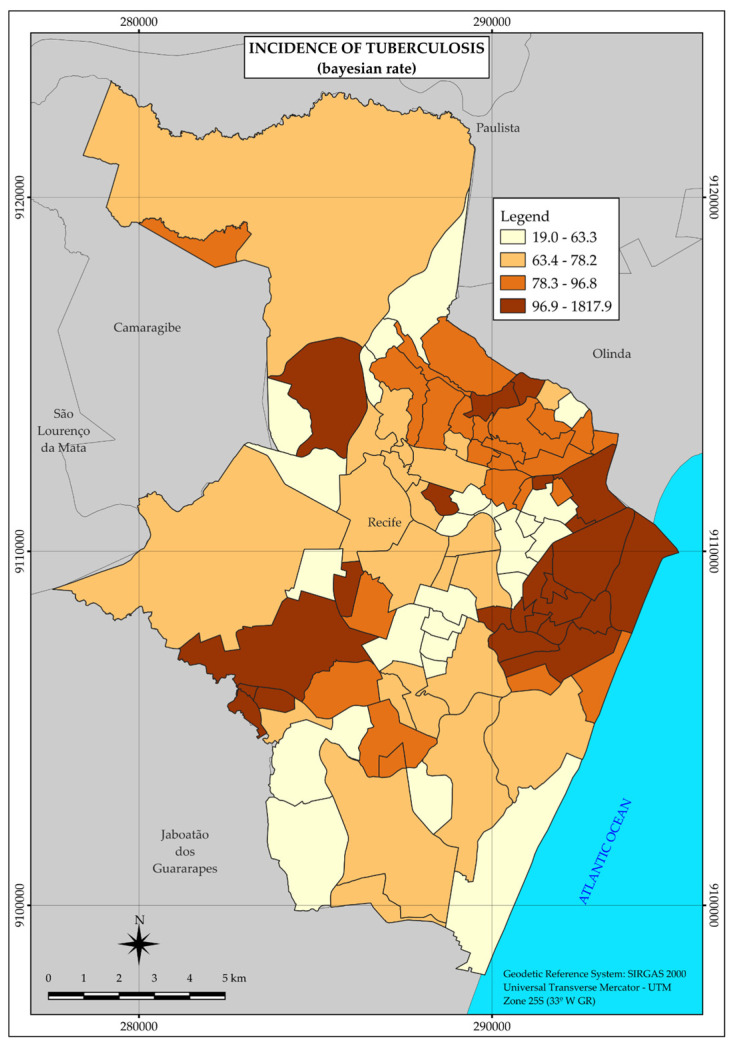 Figure 2
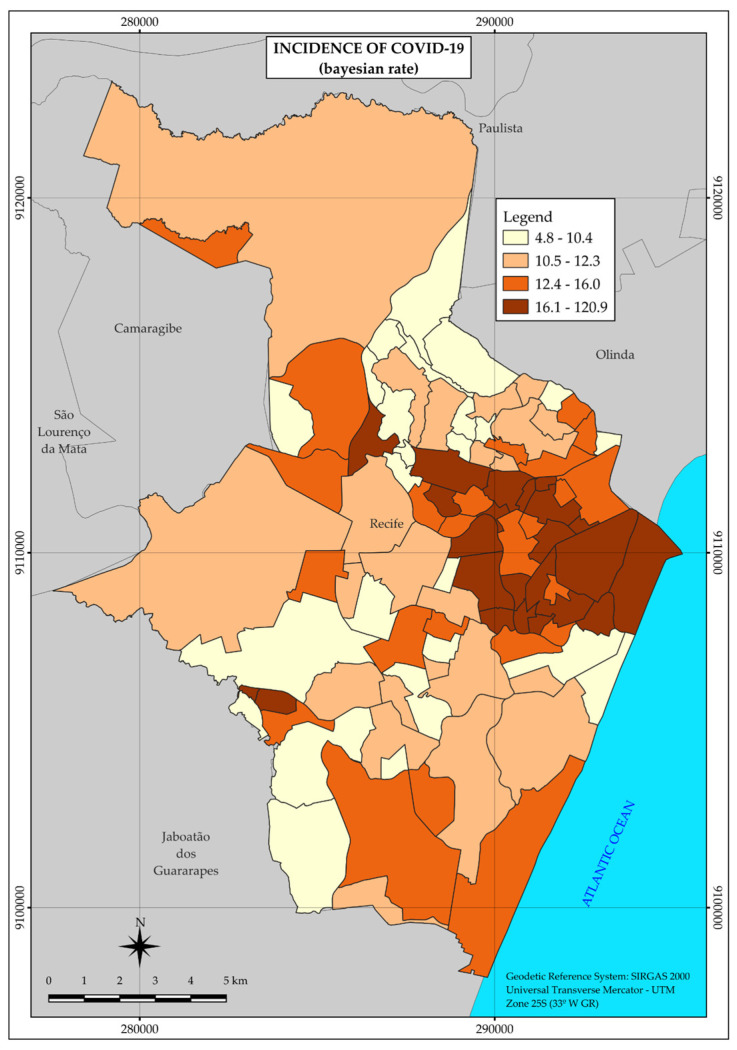 Figure 3
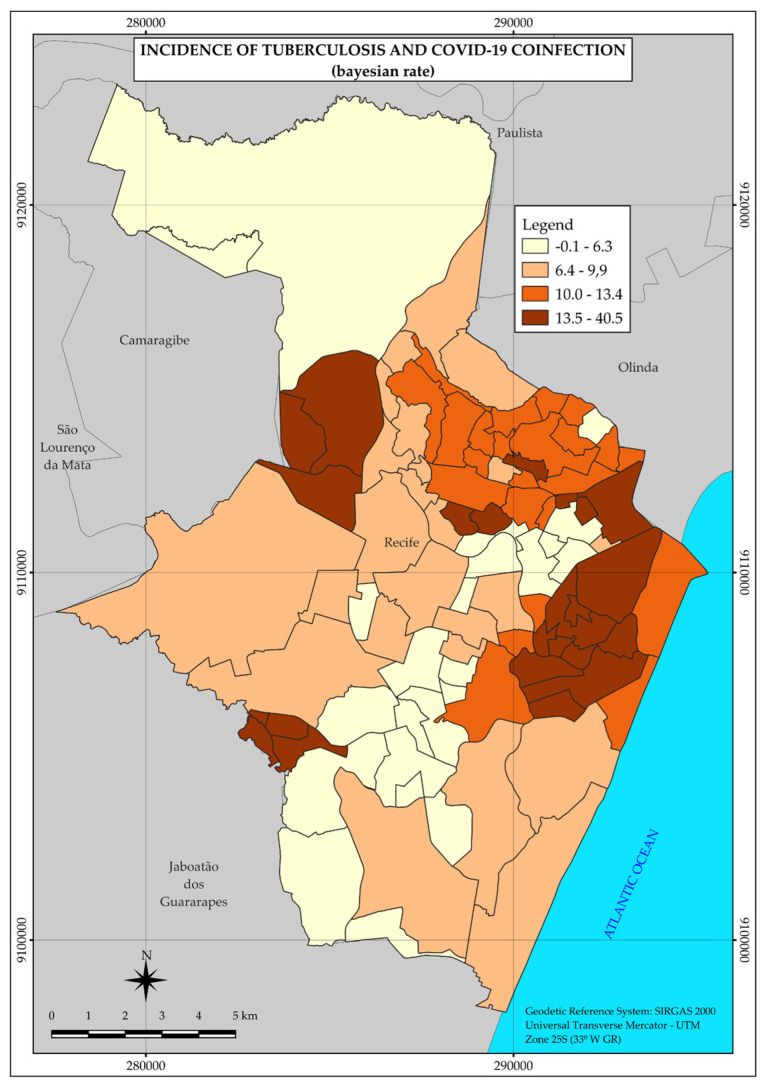 Figure 4
Peer Reviews
No public reviews on file for this paper yet. If you reviewed it on a platform where reviews are public (OpenReview, ICLR, NeurIPS, ICML), you can paste yours below so the community can read it here.
Videos
No videos yet. Explain this paper in a talk, walkthrough, or lecture? Add one.
Taxonomy
TopicsCOVID-19 epidemiological studies · Zoonotic diseases and public health · Data-Driven Disease Surveillance