Development of a k-Nearest Neighbors Model for the Prediction of Late-Onset Alzheimer’s Risk by Combining Polygenic Risk Scores and Phenotypic Variables
Sandra Ferreiro López, Rosana Ferrero, Jorge Blom-Dahl, Marta Alonso-Bernáldez, Adán González, Guillermo Pérez-Solero, Jair Tenorio-Castano

TL;DR
This paper introduces a new k-nearest neighbors model that combines genetic and clinical data to predict the risk of late-onset Alzheimer’s disease with improved accuracy.
Contribution
The novel contribution is the integration of polygenic risk scores and phenotypic variables in a KNN model, achieving better performance than previous models.
Findings
The model achieved a sensitivity of 0.80 and an AUC of 0.71 for predicting LOAD risk.
Polygenic genetic risk, APOE haplotype, and age were the most influential factors in the model’s predictions.
The model outperformed a previous 2019 KNN model with a higher AUC score.
Abstract
Introduction: Alzheimer’s disease (AD), and more specifically late-onset Alzheimer’s disease (LOAD), represents a considerable challenge in terms of early and timely diagnosis and treatment. Early diagnosis is crucial to improve the efficacy of the therapies and patients’ quality of life. The current challenge is to accurately identify at-risk individuals before the manifestations of the first symptoms of AD. Methods and results: Here, we present an improved model for LOAD risk prediction, which applies the k-nearest neighbors (KNN) algorithm. We have achieved a sensitivity of 0.80 and an area under the curve (AUC) of 0.71, which represents a high performance especially when compared to an AUC of 0.66 reported previously in 2019 using a KNN model. Discussion: The application of a mathematical model that combines genetic and clinical covariates showed a good prediction of the AD/LOAD…
Genes, proteins, chemicals, diseases, species, mutations and cell lines named across the full text — each resolved to its canonical identifier and authoritative record.
Click any figure to enlarge with its caption.
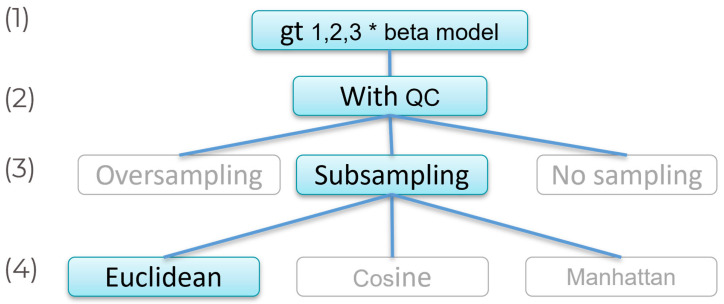 Figure 1
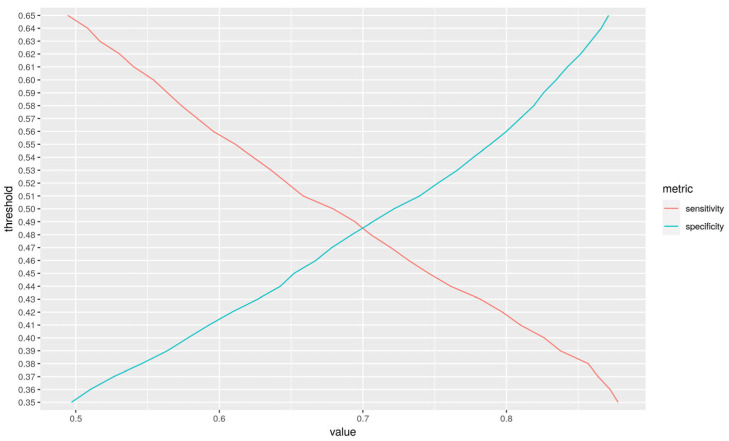 Figure 2
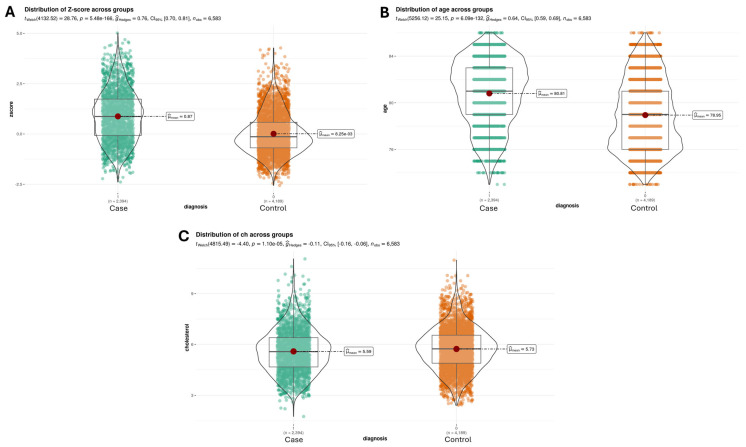 Figure 3
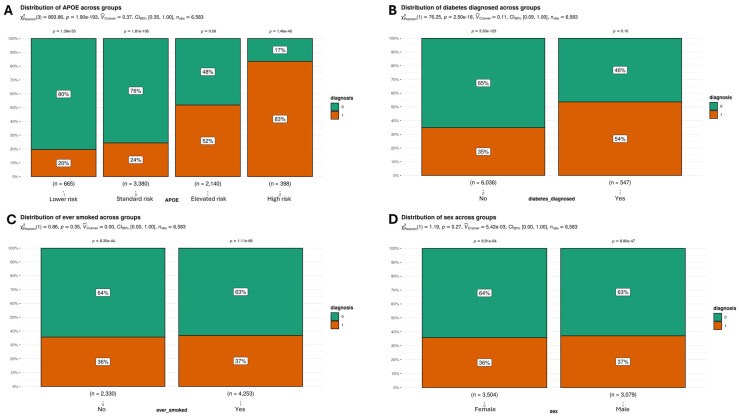 Figure 4
Peer Reviews
No public reviews on file for this paper yet. If you reviewed it on a platform where reviews are public (OpenReview, ICLR, NeurIPS, ICML), you can paste yours below so the community can read it here.
Videos
No videos yet. Explain this paper in a talk, walkthrough, or lecture? Add one.
Taxonomy
TopicsBioinformatics and Genomic Networks · Gene expression and cancer classification · Dementia and Cognitive Impairment Research