Comparative study of Taqman-based qPCR assay for the detection of Anisakis simplex and Pseudoterranova decipiens
Mi-Gyeong Kim, Min Ji Hong, Doo Won Seo, Hyun Mi Jung, Hyun-Ja Han, Seung Hwan Kim, Insun Joo, Elingarami Sauli, Elingarami Sauli, Elingarami Sauli, Elingarami Sauli

TL;DR
This study develops a sensitive and specific qPCR method to detect two parasites that cause anisakidosis, a foodborne illness from raw seafood.
Contribution
A novel Taqman-based qPCR method with optimized sensitivity and specificity for Anisakis simplex and Pseudoterranova decipiens is developed.
Findings
The optimized method detected A. simplex at 0.0019 ng/µL and P. decipiens at 0.0001 ng/µL.
The method showed no cross-activity with other parasite samples or plasmid DNA.
Thirteen detection methods were evaluated to identify the most effective primer/probe sets.
Abstract
Anisakidosis is a foodborne parasitic infection caused by the consumption of raw or uncooked seafood that contains third stage larvae from the Anisakidae family. This infection has been observed across the globe, with a particularly high prevalence in South Korea and Japan. Consequently, there is a necessity to compare and analyze the optimal detection methods with a view to preventing Anisakis outbreaks. In this study, a species-specific Taqman-based qPCR method was developed for the detection of the internal transcribed spacer region and mtDNA genes of Anisakis simplex and Pseudoterranova decipiens. Parasite-specific primer/probe sets were selected based on the data from domestic and foreign detection methods. In addition, we have designed our own primer/probe sets based on the target region of each parasite. A comprehensive literature review and a self-creation process were…
Genes, proteins, chemicals, diseases, species, mutations and cell lines named across the full text — each resolved to its canonical identifier and authoritative record.
Click any figure to enlarge with its caption.
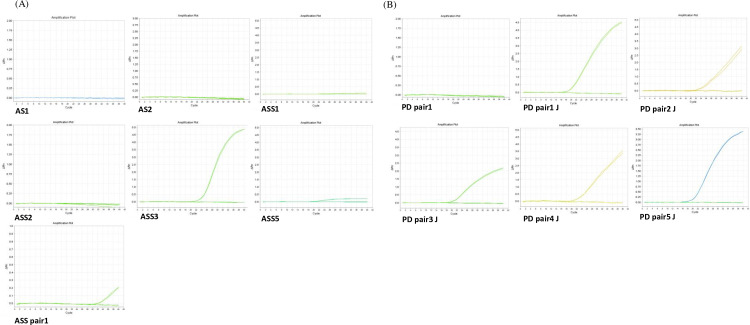 Figure 1
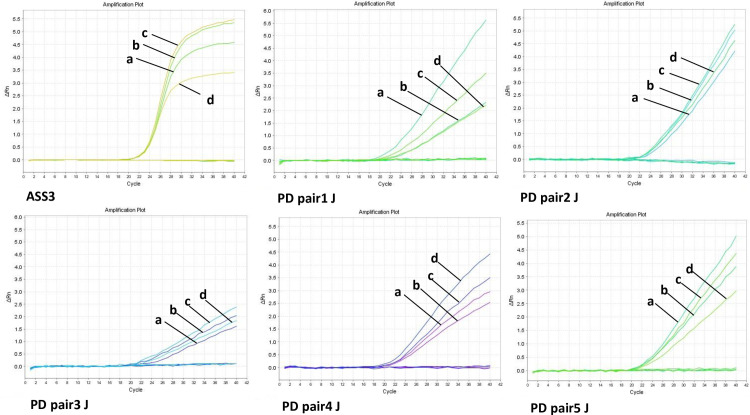 Figure 2
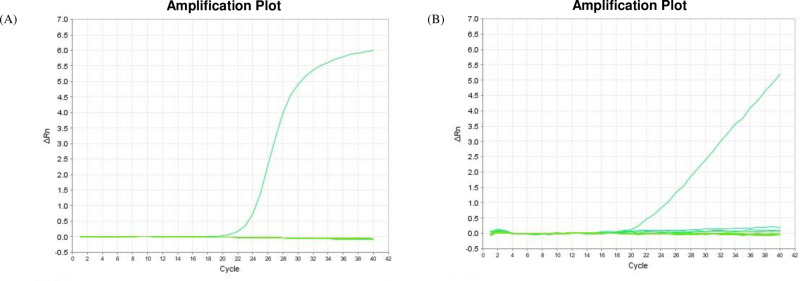 Figure 3
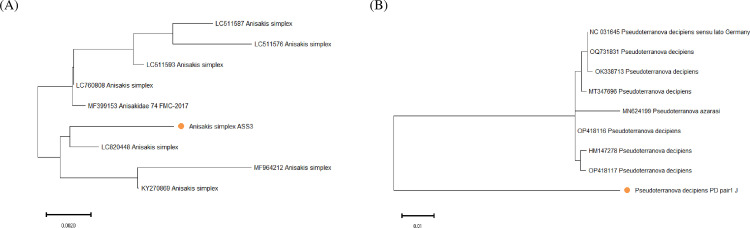 Figure 4
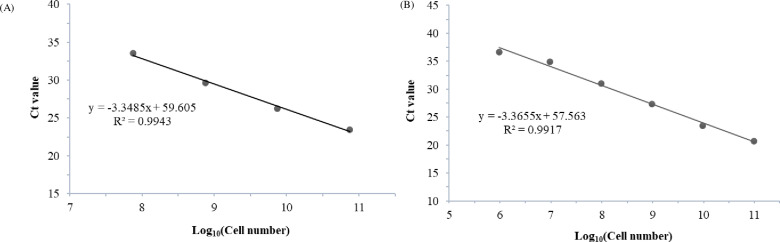 Figure 5
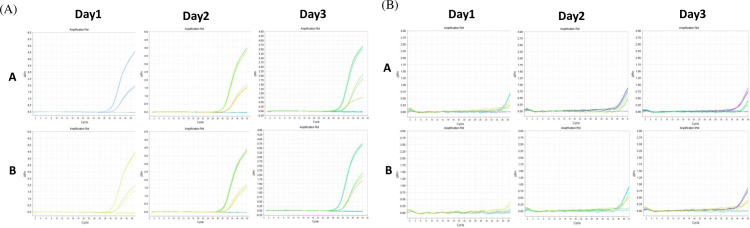 Figure 6
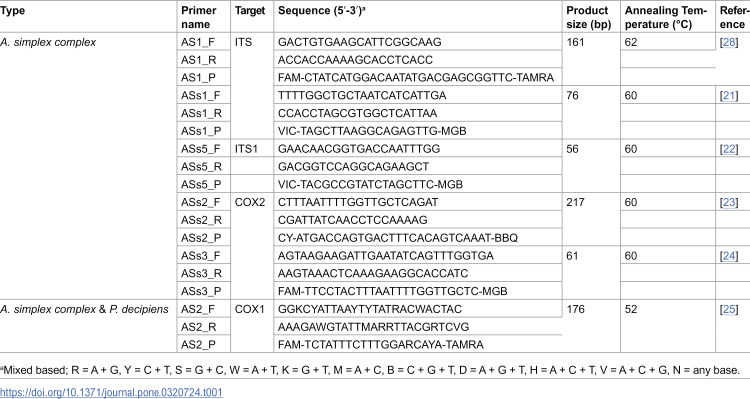 Figure 7
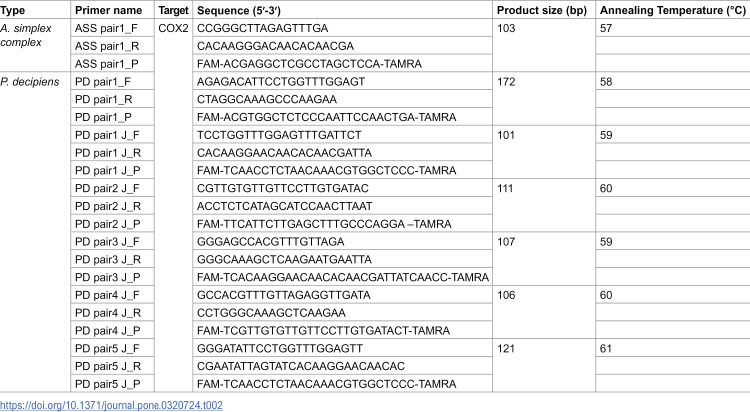 Figure 8
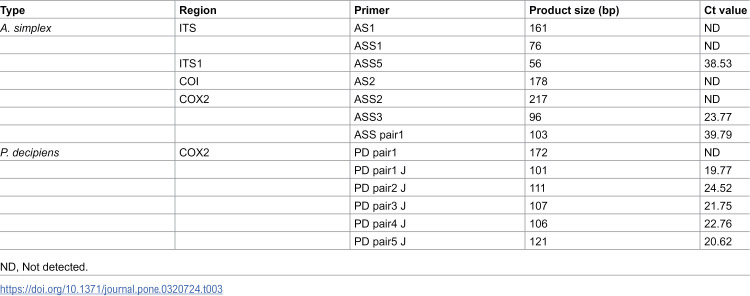 Figure 9
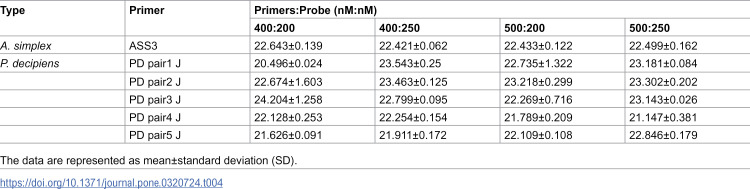 Figure 10
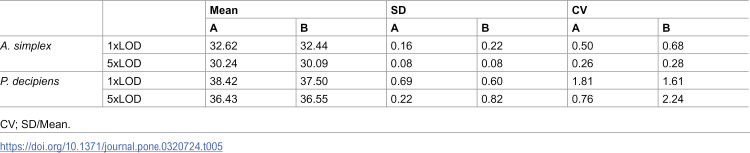 Figure 11
Peer Reviews
No public reviews on file for this paper yet. If you reviewed it on a platform where reviews are public (OpenReview, ICLR, NeurIPS, ICML), you can paste yours below so the community can read it here.
Videos
No videos yet. Explain this paper in a talk, walkthrough, or lecture? Add one.
Taxonomy
TopicsParasite Biology and Host Interactions · Identification and Quantification in Food · Marine Ecology and Invasive Species