Development and Application of a Rapid Detection Technique for 2-Amino-1-methyl-6-phenyl-imidazo [4,5-b] Pyridine in Meat Products Based on Hydrogel-Molecular-Imprinting Electrochemical Sensing Technology
Chunxiao Li, Xiaolei Zhao, Xiaofei Yin, Shuting Zhang, Jinxing He

TL;DR
This paper introduces a new electrochemical sensor for quickly and accurately detecting a harmful compound in meat products that may increase cancer risk.
Contribution
The novel contribution is the development of a selective and rapid detection method for PhIP using hydrogel-molecular-imprinting electrochemical sensing technology.
Findings
The sensor has a linear response for PhIP concentrations between 1.0–200.0 ng/mL with a detection limit of 0.07 ng/mL.
Spiked recovery experiments showed recoveries between 75.9% and 108.8%, confirming the method's accuracy and reliability.
Abstract
2-amino-1-methyl-6-phenyl-imidazo [4,5-b] pyridine (PhIP) is a harmful compound that is formed during the high-temperature processing of meat products, and the risk of cancer may be increased with the prolonged intake of foods containing high levels of PhIP. This study aimed to develop an innovative detection method specifically for PhIP in meat products. Utilizing hydrogel-molecular-imprinting electrochemical sensing technology, the preparation conditions of molecularly imprinted hydrogels (MIHs) were optimized. Consequently, a highly selective and rapid detection method for PhIP was successfully established, integrated with an electrochemical workstation. The results indicate that the prepared MIHs exhibit an excellent specific recognition performance for PhIP. The sensor exhibited a linear response within the concentration range of 1.0–200.0 ng/mL, with a detection limit of 0.07…
Genes, proteins, chemicals, diseases, species, mutations and cell lines named across the full text — each resolved to its canonical identifier and authoritative record.
Click any figure to enlarge with its caption.
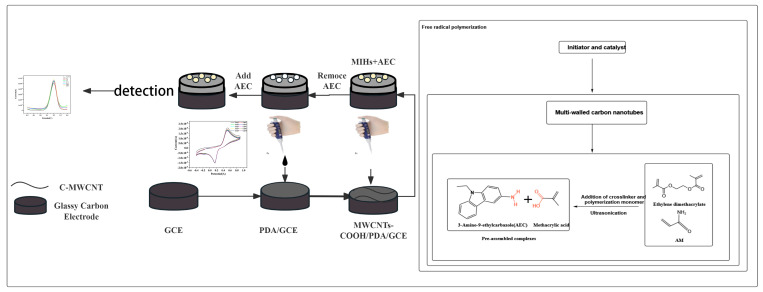 Figure 1
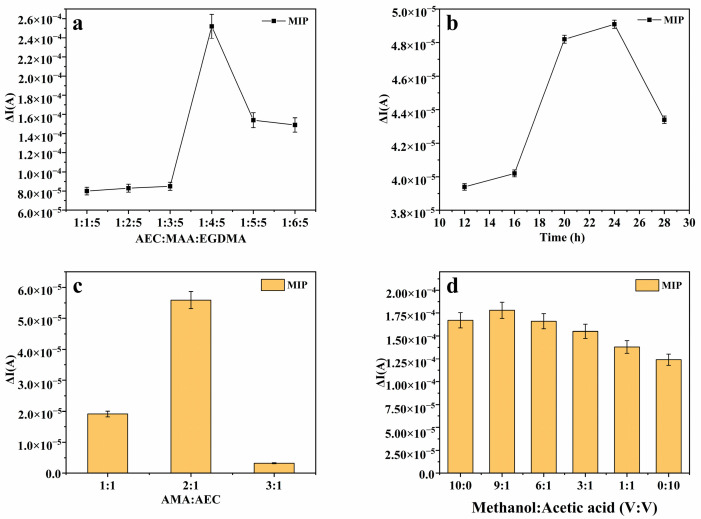 Figure 2
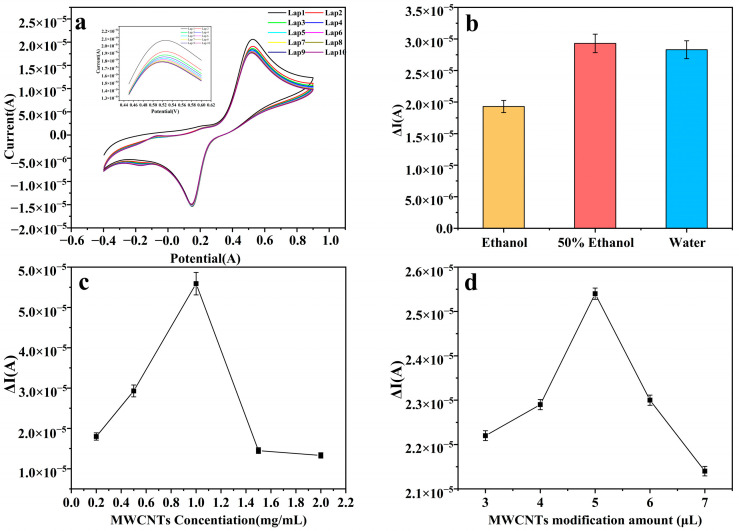 Figure 3
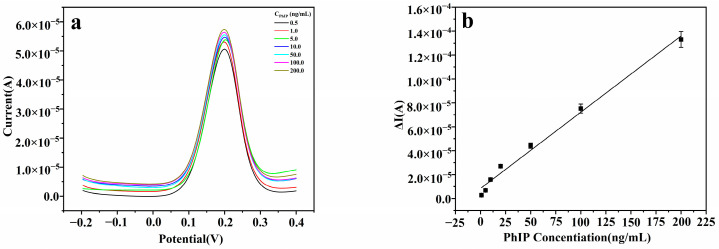 Figure 4
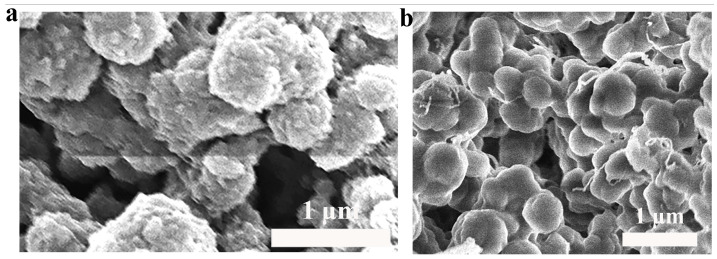 Figure 5
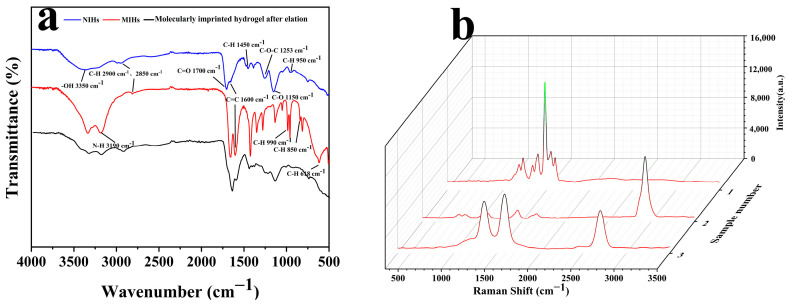 Figure 6
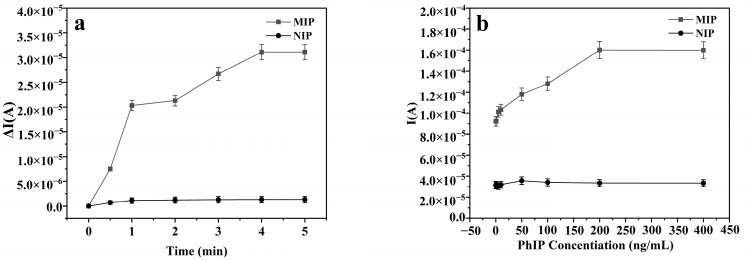 Figure 7
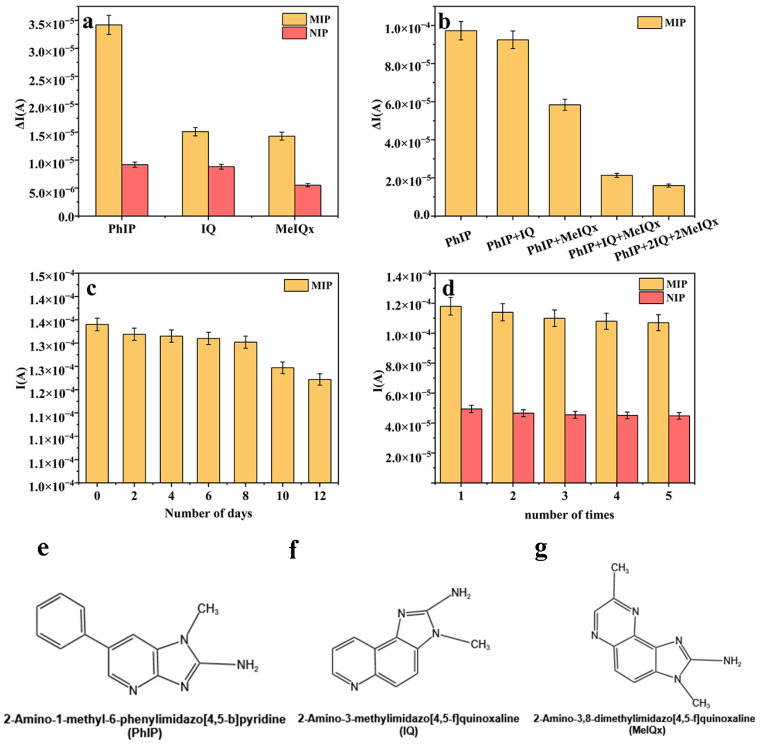 Figure 8
Peer Reviews
No public reviews on file for this paper yet. If you reviewed it on a platform where reviews are public (OpenReview, ICLR, NeurIPS, ICML), you can paste yours below so the community can read it here.
Videos
No videos yet. Explain this paper in a talk, walkthrough, or lecture? Add one.
Taxonomy
TopicsAdvanced Chemical Sensor Technologies · Electrochemical Analysis and Applications · Electrochemical sensors and biosensors