Transcriptional Regulators in the Cerebellum in Chronic Schizophrenia: Novel Possible Targets for Pharmacological Interventions
América Vera-Montecinos, Belén Ramos

TL;DR
This study identifies key transcription factors in the cerebellum of people with chronic schizophrenia that may control multiple altered proteins and biological processes.
Contribution
The study provides a novel panel of transcriptional regulators in the cerebellum that could serve as pharmacological targets in schizophrenia.
Findings
Eleven enriched transcription factors were identified, including SP1, YY1, and EGR1, which control 250 altered proteins in the cerebellum of individuals with chronic schizophrenia.
SP1, KLF7, and SP4 from the Krüppel superfamily had the largest number of target proteins.
Transcription factor targets were enriched in pathways related to transport, signaling, inflammation, and RNA processing, suggesting their broad regulatory roles.
Abstract
Despite the emerging evidence of the role of transcriptional regulators in schizophrenia as key molecular effectors responsible for the dysregulation of multiple biological processes, limited information is available for brain areas that control higher cognitive functions, such as the cerebellum. To identify transcription factors that could control a wide panel of altered proteins in the cerebellar cortex in schizophrenia, we analyzed a dataset obtained using one-shot liquid chromatography–tandem mass spectrometry on the postmortem human cerebellar cortex in chronic schizophrenia (PXD024937 identifier in the ProteomeXchange repository). Our analysis revealed a panel of 11 enriched transcription factors (SP1, KLF7, SP4, EGR1, HNF4A, CTCF, GABPA, NRF1, NFYA, YY1, and MEF2A) that could be controlling 250 altered proteins. The top three significantly enriched transcription factors were SP1,…
Genes, proteins, chemicals, diseases, species, mutations and cell lines named across the full text — each resolved to its canonical identifier and authoritative record.
Click any figure to enlarge with its caption.
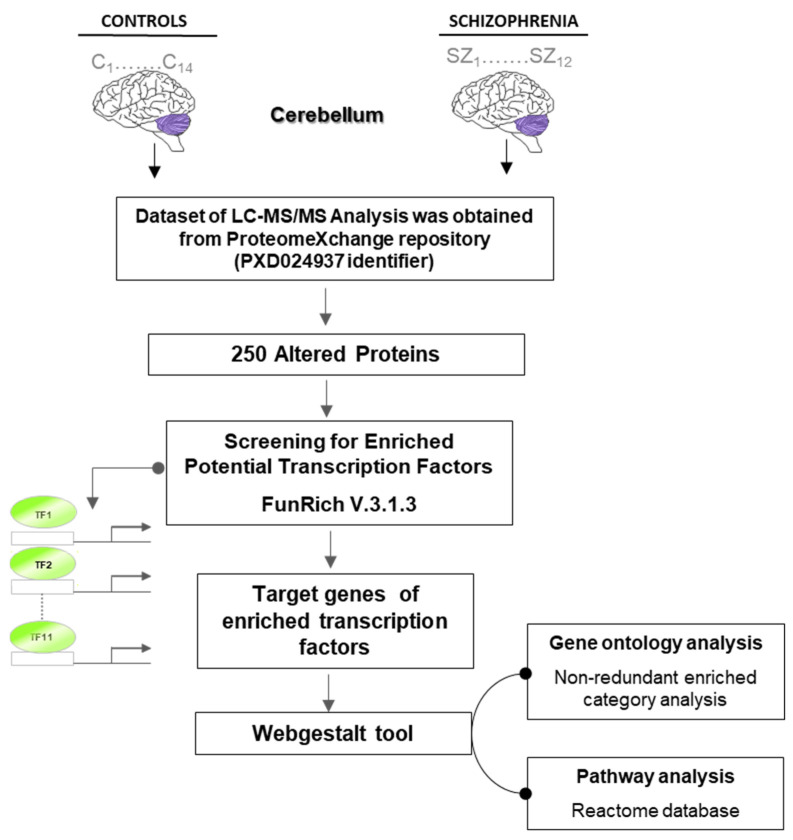 Figure 1
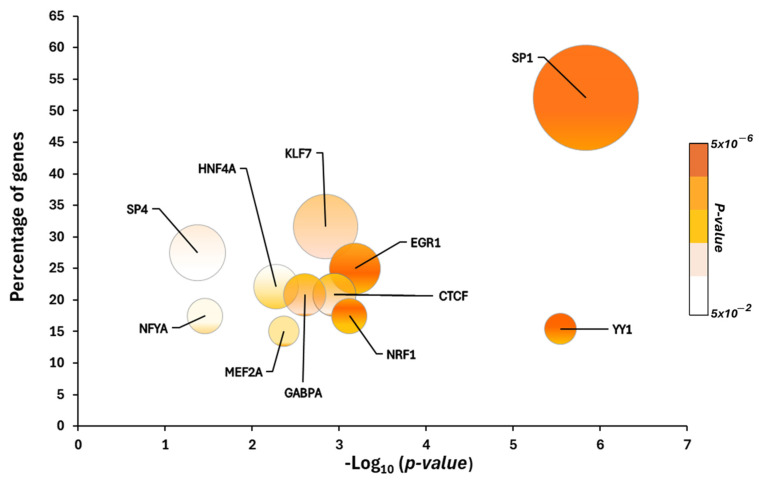 Figure 2
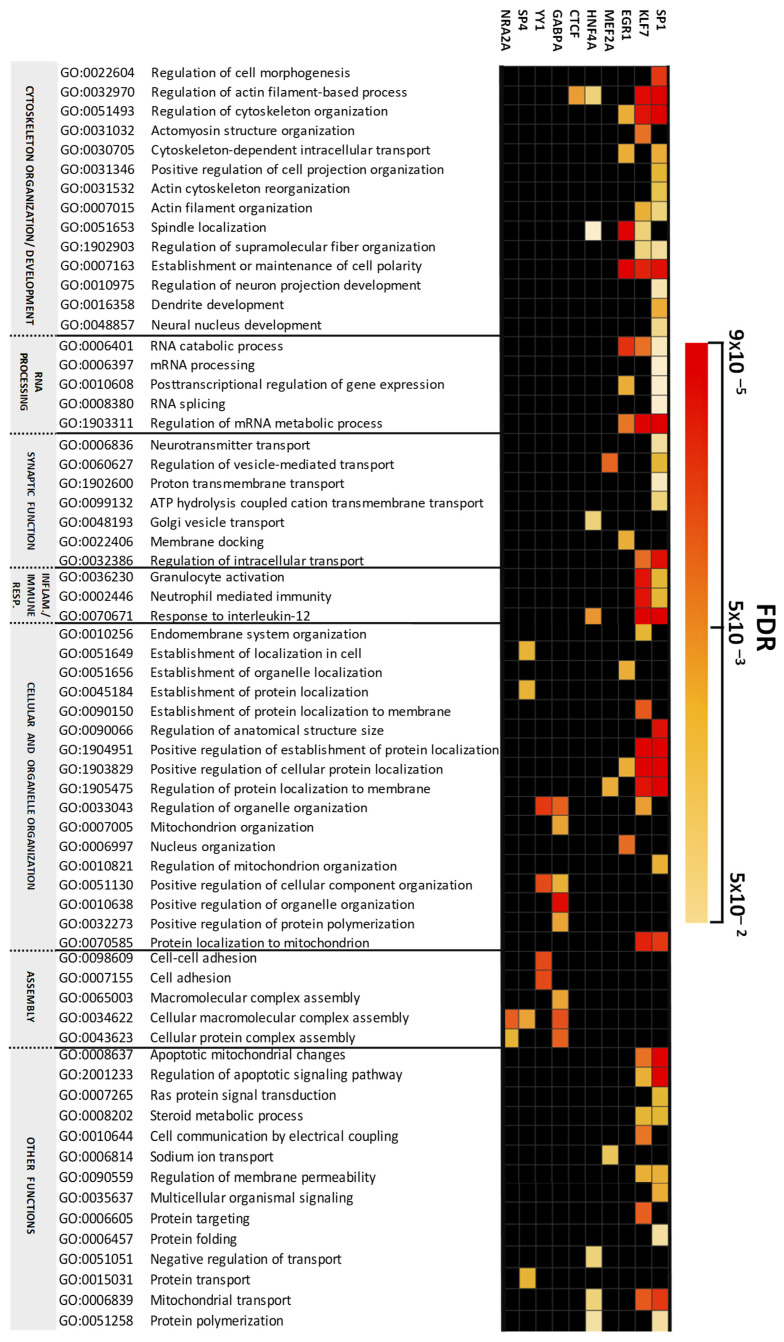 Figure 3
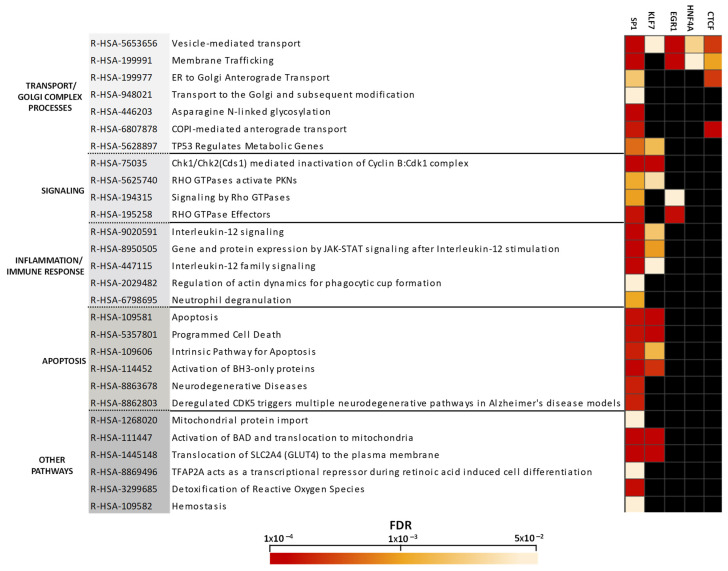 Figure 4
Peer Reviews
No public reviews on file for this paper yet. If you reviewed it on a platform where reviews are public (OpenReview, ICLR, NeurIPS, ICML), you can paste yours below so the community can read it here.
Videos
No videos yet. Explain this paper in a talk, walkthrough, or lecture? Add one.
Taxonomy
TopicsEpigenetics and DNA Methylation · Genetic Syndromes and Imprinting · RNA Research and Splicing