Evaluating the Agreement and Associations with Physical Function Between Equation- and Linear Position Transducer-Estimated Sit-to-Stand Muscle Power in Aging Adults
Garrett Steinbrink, Taylor Danielson, Julian Martinez, Joseph Patnode, Ann Swartz, Scott Strath

TL;DR
This study compares two methods for estimating muscle power during sit-to-stand tests in older adults and finds that one method better predicts physical function.
Contribution
The study reveals limited agreement between equation- and transducer-based sit-to-stand power estimates and identifies one method as a stronger predictor of physical function.
Findings
Equation-based STS power showed moderate agreement with transducer-based estimates (ICC = 0.69).
Equation-based STS power was more strongly associated with physical function outcomes like gait speed and walk test performance.
Linear position transducer estimates were less consistently linked to physical function measures compared to the equation method.
Abstract
Background/Objectives: Muscle power, estimated from the sit-to-stand (STS) test, is an important indicator of physical function (PF) in aging adults. Therefore, its assessment may be implemented into future clinical practice. The agreement between different STS power assessments is unknown, and the associations between methods and PF outcomes have not been compared. Methods: A total of 49 aging adults (mean age = 60.9 ± 10.9; 67% female) participated in this cross-sectional study. STS power from a validated equation (EQ) and a linear position transducer (LPT) were estimated. Handgrip strength (HGS), timed up-and-go (TUG), usual gait speed (UGS), fast gait speed (FGS), the 400-m walk test (400MWT), and self-reported total, basic lower-body, and advanced lower-body PF were assessed. The agreement of STS power methods was assessed with an intraclass correlation coefficient (ICC) and a…
Genes, proteins, chemicals, diseases, species, mutations and cell lines named across the full text — each resolved to its canonical identifier and authoritative record.
Click any figure to enlarge with its caption.
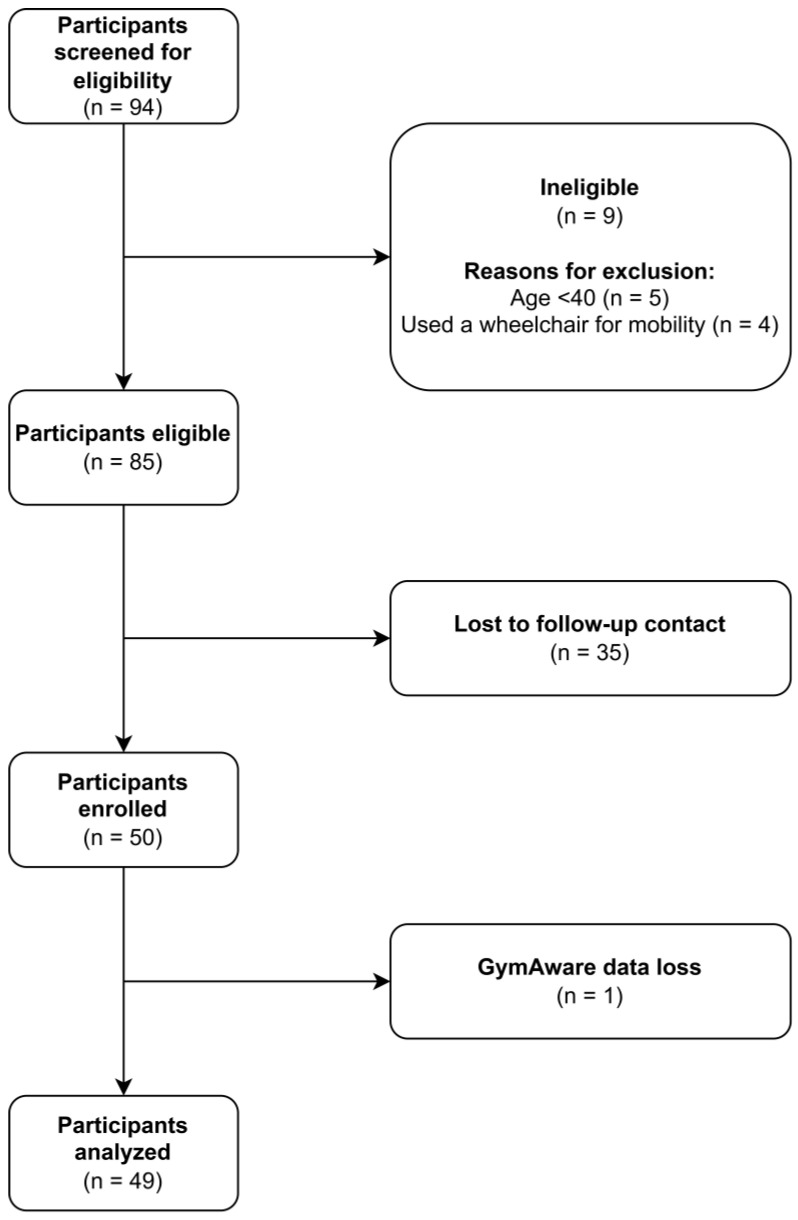 Figure 1
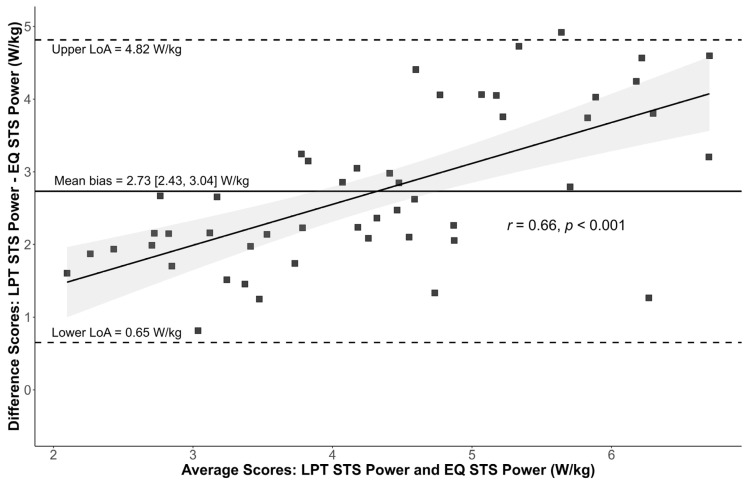 Figure 2
Peer Reviews
No public reviews on file for this paper yet. If you reviewed it on a platform where reviews are public (OpenReview, ICLR, NeurIPS, ICML), you can paste yours below so the community can read it here.
Videos
No videos yet. Explain this paper in a talk, walkthrough, or lecture? Add one.
Taxonomy
TopicsNutrition and Health in Aging · Balance, Gait, and Falls Prevention · Body Composition Measurement Techniques