Prime Editing in Dividing and Quiescent Cells
Irina O. Petrova, Svetlana A. Smirnikhina

TL;DR
This paper explores why prime editing works better in dividing cells and how to improve it in non-dividing cells.
Contribution
The paper identifies SAMHD1 as a key factor limiting prime editing efficiency in quiescent cells and suggests ways to mitigate its effects.
Findings
Prime editing efficiency is higher in dividing cells due to high dNTP levels and active DNA repair enzymes.
SAMHD1 reduces prime editing efficiency in non-dividing cells by lowering dNTP levels.
Inhibiting SAMHD1 improves prime editing outcomes in quiescent cells.
Abstract
Prime editing is a method of genome editing based on reverse transcription. Recent results have shown its elevated efficiency in dividing cells, which raises some questions regarding the mechanism of this effect, because prime editing does not employ homology-driven repair. This mini review aims to identify the reason for this phenomenon and find a possible solution to the problems that it poses. In dividing cells, prime editing takes advantage of high levels of dNTPs and active endonuclease and ligase machinery, such as FEN1 endonuclease and LIG1 ligase, but DNA mismatch repair, which is closely associated with replication, works against prime editing. Prime editing is a method which relies on retroviral reverse transcription, so mechanisms of intrinsic anti-retroviral defense should also work against editing. One of the factors which drastically reduce the efficiency of reverse…
Genes, proteins, chemicals, diseases, species, mutations and cell lines named across the full text — each resolved to its canonical identifier and authoritative record.
Click any figure to enlarge with its caption.
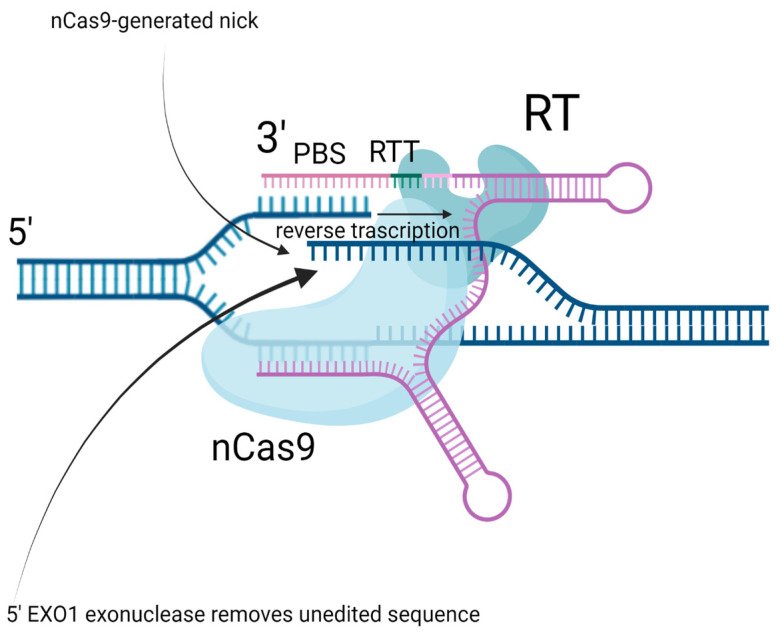 Figure 1
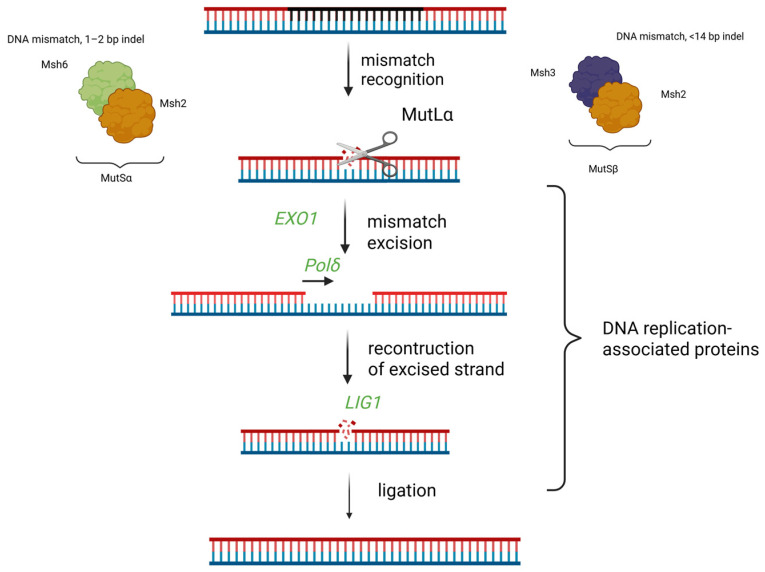 Figure 2
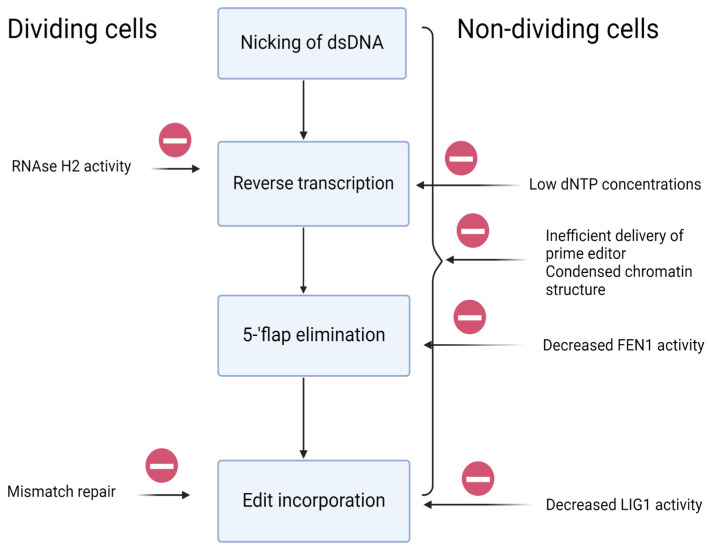 Figure 3
Peer Reviews
No public reviews on file for this paper yet. If you reviewed it on a platform where reviews are public (OpenReview, ICLR, NeurIPS, ICML), you can paste yours below so the community can read it here.
Videos
No videos yet. Explain this paper in a talk, walkthrough, or lecture? Add one.
Taxonomy
TopicsCRISPR and Genetic Engineering · Cytomegalovirus and herpesvirus research · Advanced biosensing and bioanalysis techniques