Measures of Homozygosity and Relationship to Genetic Diversity in the Bearded Collie Breed
Janelle M. Belanger, Liza C. Gershony, Jerold S. Bell, Marjo K. Hytönen, Hannes Lohi, Kerstin Lindblad-Toh, Katarina Tengvall, Elsa Sell, Thomas R. Famula, Anita M. Oberbauer

TL;DR
This study compares different methods to measure homozygosity in Bearded Collies and finds that DNA-based methods provide more accurate insights into genetic diversity than traditional pedigree-based approaches.
Contribution
The study introduces a comparative analysis of pedigree, SNP array, and whole genome sequencing data to evaluate their effectiveness in measuring homozygosity in a closed dog breed.
Findings
DNA-based homozygosity measures are more informative than pedigree-based estimates for individual Bearded Collies.
SNP array data overestimates inbreeding levels due to methodological limitations.
Most high-impact genetic variants are found in short runs of homozygosity linked to ancestral breeding practices.
Abstract
Background: Genetic diversity in closed populations, such as pedigree dogs, is of concern for maintaining the health and vitality of the population in the face of evolving challenges. Measures of genetic diversity rely upon estimates of homozygosity without consideration of whether the homozygosity is desirable or undesirable or if heterozygosity has a functional impact. Pedigree coefficients of inbreeding have been the classical approach yet they are inadequate unless based upon the entire population. Methods: Homozygosity measures based upon pedigree analyses (n = 11,898), SNP array data (n = 244), and whole genome sequencing (n = 23) were compared in the Bearded Collie, as well as a comparison of SNP array data to a pedigree cohort (n = 5042) and a mixed-breed cohort (n = 1171). Results: Molecular measures based upon DNA are more informative on an individual’s homozygosity levels…
Genes, proteins, chemicals, diseases, species, mutations and cell lines named across the full text — each resolved to its canonical identifier and authoritative record.
Click any figure to enlarge with its caption.
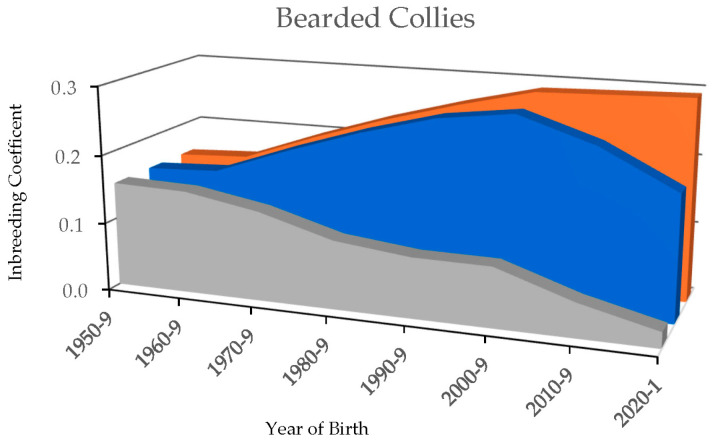 Figure 1
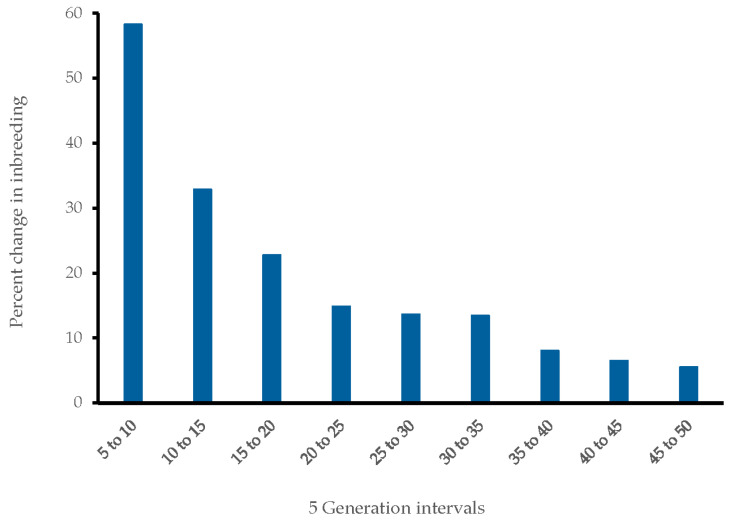 Figure 2
Peer Reviews
No public reviews on file for this paper yet. If you reviewed it on a platform where reviews are public (OpenReview, ICLR, NeurIPS, ICML), you can paste yours below so the community can read it here.
Videos
No videos yet. Explain this paper in a talk, walkthrough, or lecture? Add one.
Taxonomy
TopicsGenetic and phenotypic traits in livestock · Human-Animal Interaction Studies · Veterinary Equine Medical Research