Inferring the Degree of Relatedness and Kinship Types Using an All-in-One Marker Set
Ran Li, Yu Zang, Jiajun Liu, Enlin Wu, Riga Wu, Hongyu Sun

TL;DR
This paper introduces a new method for accurately determining family relationships using genetic markers, which could help in forensic investigations.
Contribution
The study introduces a new kinship nomenclature (KC) and combines multiple genetic markers to improve kinship inference accuracy.
Findings
Combining four types of genetic markers achieved >99.99% accuracy for first-degree relatives.
The method showed 99.28% accuracy for first-degree relationships but dropped to 15.82% for third-degree ones.
Real family data validated the high accuracy and precision of the new method.
Abstract
Background/Objectives: Kinship inference is commonly adopted in various forensic applications, but previous studies have often lacked precision. Methods: In this study, a new method for the nomenclature of kinship types, i.e., kinship chain (KC), was proposed, and then, six types of identity by state (IBS) scores were calculated for simulated and real families using four types of markers. Finally, several Bayesian network (BN)-based classifiers were constructed to investigate the efficiency of the kinship inference. Results: A total of 7, 22, 58, and 3 KCs were obtained for common first-, second-, and third-degree relatives and unrelated pairs, respectively. High accuracies could be achieved in distinguishing between related and unrelated pairs after combining the four types of genetic markers, with an accuracy of >99.99% for all 7 KCs of first-degree relationships and ~99% for 14 out…
Genes, proteins, chemicals, diseases, species, mutations and cell lines named across the full text — each resolved to its canonical identifier and authoritative record.
Click any figure to enlarge with its caption.
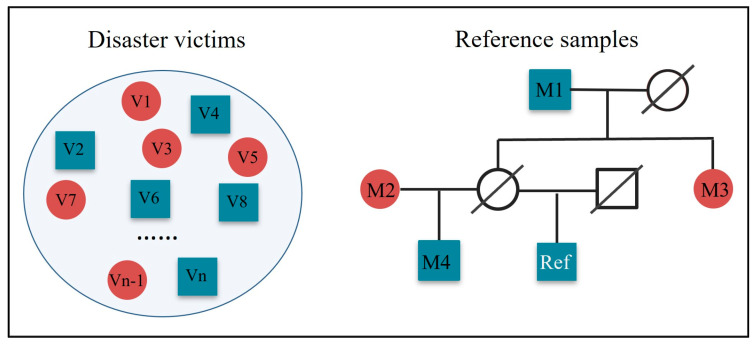 Figure 1
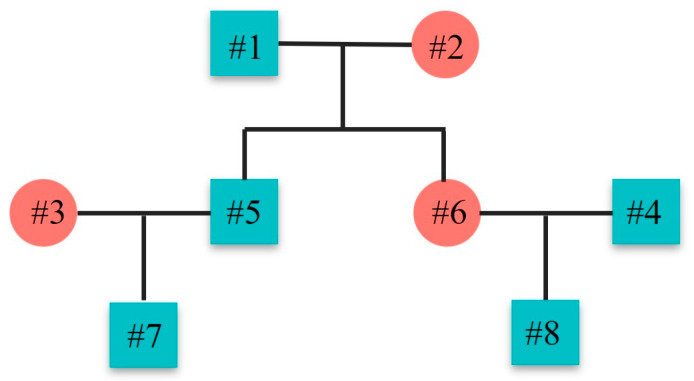 Figure 2
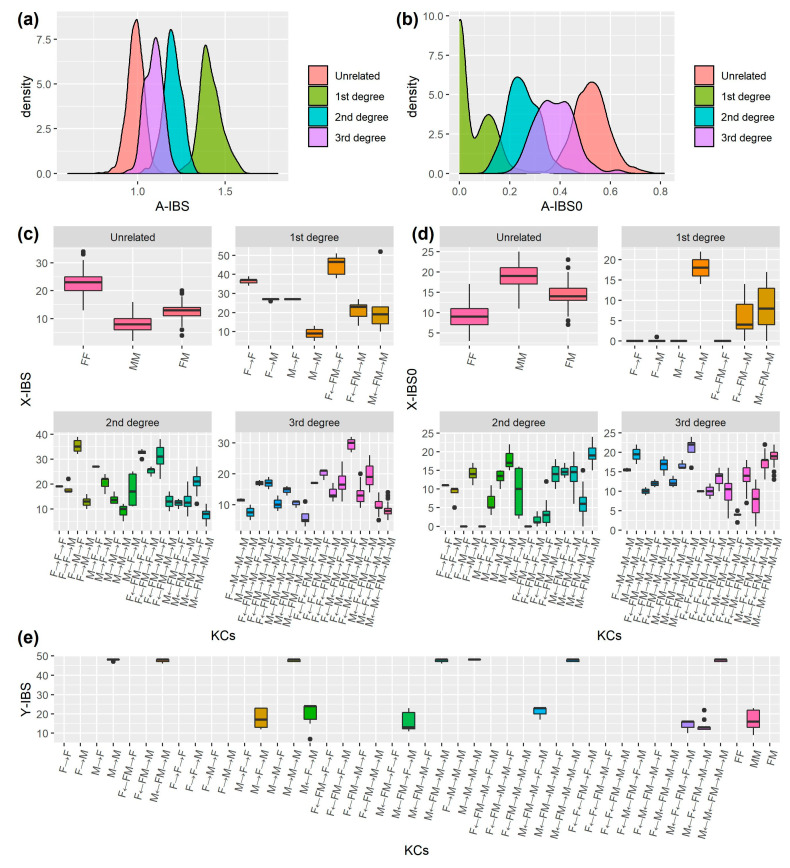 Figure 3
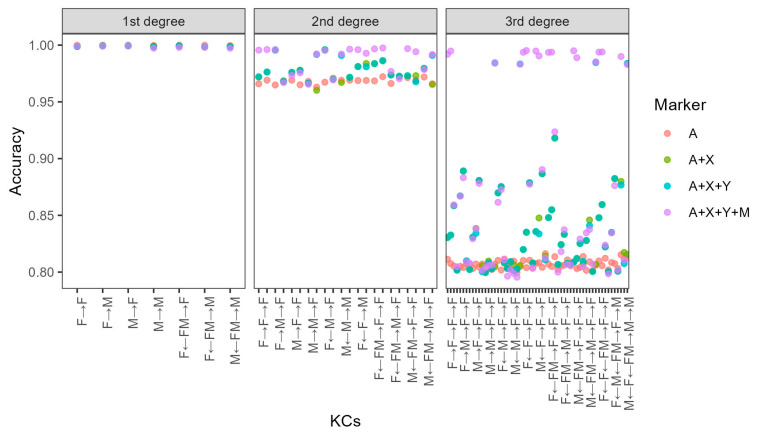 Figure 4
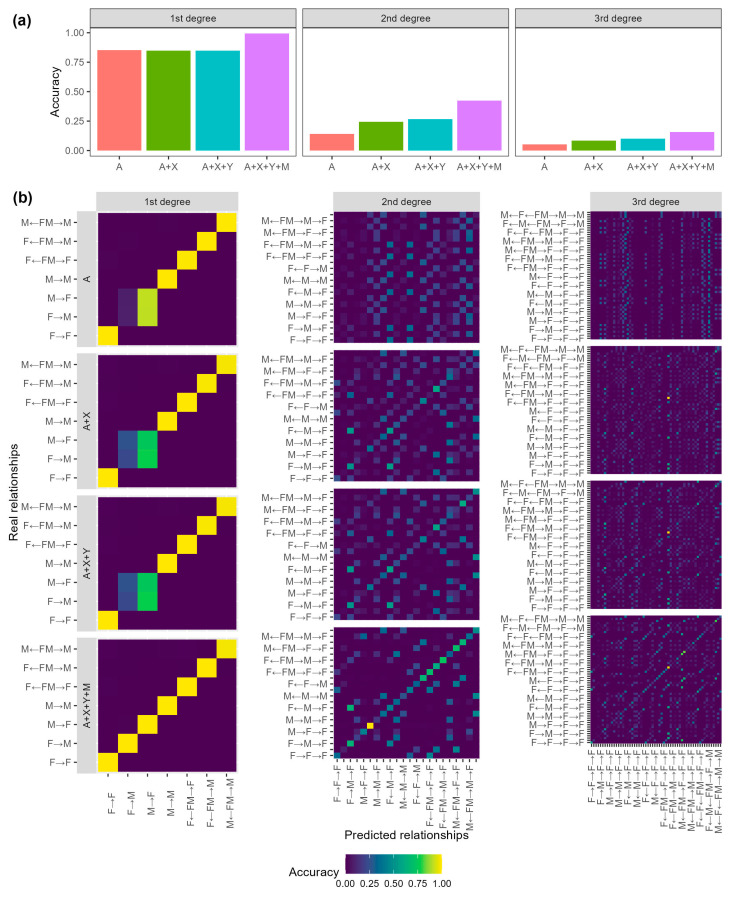 Figure 5
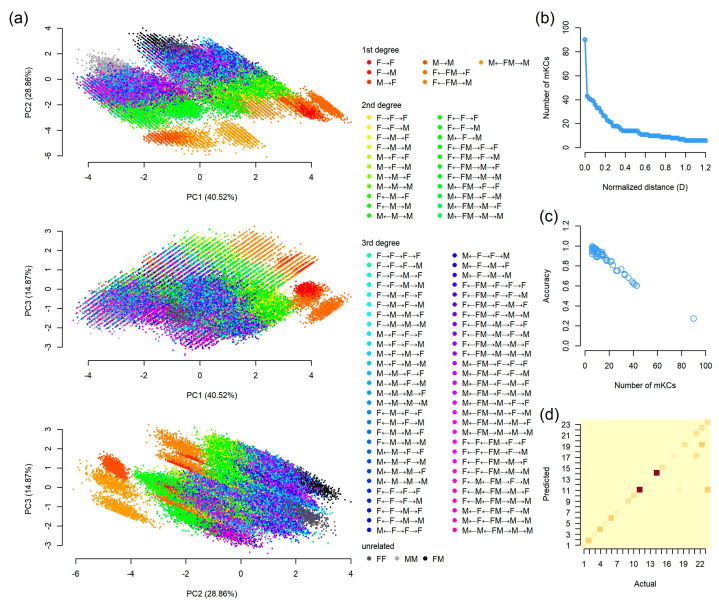 Figure 6
Peer Reviews
No public reviews on file for this paper yet. If you reviewed it on a platform where reviews are public (OpenReview, ICLR, NeurIPS, ICML), you can paste yours below so the community can read it here.
Videos
No videos yet. Explain this paper in a talk, walkthrough, or lecture? Add one.
Taxonomy
TopicsForensic and Genetic Research · Forensic Anthropology and Bioarchaeology Studies