Role of Thalamic CaV3.1 T-Channels in Fear Conditioning
Tamara Timic Stamenic, Srdjan M. Joksimovic, Brier Fine-Raquet, Vasilije P. Tadic, Vesna Tesic, Vesna Jevtovic-Todorovic, Slobodan M. Todorovic

TL;DR
This study explores how a specific calcium channel in the thalamus affects fear responses, suggesting it could be a target for treating psychiatric disorders.
Contribution
The study identifies thalamic CaV3.1 T-channels as a novel target for psychiatric diseases through genetic and molecular approaches.
Findings
Global CaV3.1 KO mice showed increased freezing during fear conditioning and testing.
CMT-specific CaV3.1 KD mice had increased fear responses only during testing.
Thalamic CaV3.1 T-channels may be a new target for treating psychiatric disorders.
Abstract
The potential contribution of the ion channels that control the excitability of the midline and intralaminar nuclei of the thalamus to the modulation of behaviors has not been well studied. In this study, we used both global genetic deletion (knock-out, KO) and thalamus-specific molecular knock-down (KD) approaches to investigate the role of thalamic CaV3.1 T-type calcium channels (T-channels) in fear learning and fear responses. Previously, we have shown that the dominant subtype of T-channels in the central medial nucleus of the thalamus (CMT) is the CaV3.1 isoform and that CMT neurons from CaV3.1 KO animals have decreased burst firing. By specifically knocking down CaV3.1 T-channels in the CMT using the shRNA approach, we also reduced burst firing without affecting the tonic firing mode of the transfected neurons. We report that global CaV3.1 KO animals showed stronger freezing…
Genes, proteins, chemicals, diseases, species, mutations and cell lines named across the full text — each resolved to its canonical identifier and authoritative record.
Click any figure to enlarge with its caption.
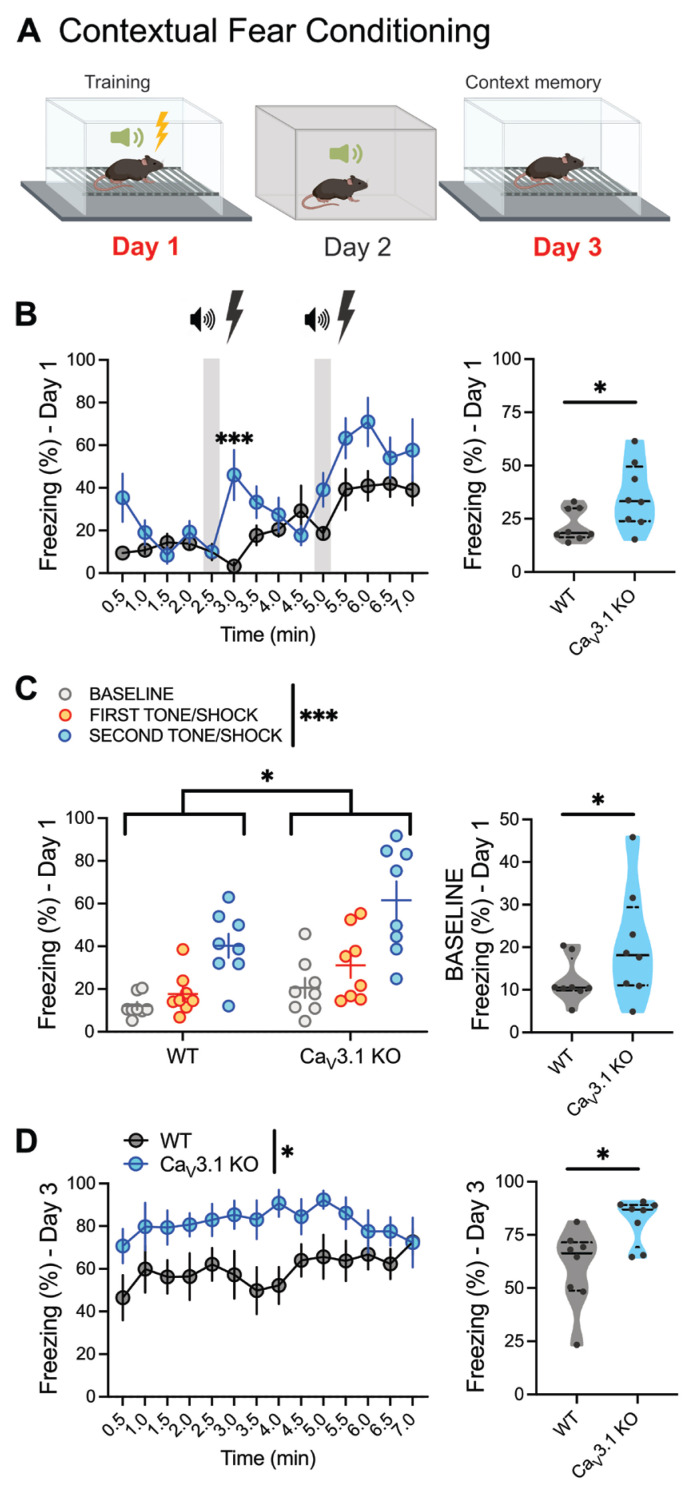 Figure 1
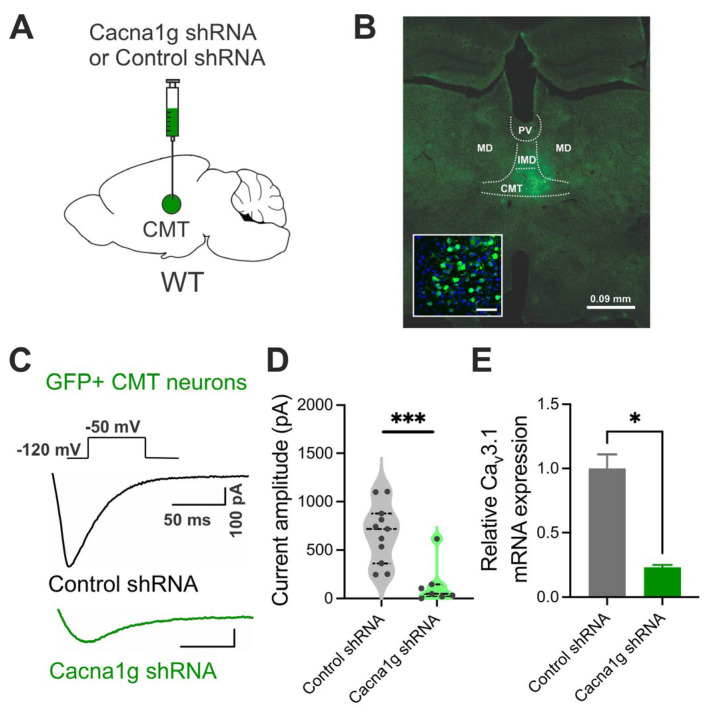 Figure 2
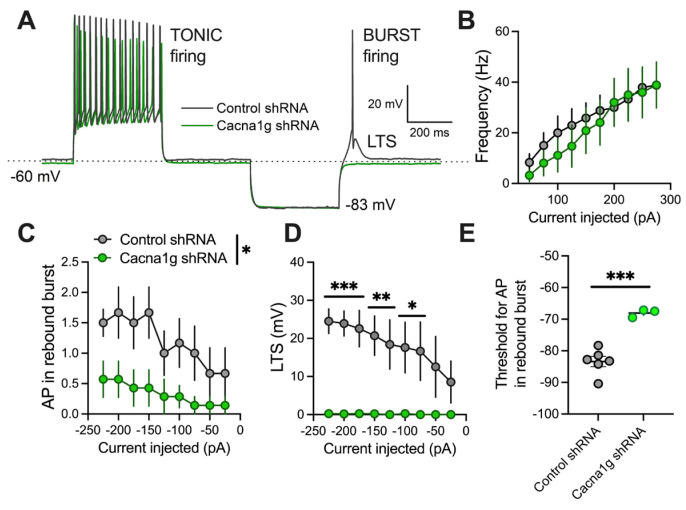 Figure 3
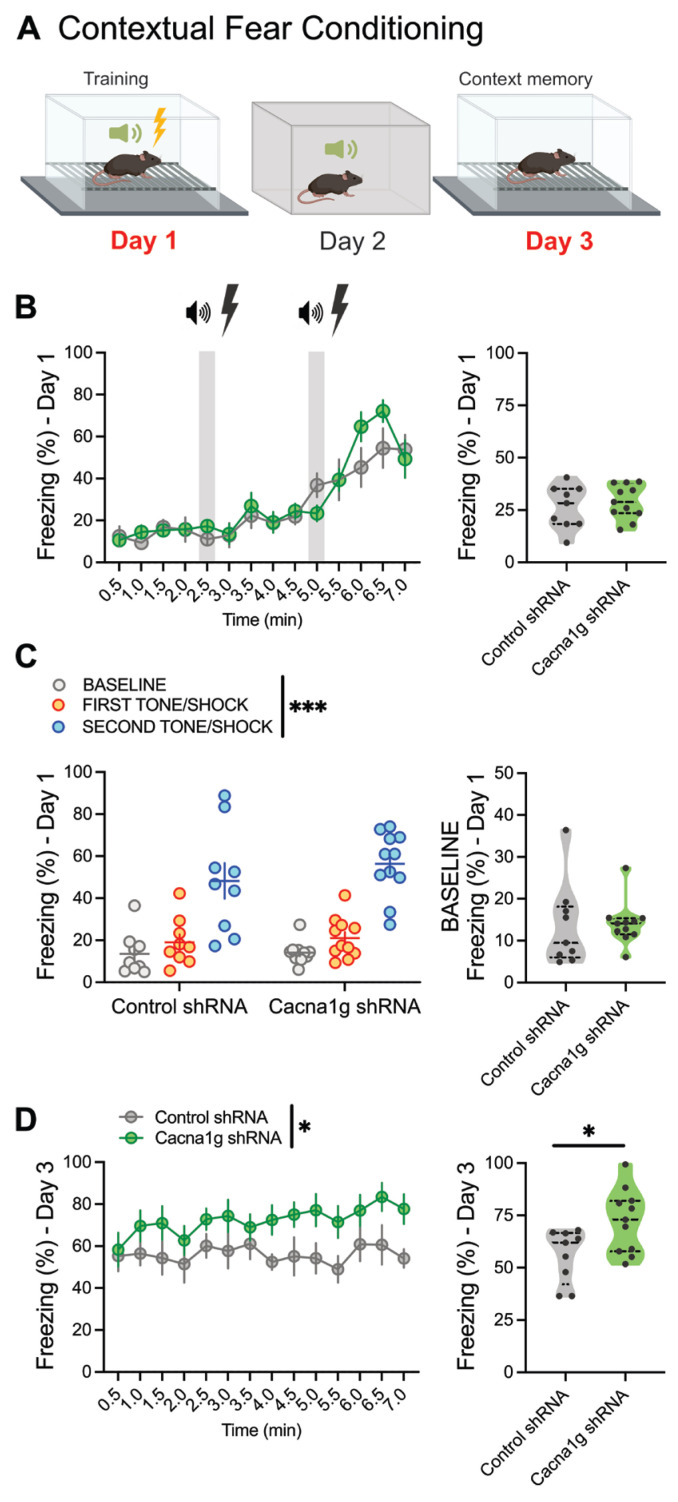 Figure 4
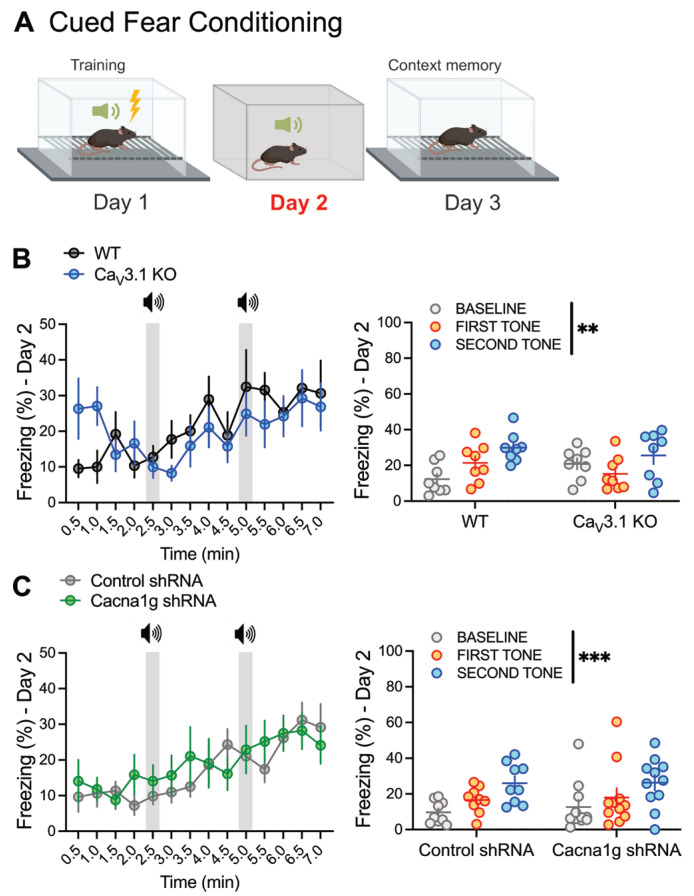 Figure 5
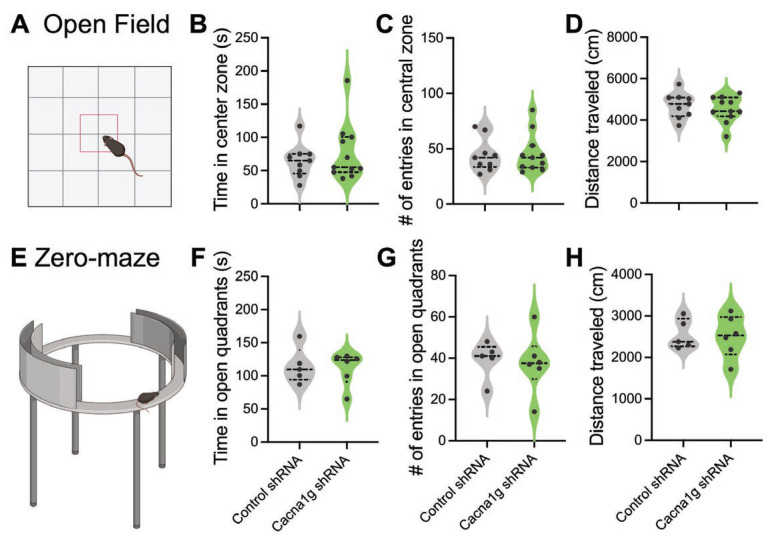 Figure 6
Peer Reviews
No public reviews on file for this paper yet. If you reviewed it on a platform where reviews are public (OpenReview, ICLR, NeurIPS, ICML), you can paste yours below so the community can read it here.
Videos
No videos yet. Explain this paper in a talk, walkthrough, or lecture? Add one.
Taxonomy
TopicsIon channel regulation and function · Neural dynamics and brain function · Neuroscience and Neuropharmacology Research