A Quasi-Experimental Controlled Study to Evaluate the Effects of a Kinesiologic Approach—The Canali Postural Method—To Posture Reprogramming for Non-Specific Low Back Pain
Saverio Sabina, Daria Monteleone, Pierpaolo Mincarone, Patrizia Maiorano, Roberto Guarino, Maria Rosaria Tumolo, Carlo Giacomo Leo, Antonio Giordano, Mirko Zisi

TL;DR
This study compares a personalized postural reprogramming method (CPM) to generic exercises for non-specific low back pain, finding that CPM provides better pain relief and disability improvement.
Contribution
The study introduces a novel kinesiological method (CPM) for postural reprogramming and demonstrates its superior effectiveness over generic exercises for NSLBP.
Findings
The CPM group experienced significantly greater pain relief immediately after and 3 months post-intervention.
The CPM group showed superior improvement in disability perception at the 3-month follow-up.
Results suggest CPM enhances motor control and quality of life for individuals with NSLBP.
Abstract
Background/Objectives: Low back pain (LBP) is the leading cause of disability worldwide, with most cases classified as non-specific low back pain (NSLBP). Various treatments exist, among which are physical exercises that promote flexibility, mobility and core stabilization, improving muscle function and body posture. The Canali Postural Method (CPM) is a kinesiological method that offers a personalized approach to postural reprogramming. This study compares the effects of the CPM and generic exercises in individuals with NSLBP. Methods: Subjects with NSLBP were engaged in a four-week intervention either based on a CPM reprogramming phase (CPM group) or generic exercises for the control group (CG). The CPM group underwent an assessment phase to identify the possible musculoskeletal causes of compensatory postural arrangements. The functional disability and pain level were assessed…
Genes, proteins, chemicals, diseases, species, mutations and cell lines named across the full text — each resolved to its canonical identifier and authoritative record.
Click any figure to enlarge with its caption.
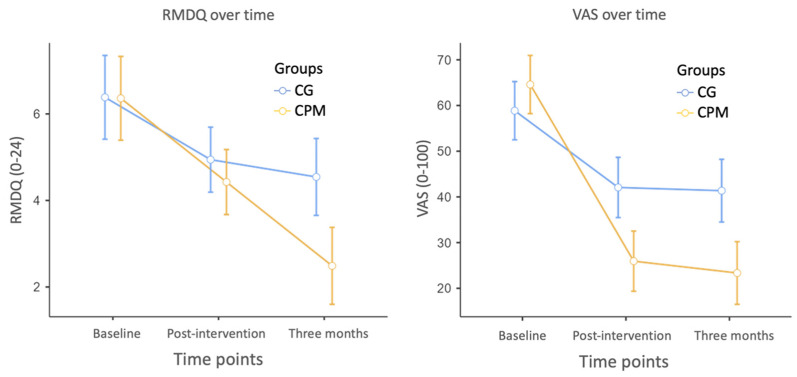 Figure 1
Peer Reviews
No public reviews on file for this paper yet. If you reviewed it on a platform where reviews are public (OpenReview, ICLR, NeurIPS, ICML), you can paste yours below so the community can read it here.
Videos
No videos yet. Explain this paper in a talk, walkthrough, or lecture? Add one.
Taxonomy
TopicsMusculoskeletal pain and rehabilitation · Spine and Intervertebral Disc Pathology · Myofascial pain diagnosis and treatment