Novel Filaggrin Variants Are Associated with Ichthyosis Vulgaris in Mexicans
Luz María González-Huerta, Francisco Gabino Zúñiga-Rodríguez, Valeria Isabel Valerio-Gómez, Andrea Aida Velasco-Medina, María del Refugio Rivera-Vega, Edgar Hernández-Zamora, Jaime Toral-López

TL;DR
This study identifies new genetic variants in the FLG gene linked to ichthyosis vulgaris in Mexican patients, highlighting the prevalence of a specific mutation.
Contribution
The study reports novel FLG gene variants associated with ichthyosis vulgaris in the Mexican population.
Findings
The R501* variant was found in 15 out of 18 sporadic IV cases.
Four new FLG variants (p.Q2123R, p.H2118R, p.D2120E, p.S3970L) were identified.
Novel homozygous and heterozygous variants were found in family members.
Abstract
Background/Objective: Ichthyosis vulgaris (IV) is a genodermatosis caused by heterozygous, homozygous, or compound heterozygous variants in the filaggrin (FLG) gene on chromosome 1q21, which also predispose individuals to atopic dermatitis. Its incidence is 1 in 80–250 children. The phenotypic characteristics include palmar hyperlinearity, keratosis pilaris, and a fine scale that is most prominent over the lower abdomen, arms, and legs. Our objective was to study the genetic variants in the FLG gene and their associations in patients with ichthyosis vulgaris. Material and methods: Here, we studied eighteen Mexican sporadic cases and four family members with IV. Steroid sulfatase (STS) enzymatic activity, polymerase chain reaction (PCR), and direct sequencing on the FLG gene were conducted. Results: We found the recurrent heterozygous variant R501* in fifteen sporadic cases, while the…
Genes, proteins, chemicals, diseases, species, mutations and cell lines named across the full text — each resolved to its canonical identifier and authoritative record.
Click any figure to enlarge with its caption.
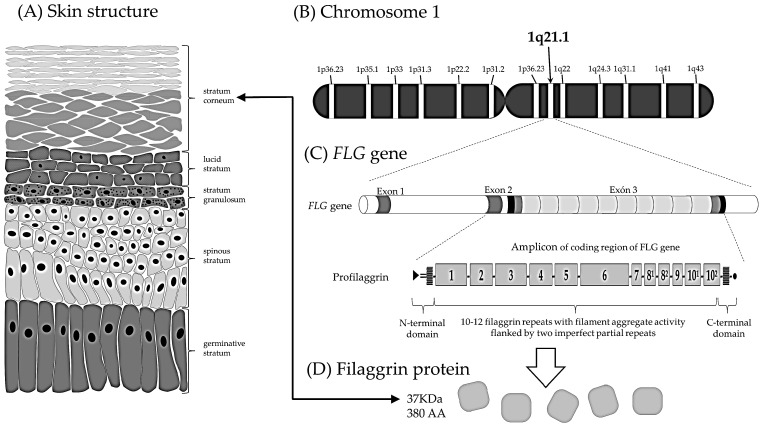 Figure 1
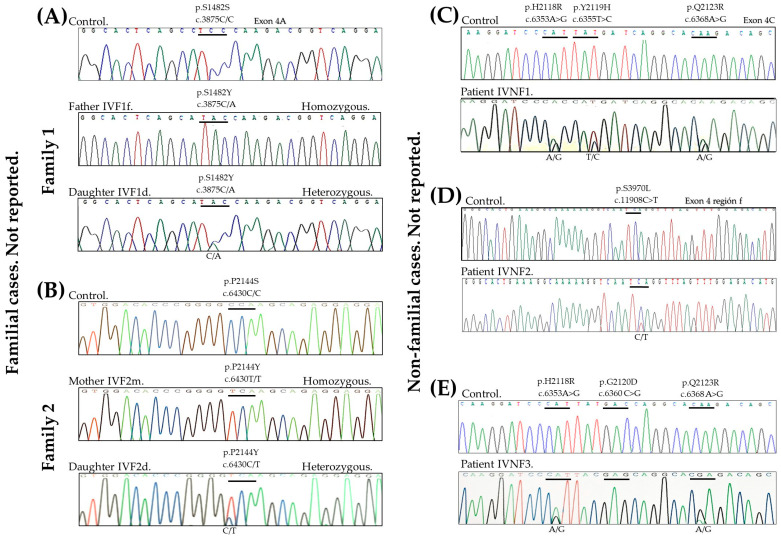 Figure 2
 Figure 3
 Figure 4
Peer Reviews
No public reviews on file for this paper yet. If you reviewed it on a platform where reviews are public (OpenReview, ICLR, NeurIPS, ICML), you can paste yours below so the community can read it here.
Videos
No videos yet. Explain this paper in a talk, walkthrough, or lecture? Add one.
Taxonomy
TopicsDermatology and Skin Diseases · Transgenic Plants and Applications · Food Allergy and Anaphylaxis Research