High-Efficiency Enrichment of Megakaryocytes and Identification of Micromegakaryocytes from Human Bone Marrow by Imaging Flow Cytometry
Maya Nautrup Pedersen, Trine Engelbrecht Hybel, Jens Haugbølle Bjerre, Anne Sofie Borg Hammer, Anja Bille Bohn, Marie Bill, Carina Agerbo Rosenberg, Maja Ludvigsen

TL;DR
This paper introduces a new method to efficiently identify and enrich megakaryocytes in human bone marrow using imaging flow cytometry and machine learning, improving diagnostic accuracy.
Contribution
A novel approach combining CD41 enrichment, immunophenotyping, and a convolutional neural network to enhance megakaryocyte detection and reduce false positives.
Findings
CD41 enrichment increased megakaryocyte frequency nearly 200-fold.
A convolutional neural network reduced false positives by 94.9%.
The method enables accurate detection of both mature and immature megakaryocytes.
Abstract
Megakaryocytes (MKs) are rare, large, polyploid bone marrow (BM) cells responsible for the production of platelets. The identification and characterization of MKs is widely recognized as challenging. Manual microscopy is especially difficult due to the rarity and complex morphology of MKs, while flow cytometry faces additional challenges from MKs’ large size, fragility, and platelet adhesion, causing false positives. We present a novel approach to accurately enrich MKs from human BM aspirates with a specific focus on the detection and quantification of microMKs. By integrating CD41+ cell enrichment, immunophenotyping, and morphometric analysis, we identified cells of the megakaryocytic lineage. To increase accuracy, a convolutional neural network was trained to identify CD41− cells falsely displaying an MK-like immunophenotype due to adhesive CD41+ platelets. This allowed for exclusion…
Genes, proteins, chemicals, diseases, species, mutations and cell lines named across the full text — each resolved to its canonical identifier and authoritative record.
Click any figure to enlarge with its caption.
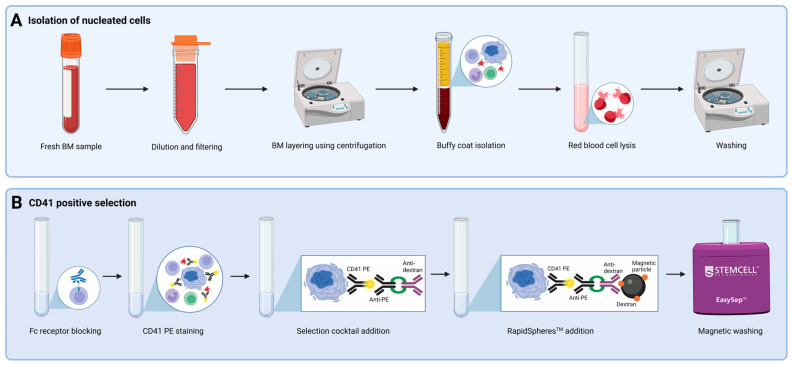 Figure 1
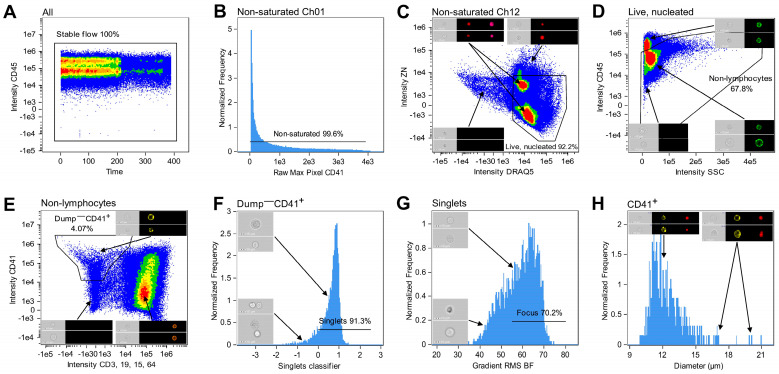 Figure 2
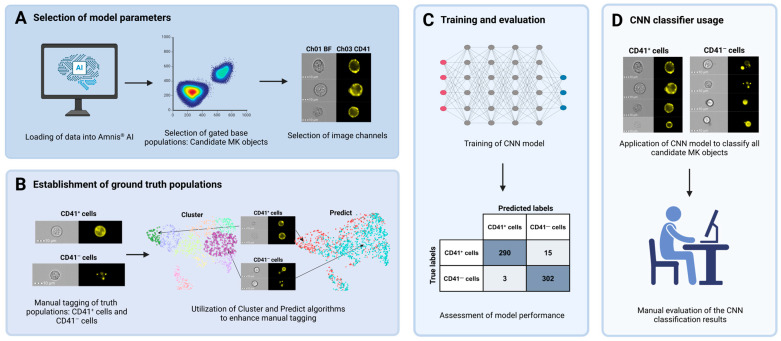 Figure 3
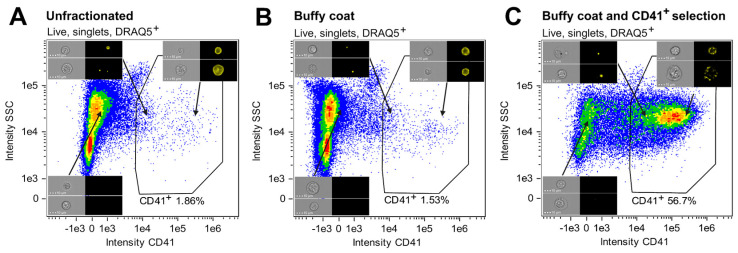 Figure 4
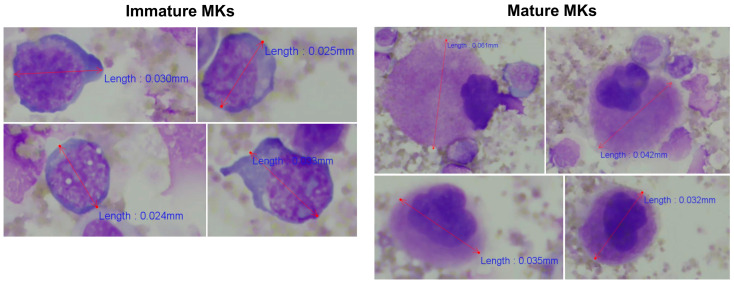 Figure 5
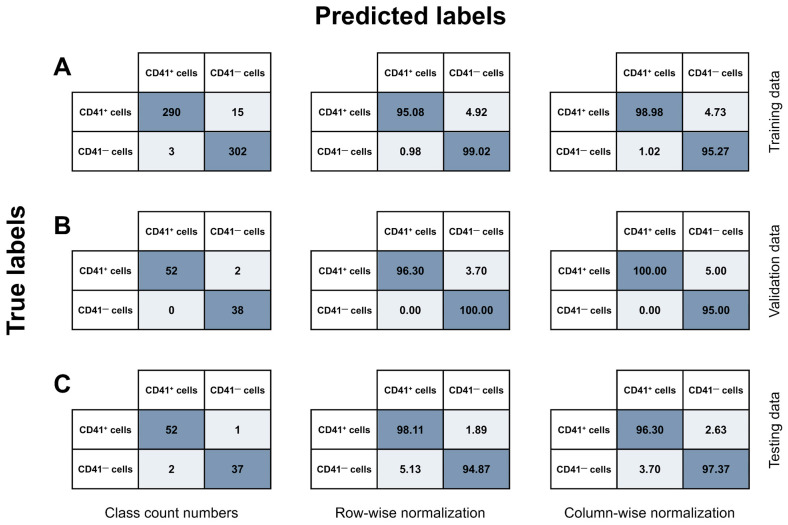 Figure 6
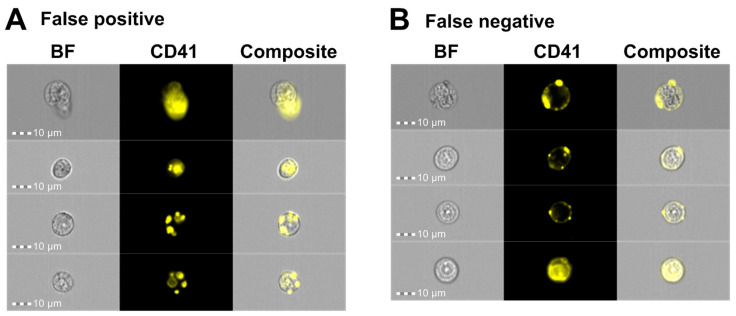 Figure 7
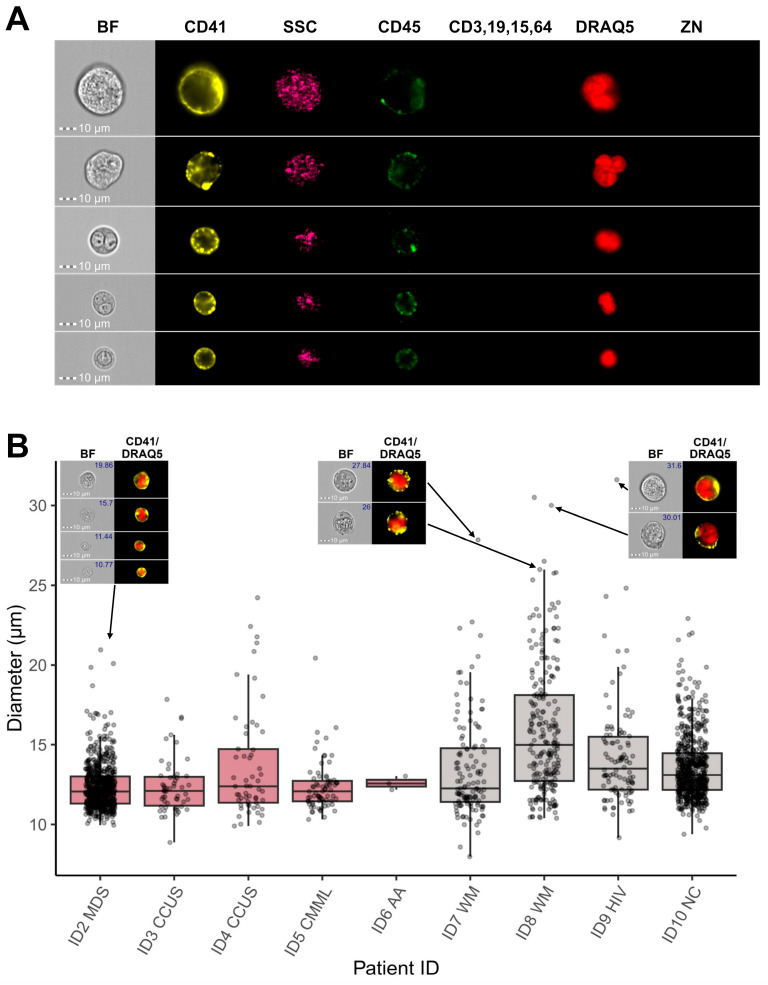 Figure 8
Peer Reviews
No public reviews on file for this paper yet. If you reviewed it on a platform where reviews are public (OpenReview, ICLR, NeurIPS, ICML), you can paste yours below so the community can read it here.
Videos
No videos yet. Explain this paper in a talk, walkthrough, or lecture? Add one.
Taxonomy
TopicsAcute Myeloid Leukemia Research · Hematopoietic Stem Cell Transplantation · Neutrophil, Myeloperoxidase and Oxidative Mechanisms