Bit-Level Construction for Multiplicative-Repetition-Based Non-Binary Polar Codes
Rongchi Xu, Peiyao Chen, Ling Liu, Min Zhu, Baoming Bai

TL;DR
This paper introduces a new bit-level construction method for non-binary polar codes that improves decoding performance by optimizing bit allocation in synthesized channels.
Contribution
The novel bit-level construction method for MR-based non-binary polar codes optimizes bit allocation using error probability and channel capacity.
Findings
Bit-level construction improves decoding performance compared to conventional symbol-level methods.
A Monte-Carlo method reduces complexity in determining optimal bit allocation.
Probabilistic shaping further enhances performance in MR-based non-binary polar codes.
Abstract
In this paper, we discuss non-binary polar codes using a 2×2 matrix over a Galois field GF(2q) as the kernel. Conventional construction of non-binary polar codes divides the synthesized channels into frozen channels and information channels. Each information channel carries one symbol, i.e., q bits. However, there are many middle channels with insufficient polarization, which cannot carry one symbol of q bits but only i bits, 1≤i<q,i∈Z, at finite block length. In this paper, we consider bit-level construction for multiplicative repetition (MR)-based non-binary polar codes and propose a bit-level construction based on the two following methods. We first calculate the error probability and channel capacity lower bound of each synthesized channel based on the channel degradation method, and then determine both the number and index of the carried bits for each synthesized channel according…
Genes, proteins, chemicals, diseases, species, mutations and cell lines named across the full text — each resolved to its canonical identifier and authoritative record.
Click any figure to enlarge with its caption.
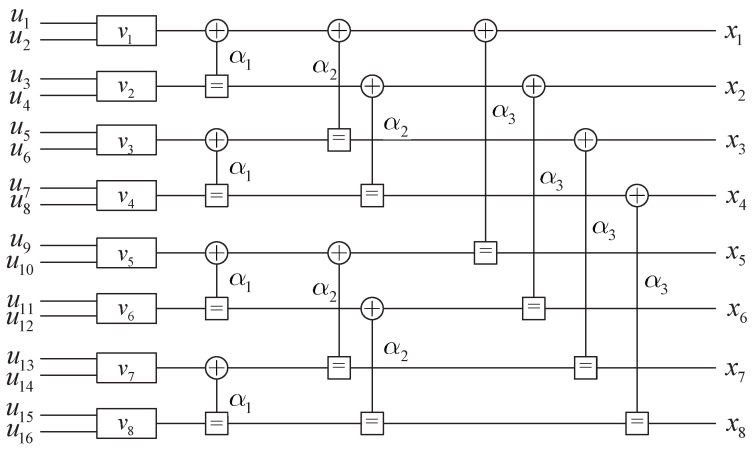 Figure 1
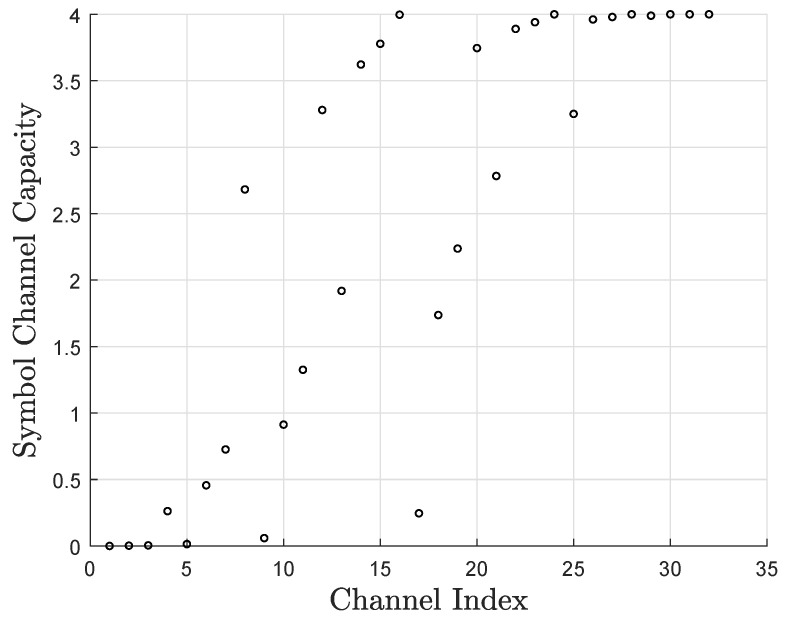 Figure 2
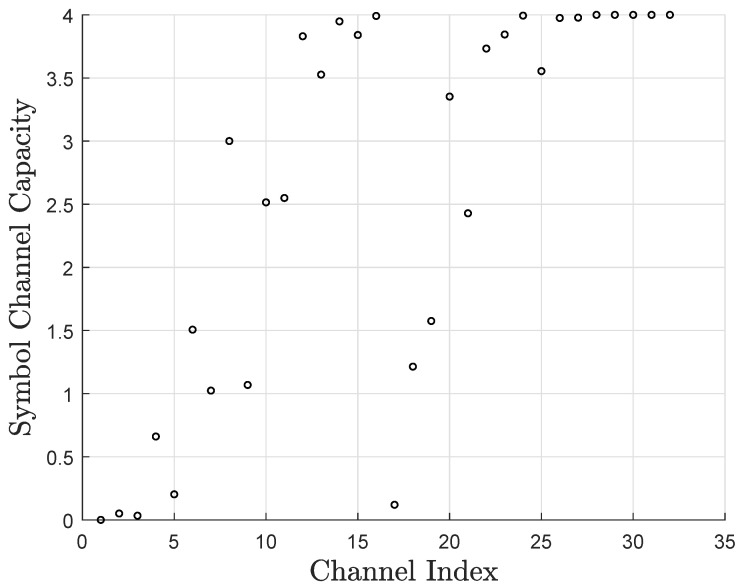 Figure 3
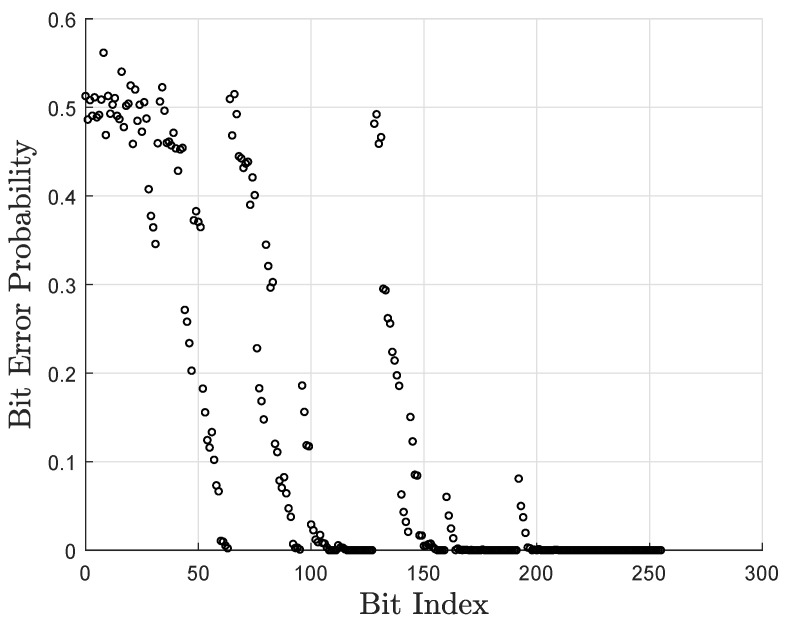 Figure 4
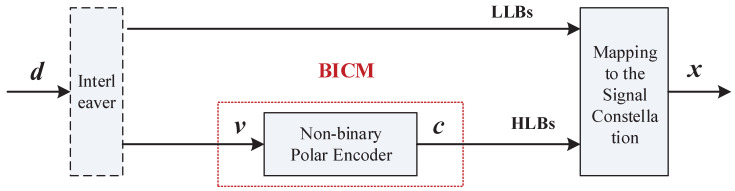 Figure 5
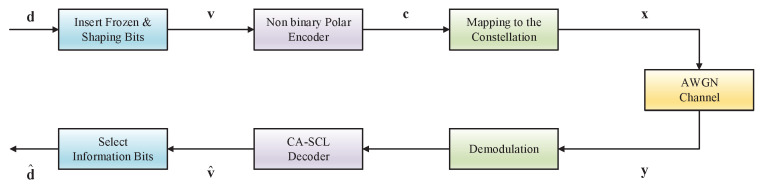 Figure 6
 Figure 7
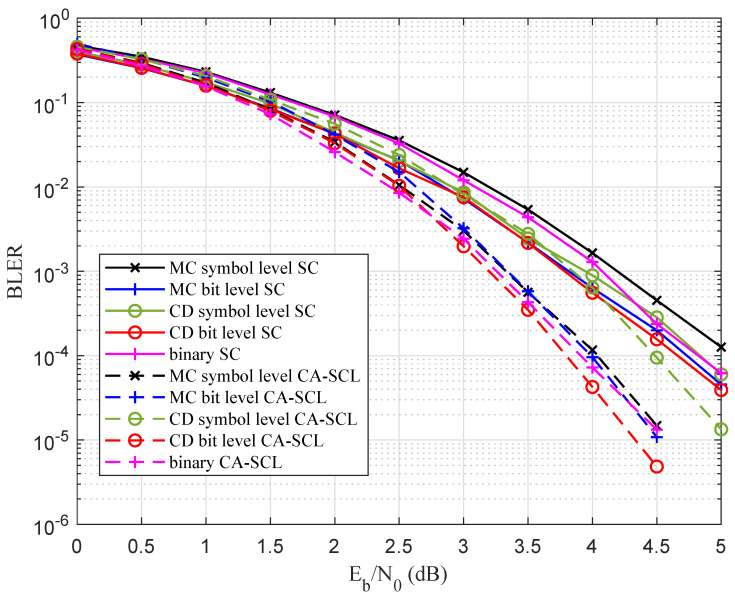 Figure 8
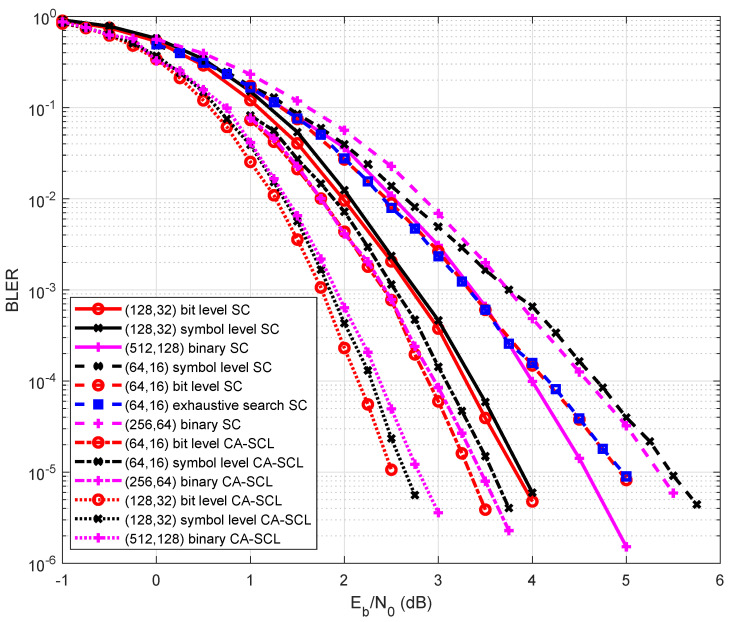 Figure 9
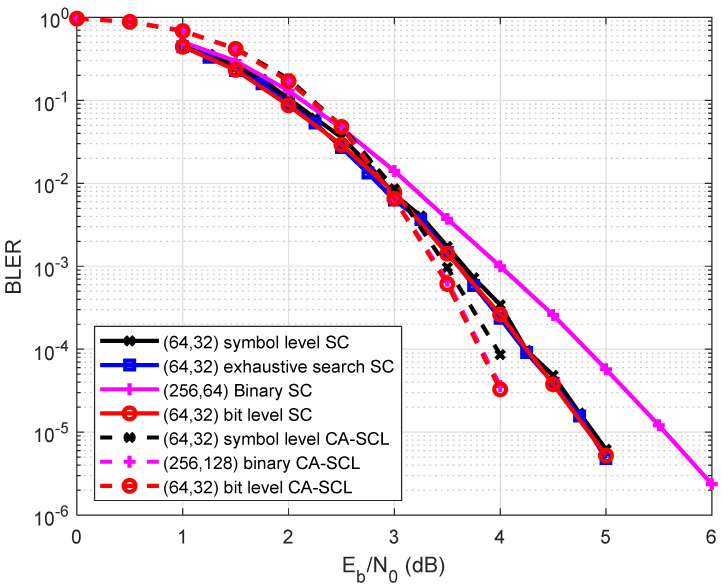 Figure 10
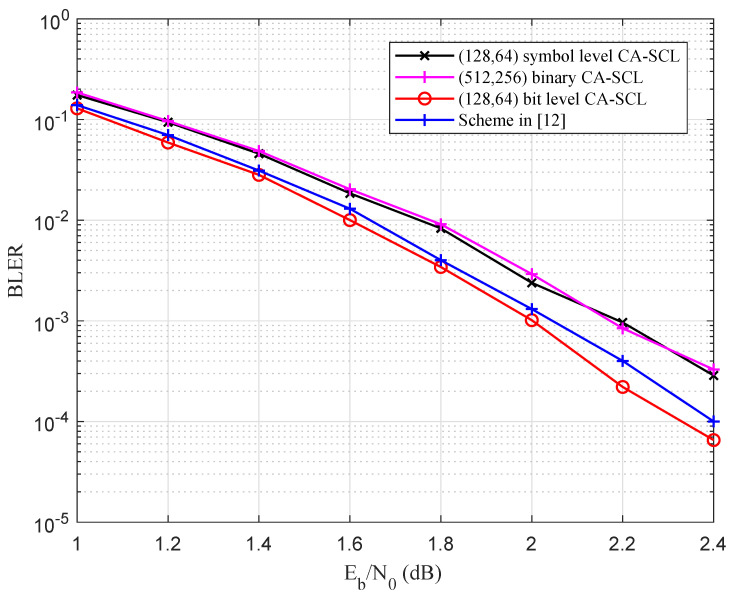 Figure 11
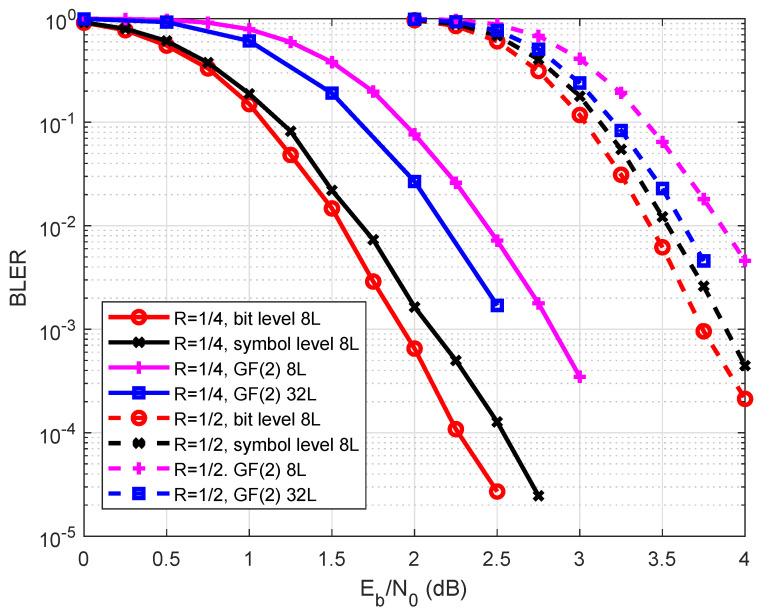 Figure 12
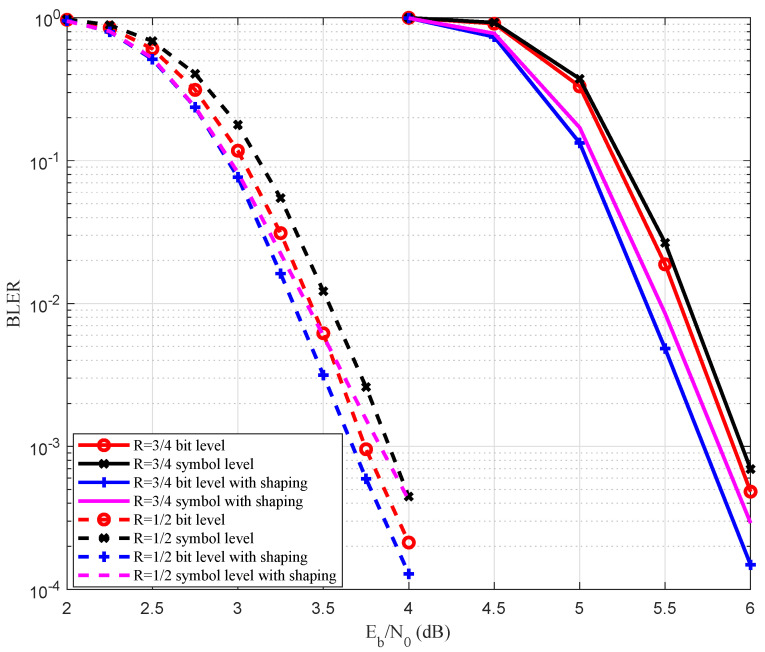 Figure 13
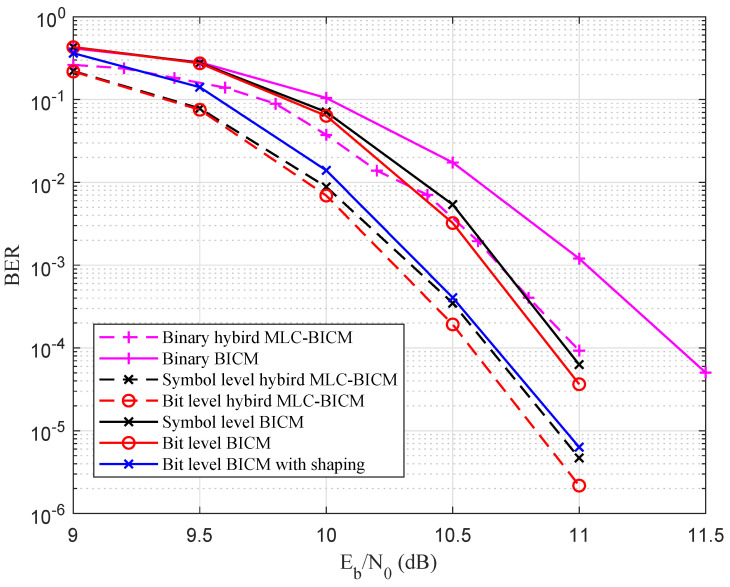 Figure 14
Peer Reviews
No public reviews on file for this paper yet. If you reviewed it on a platform where reviews are public (OpenReview, ICLR, NeurIPS, ICML), you can paste yours below so the community can read it here.
Videos
No videos yet. Explain this paper in a talk, walkthrough, or lecture? Add one.
Taxonomy
TopicsError Correcting Code Techniques · Coding theory and cryptography · Advanced Wireless Communication Techniques