The ‘Surprise’ Question in Haemato-Oncology: The Estimating Physician and Time to Death Reduce the Prognostic Uncertainty—An Observational Study
Christina Gerlach, Martin Weber, Irene Schmidtmann

TL;DR
This study shows that the 'Surprise' Question, used to identify patients who may benefit from palliative care, is less effective for those with blood cancers compared to solid tumors, and its accuracy depends more on the physician than on patient factors.
Contribution
The first validation of the 'Surprise' Question in haemato-oncology outpatients, revealing its limited sensitivity for haematological malignancies and physician-dependent accuracy.
Findings
The 'Surprise' Question had low sensitivity (0.23) for haematological malignancies, missing 77% of patients in their last year of life.
Physician factors, not patient characteristics, were the main influence on the accuracy of the 'Surprise' Question.
The tool's predictive value for survivors was high (94%), preventing premature palliative care for those with better prognoses.
Abstract
The ‘Surprise’ Question, an intuitive instrument used to estimate a patient’s survival, has been tested in different entities and settings. Despite the limitations in its accuracy, it has been recommended for the early integration of palliative care because the tool is suitable for triggering reflection on the patient’s overall situation. For the first time, we validated the ‘Surprise’ Question in haemato-oncology outpatients. The test sensitivity was poor for haematological malignancies (0.23) compared to solid tumours (0.58), i.e., many haematology patients in their last year of life were not identified (77%), but the specificity and predictive value for the survivors were safe, preventing patients with a better prognosis from receiving palliative care too early (94%). Notably, the accuracy of the ‘Surprise’ Question depended on the estimating physician rather than on objective…
Genes, proteins, chemicals, diseases, species, mutations and cell lines named across the full text — each resolved to its canonical identifier and authoritative record.
Click any figure to enlarge with its caption.
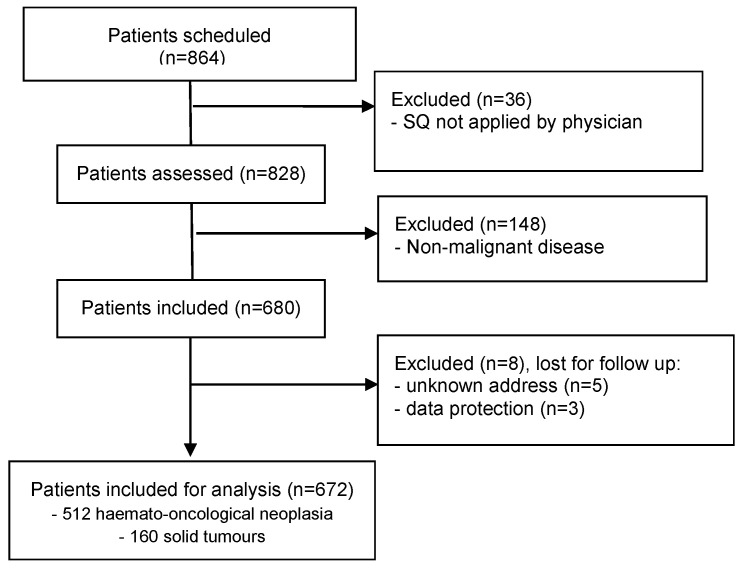 Figure 1
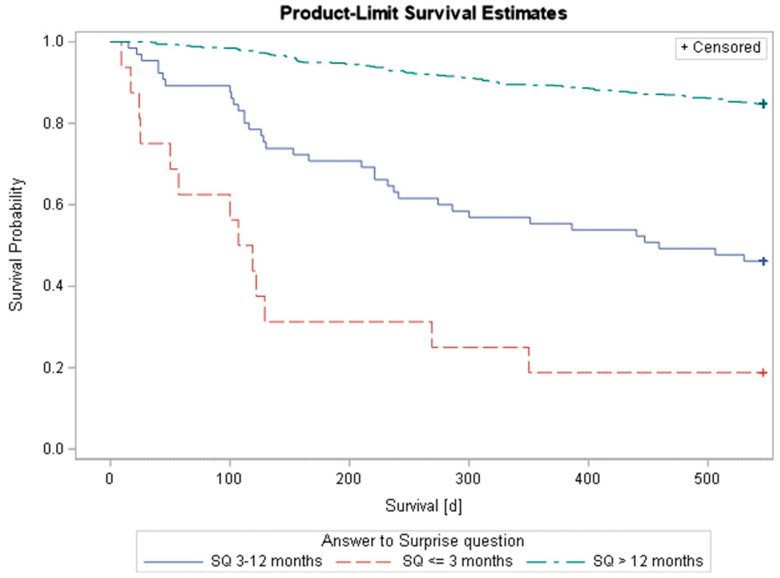 Figure 2
Peer Reviews
No public reviews on file for this paper yet. If you reviewed it on a platform where reviews are public (OpenReview, ICLR, NeurIPS, ICML), you can paste yours below so the community can read it here.
Videos
No videos yet. Explain this paper in a talk, walkthrough, or lecture? Add one.
Taxonomy
TopicsPalliative Care and End-of-Life Issues · Childhood Cancer Survivors' Quality of Life · Cancer survivorship and care