Short-Term Observation of Heart Rate and Oxygen Saturation in Relation to Masticatory Muscle Activity in Temporomandibular Disorders
Grzegorz Zieliński, Michał Ginszt, Marcin Wójcicki, Jacek Szkutnik, Monika Litko-Rola, Piotr Gawda

TL;DR
This study found that TMD patients have higher resting muscle activity in the temporalis muscle, which correlates with increased oxygen saturation.
Contribution
The study reveals a novel link between masticatory muscle activity and oxygen saturation in TMD patients.
Findings
TMD patients showed a positive correlation between temporalis muscle activity and oxygen saturation.
Increased muscle tension in TMD patients may lead to higher energy and oxygen demands in the temporalis muscle.
The correlation suggests a potential hypermetabolism in the temporalis muscle at rest in TMD patients.
Abstract
(1) Background: The present study was designed to analyze the relationship between masticatory muscle activity, oxygen body saturation, and heart rate in patients with temporomandibular disorders (TMDs). (2) Methods: A total of 104 individuals with a painful form of TMDs were included in the study, consisting of 72 women and 32 men, with an average age of 24 ± 3 years. The control group included 77 individuals, comprising 44 women and 33 men, with an average age of 24 ± 3 years. An electromyographic study was conducted at rest, focusing on the temporalis (TA) and masseter muscles, alongside an oxygen saturation and heart rate analysis using a pulse oximeter. (3) Results: Analysis of the correlations between oxygen saturation and the studied muscles revealed a positive correlation between the resting activity of the TA and oxygen saturation, with a small effect size in the TMDs group.…
Genes, proteins, chemicals, diseases, species, mutations and cell lines named across the full text — each resolved to its canonical identifier and authoritative record.
Click any figure to enlarge with its caption.
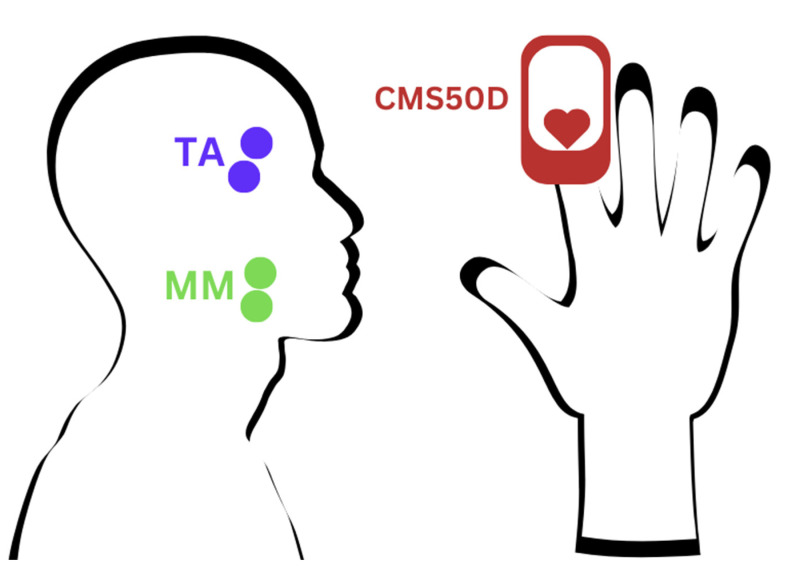 Figure 1
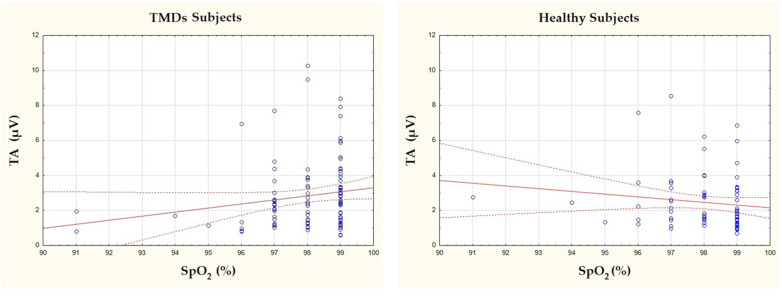 Figure 2
Peer Reviews
No public reviews on file for this paper yet. If you reviewed it on a platform where reviews are public (OpenReview, ICLR, NeurIPS, ICML), you can paste yours below so the community can read it here.
Videos
No videos yet. Explain this paper in a talk, walkthrough, or lecture? Add one.
Taxonomy
TopicsTemporomandibular Joint Disorders · Obstructive Sleep Apnea Research · Botulinum Toxin and Related Neurological Disorders