LRG1 Alters Pericyte Phenotype and Compromises Vascular Maturation
Alexandra E. Hoeh, Jui-Hsien Chang, Ronja S. Mueller, Mark Basche, Alessandro Fantin, Anastasios Sepetis, Giulia De Rossi, Athina Dritsoula, Robin R. Ali, Patric Turowski, Stephen E. Moss, John Greenwood

TL;DR
LRG1 disrupts retinal blood vessel development, leading to weaker and leakier blood vessels, suggesting it could be a target for treating diseases with abnormal blood vessel growth.
Contribution
The study demonstrates that LRG1 interferes with vascular maturation in retinal development, identifying it as a potential therapeutic target for angiopathy-related diseases.
Findings
Exogenous LRG1 reduces pericyte coverage and NG2 expression in retinal blood vessels.
LRG1 compromises collagen IV sheathing and reduces vessel calibre and vascular density.
LRG1 increases blood-retinal barrier permeability and transcytotic vesicles in endothelial cells.
Abstract
Upregulation of leucine-rich alpha-2-glycoprotein-1 (LRG1) contributes to aberrant neovascularization in many different diseases. In contrast, LRG1 is not involved in developmental angiogenesis. Here, we investigated the vasculopathic properties of LRG1 by examining its effect on developing retinal blood vessels. By injecting recombinant protein or an expression vector into the mouse retina during vascular development, we showed that exogenous LRG1 reduces pericyte coverage and NG2 expression. It leads to diminished collagen IV sheathing, fewer adhesion and gap junctions, and reduced vessel calibre and vascular density. Moreover, in mouse retinae containing exogenous LRG1, the developing blood–retinal barrier remains more permeable with significantly higher numbers of transcytotic vesicles present in microvascular endothelial cells. These results reveal that exogeneous LRG1 is…
Genes, proteins, chemicals, diseases, species, mutations and cell lines named across the full text — each resolved to its canonical identifier and authoritative record.
Click any figure to enlarge with its caption.
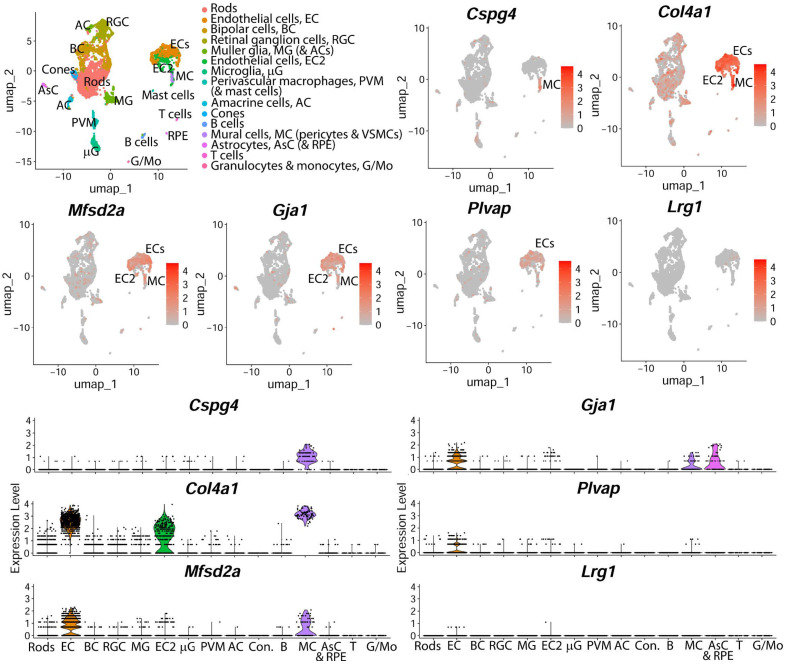 Figure 1
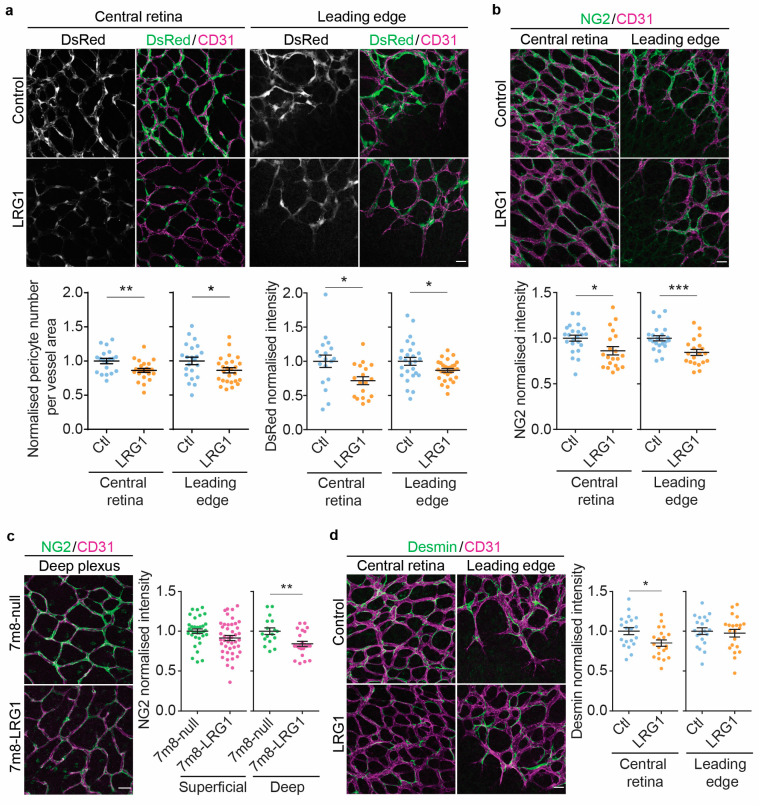 Figure 2
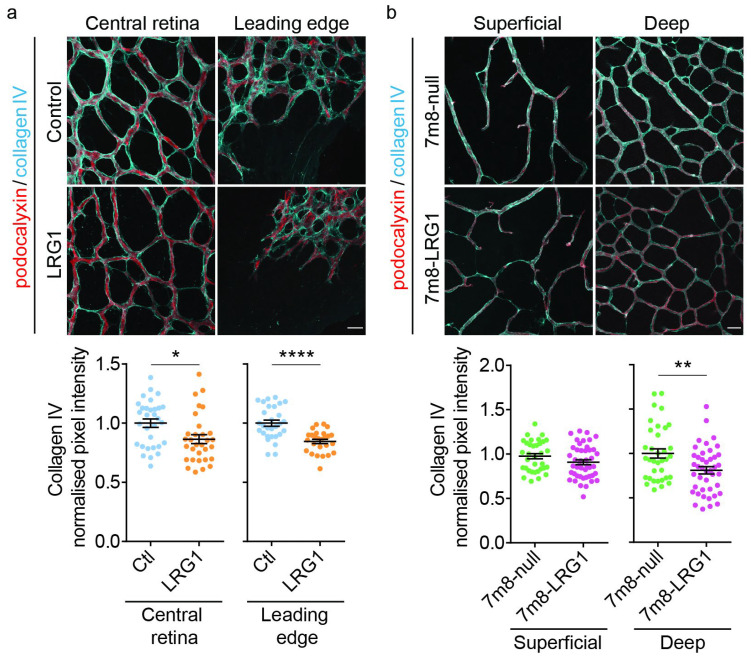 Figure 3
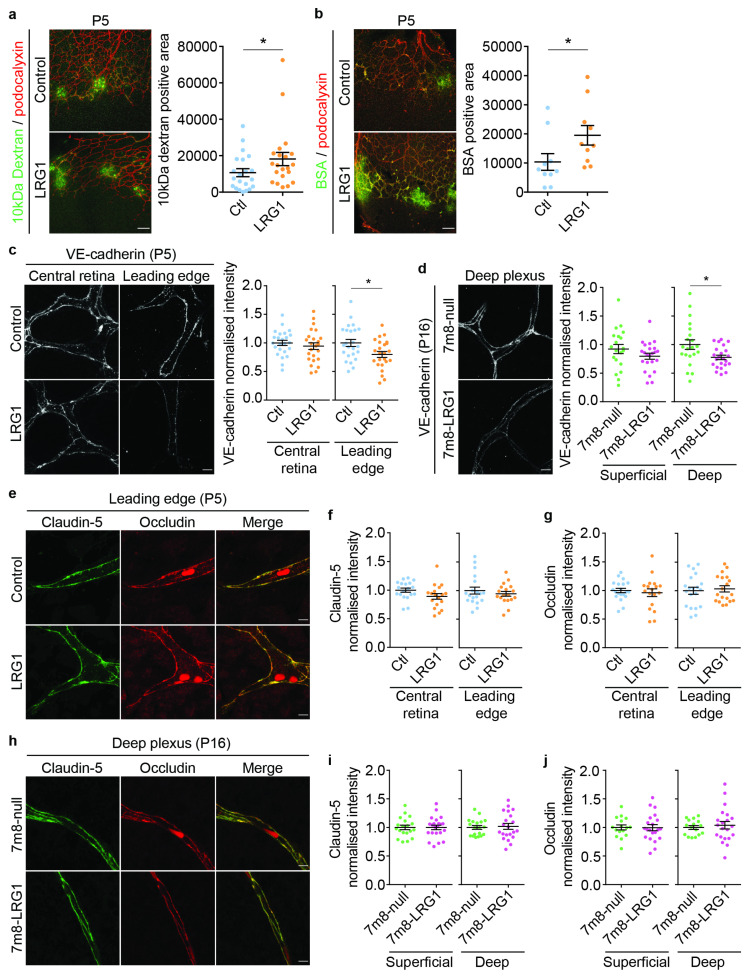 Figure 4
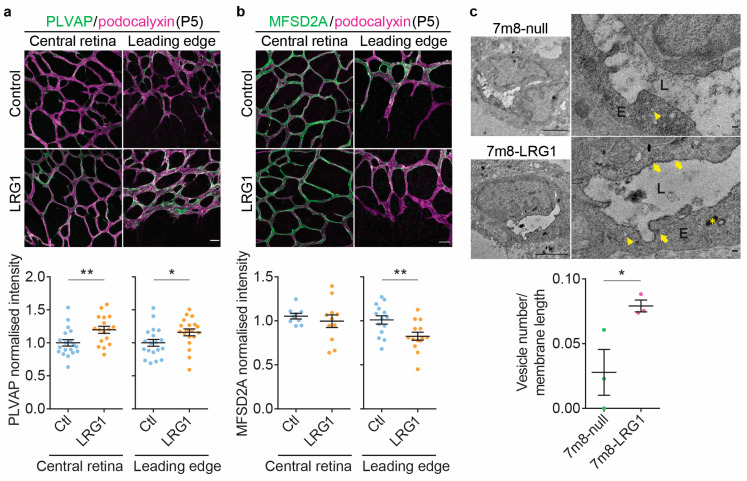 Figure 5
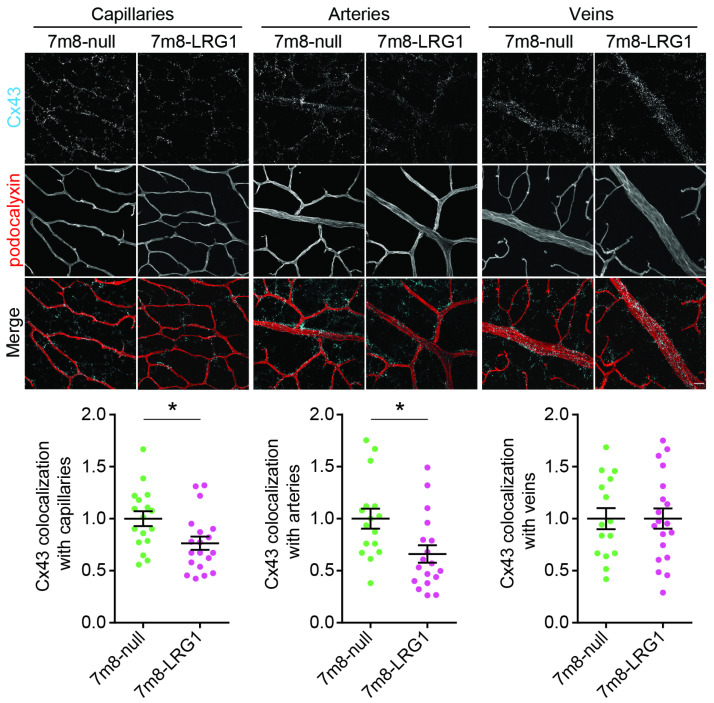 Figure 6
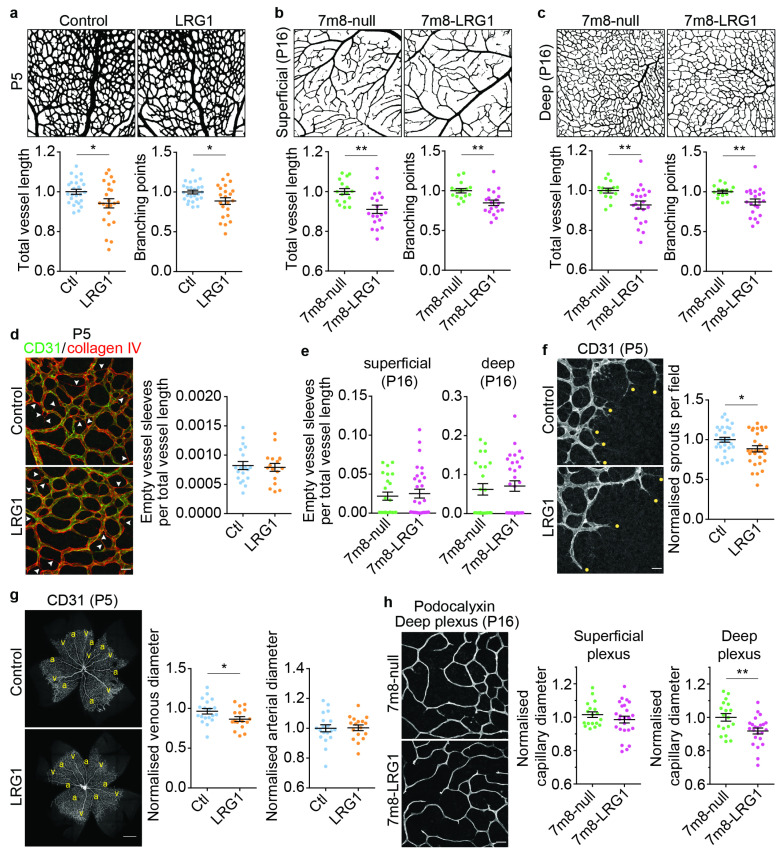 Figure 7
Peer Reviews
No public reviews on file for this paper yet. If you reviewed it on a platform where reviews are public (OpenReview, ICLR, NeurIPS, ICML), you can paste yours below so the community can read it here.
Videos
No videos yet. Explain this paper in a talk, walkthrough, or lecture? Add one.
Taxonomy
TopicsClusterin in disease pathology · Lipid metabolism and disorders · Barrier Structure and Function Studies