Conformational Flexibility of a Lipocalin Allergen (Mus m 1): Implications for Molecular Allergy Diagnostics
Federica Agosta, Thelma A. Pertinhez, Pietro Cozzini, Alberto Spisni, Elena Ferrari

TL;DR
This paper studies how changes in a mouse allergen protein affect its structure and stability, which could help develop better allergy diagnostics and treatments.
Contribution
The study identifies a specific mutation (C138A) that increases the stability and allergenic potential of the Mus m 1 protein.
Findings
The C138A mutation reduces solvent-accessible surface area and α-helix displacement, increasing folding stability.
The C138A mutant maintains allergenic potential and is a promising candidate for diagnostics and vaccines.
MD simulations and HINT analysis revealed structural insights into how mutations affect protein dynamics.
Abstract
Mus m 1 lipocalin is the cause of mouse allergy in sensitized individuals. The production of a soluble, stable, and immunogenic isoform of Mus m 1 is essential for developing new diagnostic tools and immunotherapeutic protocols for treating allergic symptoms. To that end, using molecular dynamics (MD), we explored the impact of substitutions at positions 120 and 138 on the structure and dynamics of the allergic isoform Mus m 1.0102. HINT-based analysis of the MD trajectories, obtained for the mutants Y120F, Y120A, C138S, and C138A, allowed the assessment of the mutations’ impact on the network of intramolecular interactions, providing insights into the mechanisms underlying protein stability, dynamics, and allergenic reactivity. The C138A mutant revealed a reduction in the solvent-accessible surface area in the region of the mutated residue, of the radius of gyration, and of the α-helix…
Genes, proteins, chemicals, diseases, species, mutations and cell lines named across the full text — each resolved to its canonical identifier and authoritative record.
Click any figure to enlarge with its caption.
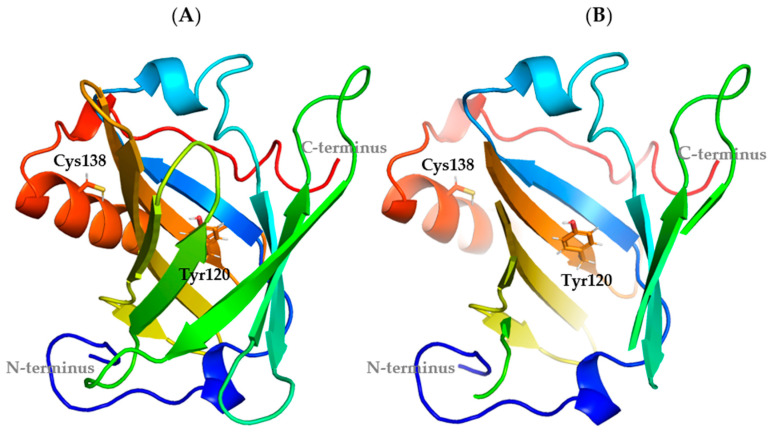 Figure 1
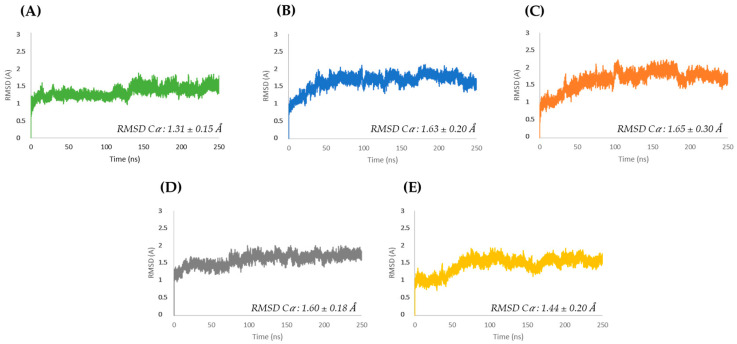 Figure 2
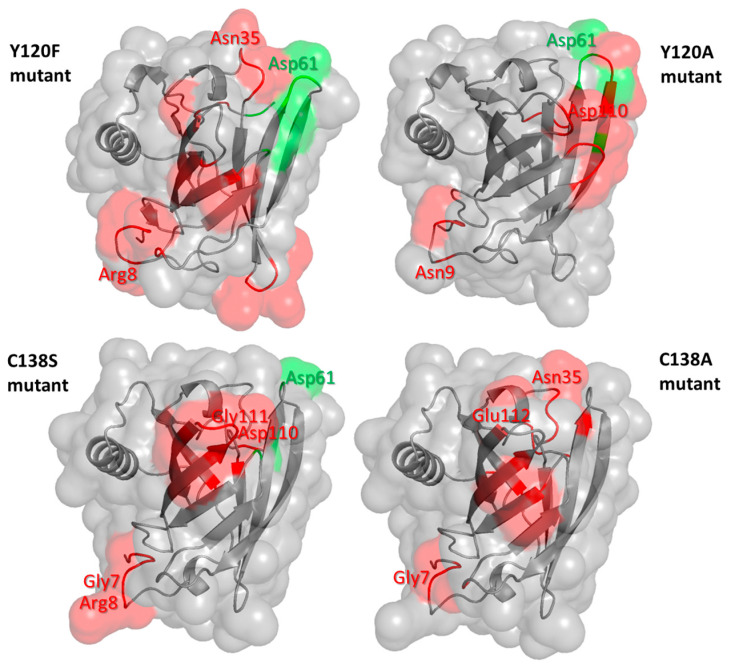 Figure 3
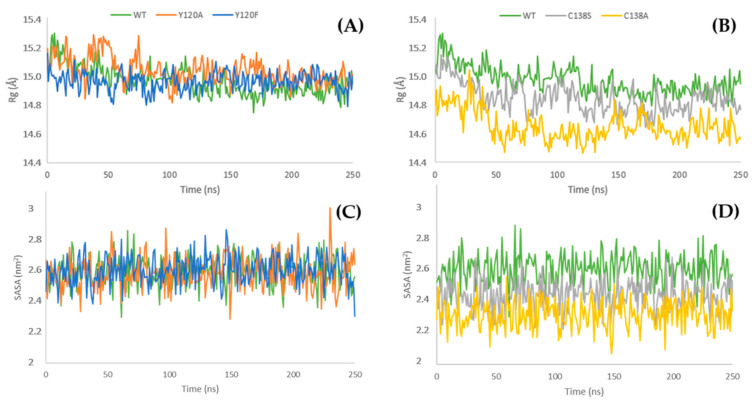 Figure 4
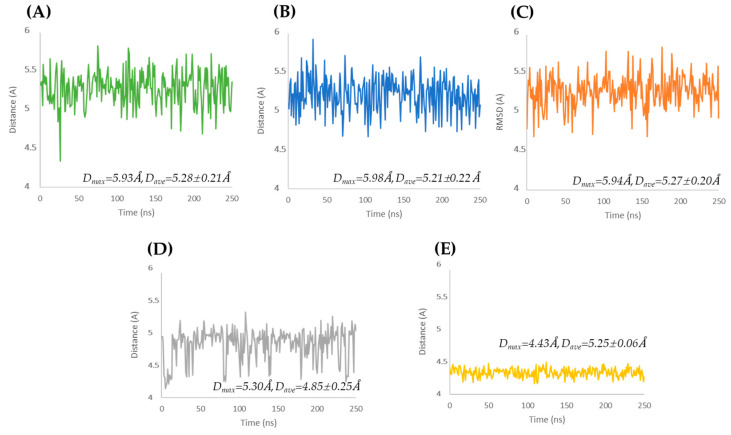 Figure 5
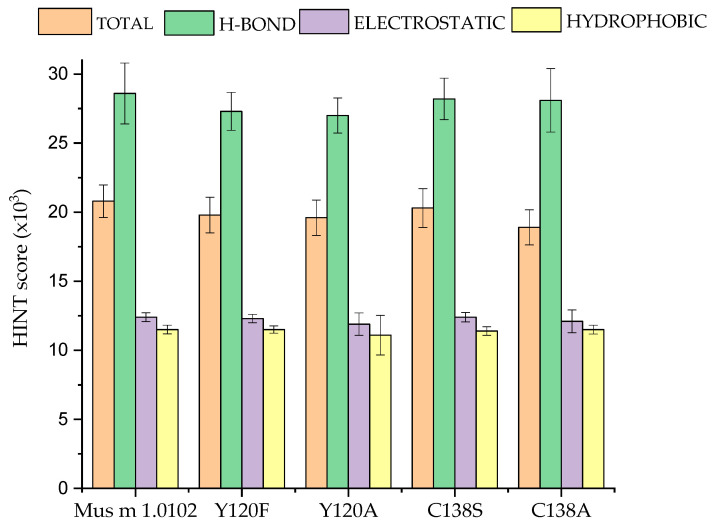 Figure 6
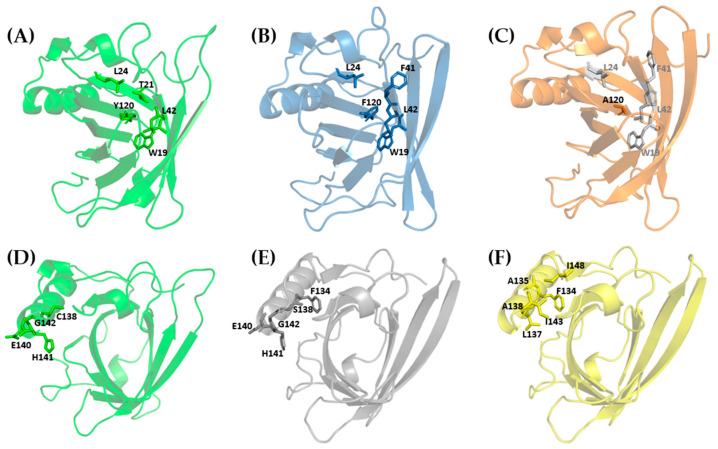 Figure 7
Peer Reviews
No public reviews on file for this paper yet. If you reviewed it on a platform where reviews are public (OpenReview, ICLR, NeurIPS, ICML), you can paste yours below so the community can read it here.
Videos
No videos yet. Explain this paper in a talk, walkthrough, or lecture? Add one.
Taxonomy
TopicsContact Dermatitis and Allergies · Allergic Rhinitis and Sensitization · Food Allergy and Anaphylaxis Research