Exploring heterogeneity in PTSD symptoms and associated predictors and outcomes in Afghanistan veterans: A latent profile analysis
Line Rønning, Frederick Anyan, Odin Hjemdal, Hans Jakob Bøe, Andreas Espetvedt Nordstrand, Holly B. Herberman Mash, James A. Naifeh

TL;DR
This study identifies different patterns of PTSD symptoms among Afghanistan veterans and finds that certain factors predict which group veterans fall into.
Contribution
The study uses latent profile analysis to reveal distinct PTSD symptom patterns and their associated predictors and outcomes in veterans.
Findings
Three distinct PTSD symptom profiles were identified: Low Symptoms, High Numbing and Arousal, and High Symptoms.
The High Symptoms profile was associated with higher rates of mental health service use and suicidal ideation.
Female gender, fewer deployments, disclosure barriers, and more morally injurious events predicted membership in the High Symptoms profile.
Abstract
Research on posttraumatic stress symptoms (PTSS) typically focuses on diagnosis or symptom severity, however, this overlooks the variety of symptom patterns that exist. Latent profile analysis was used to explore PTSS profiles in a sample of Norwegian Afghanistan veterans (n = 4052, 91.7% males). Multinomial logistic regression analyses were conducted to examine predictors and outcomes associated with PTSS profile membership. Three profiles emerged: Low Symptoms profile (85%); High Numbing and Arousal profile (13%); and High Symptoms profile (2%). Being female, lower number of deployments, barriers to disclose war-related experiences, and higher number of potentially morally injurious events (PMIEs) were associated with belonging to the High Symptoms profile compared to the High Numbing and Arousal (Male gender: OR = 0.37, p < .05; Number of deployments: OR = 0.68, p < .05; Barriers to…
Genes, proteins, chemicals, diseases, species, mutations and cell lines named across the full text — each resolved to its canonical identifier and authoritative record.
Click any figure to enlarge with its caption.
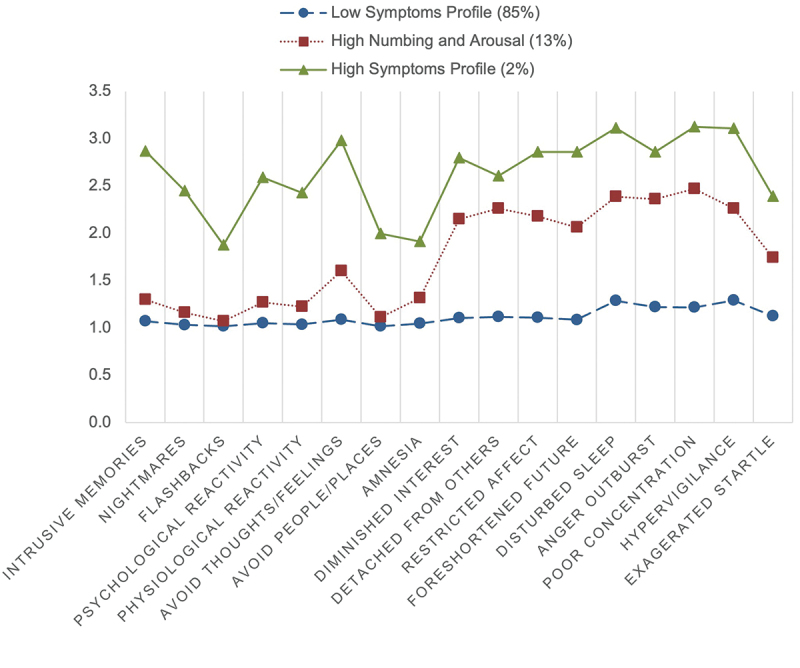 Figure 1
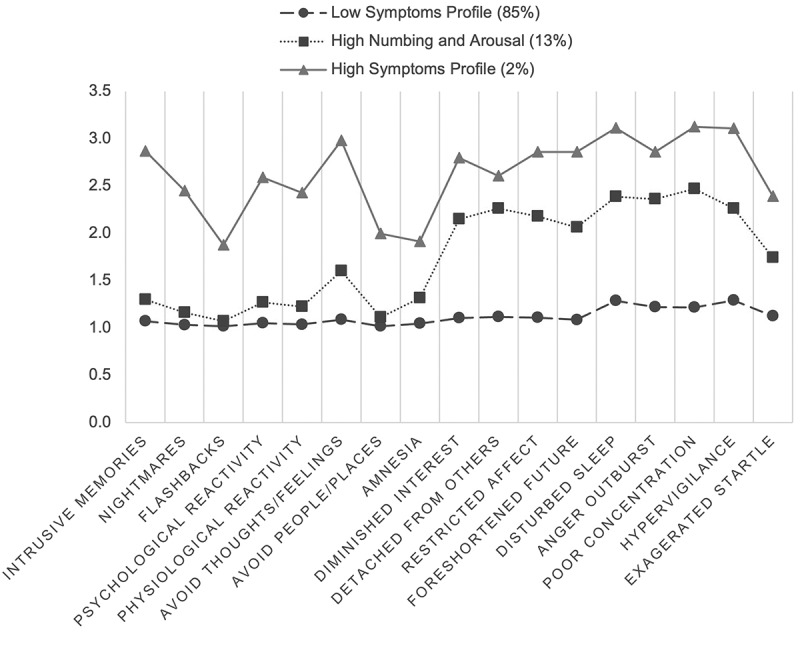 Figure 2
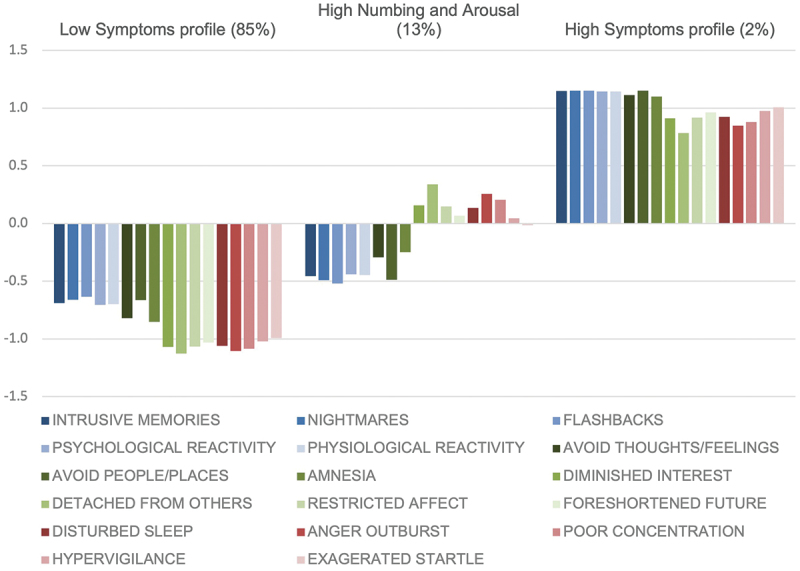 Figure 3
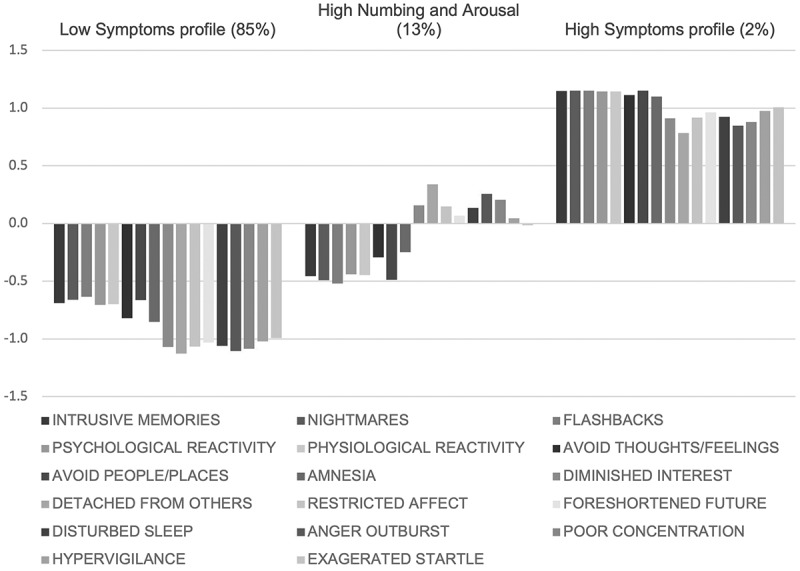 Figure 4
Peer Reviews
No public reviews on file for this paper yet. If you reviewed it on a platform where reviews are public (OpenReview, ICLR, NeurIPS, ICML), you can paste yours below so the community can read it here.
Videos
No videos yet. Explain this paper in a talk, walkthrough, or lecture? Add one.
Taxonomy
TopicsPosttraumatic Stress Disorder Research · Migration, Health and Trauma · Resilience and Mental Health