Sexting Behaviors and Fear of Missing out Among Young Adults
Mara Morelli, Alessandra Ragona, Antonio Chirumbolo, Maria Rosaria Nappa, Alessandra Babore, Carmen Trumello, Gaetano Maria Sciabica, Elena Cattelino

TL;DR
This study explores how fear of missing out (FoMO) is linked to risky sexting behaviors in young adults, finding it predicts sexting under substance use and for emotion regulation.
Contribution
The study identifies FoMO as a predictor of risky sexting behaviors in young adults, a group less studied than adolescents.
Findings
FoMO predicts risky sexting under substance use and for emotion regulation.
The link between FoMO and sexting for emotion regulation is stronger among LGB individuals.
FoMO does not influence experimental sexting behaviors.
Abstract
Fear of missing out (FoMO) creates a strong urge to stay continuously connected and informed about peers’ activities, identified as a risk factor for problematic social media use and risky behaviors. Sexting is generally defined as the exchange of sexually suggestive or explicit photos, videos, or text messages through cell phones or other technologies. Despite its social relevance, the link between FoMO and sexting remains underexplored. This study examines their relationship in young adults—an understudied group compared to adolescents—while controlling for age, sex, and sexual orientation. The study surveyed 911 Italian young adults (18–30 years, Mage = 22.3, SDage = 2.57, 74% women, 70.4% heterosexual) through an online questionnaire. The results indicate that FoMO predicts only risky sexting behaviors (sexting under substance use and sexting for emotion regulation) while not…
Genes, proteins, chemicals, diseases, species, mutations and cell lines named across the full text — each resolved to its canonical identifier and authoritative record.
Click any figure to enlarge with its caption.
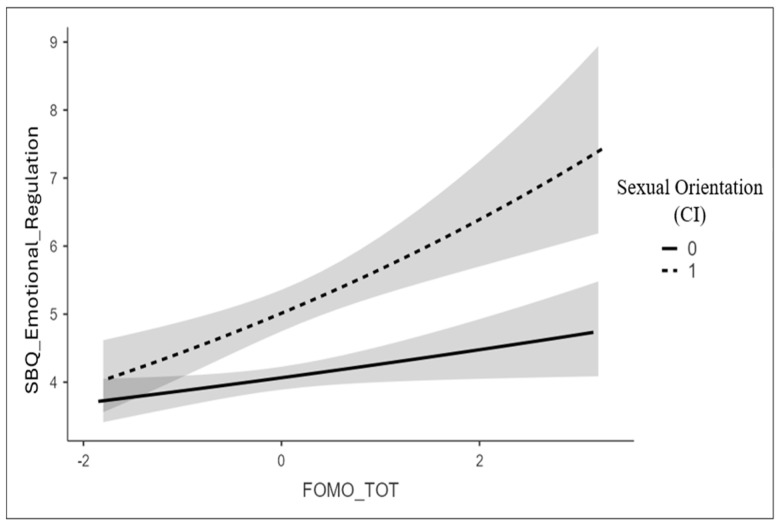 Figure 1
Peer Reviews
No public reviews on file for this paper yet. If you reviewed it on a platform where reviews are public (OpenReview, ICLR, NeurIPS, ICML), you can paste yours below so the community can read it here.
Videos
No videos yet. Explain this paper in a talk, walkthrough, or lecture? Add one.
Taxonomy
TopicsGender, Feminism, and Media · Impact of Technology on Adolescents · Child Development and Digital Technology
1. Introduction
Over the past few years, the widespread use of technology for social interactions has undoubtedly brought numerous benefits, such as bridging the gap between individuals and enabling connections with people from different parts of the world. In particular, the use of social media for social, romantic, and sexual interactions has grown significantly (Bouffard et al., 2022; Kemp, 2024). However, the literature consistently emphasizes the need to address a range of inherent risks tied to technology and social media usage. Among these risks are social media addiction (Andreassen et al., 2012) and, more broadly, a decline in the well-being of young people who spend extended hours on social networking platforms (Rasmussen et al., 2020).
One area of growing concern in this context is the phenomenon of fear of missing out (FoMO), which has become increasingly prevalent alongside the rise of social media (Elhai et al., 2020). FoMO refers to a common anxiety stemming from the belief that others may be engaging in fulfilling or enjoyable experiences from which one is excluded. This feeling is often accompanied by a persistent urge to remain connected and updated on the actions and lives of others, particularly close friends, to avoid feelings of disconnection or exclusion (Przybylski et al., 2013).
Drawing on the Self-Determination Theory framework (Deci & Ryan, 1985), Przybylski et al. (2013) demonstrated that individuals with lower satisfaction of core psychological needs—such as autonomy, competence, and relatedness—are more likely to experience FoMO. Researchers have further linked FoMO to feelings of personal insecurity and inadequacy, which heighten fears of social exclusion (Gupta & Sharma, 2021). As a result, FoMO can drive individuals to seek constant social connection.
Social media platforms, which provide continuous updates on others’ lives and activities, have been identified as a key medium through which FoMO manifests. A recent meta-analysis established a clear linear connection between FoMO and social media use (Zhang et al., 2021), and numerous studies have also recognized FoMO as a significant factor contributing to excessive, compulsive, or problematic engagement with social media (Hussain et al., 2023; Tandon et al., 2021). Moreover, FoMO has been examined in relation to various negative online behaviors, including cyberbullying (Geng et al., 2022), problematic use of internet and social networks (Benzi et al., 2024; Gupta & Sharma, 2021), and harmful patterns of smartphone and social media communication (Sha et al., 2019).
1.1. Sexting Types and Behaviors
An online behavior that has been extensively studied and remains highly controversial in recent decades is sexting, defined as the engagement in exchanging provocative or sexually suggestive messages, photos, and videos via smartphones, the internet, or social networks (Chalfen, 2009). The literature appears to be divided on many aspects of sexting, ranging from its definitions to the various types of behaviors associated with it (Döring, 2014; Morelli et al., 2023). Recent meta-analyses have explored various types of sexting behaviors (Mori et al., 2019, 2020), positioning them along a spectrum that ranges from safer to more risky actions. At the safer end of this spectrum, we find experimental sexting, which refers to a consensual exchange of explicit messages that allow individuals to explore and address developmental needs related to their sexuality and identity formation (Bianchi et al., 2019; Kosenko et al., 2017; Morelli et al., 2021). This concept was initially proposed by Wolak et al. (2012), who conceived sexting as a new sexual norm, particularly during adolescence and young adulthood. These developmental stages are marked by individuals’ exploration of their sexual identity and their perceptions of body image (Bianchi et al., 2021b). Experimental sexting is often regarded as a means of fostering passion, intimacy, and enjoyment (Drouin & Tobin, 2014; Van Ouytsel et al., 2019), particularly in long-distance relationships (Beckmeyer et al., 2022; Parker et al., 2013; Walker et al., 2013), and is more prevalent among sexual minorities in the context of increased communication (Chong et al., 2015). Several studies have also emphasized its positive effects, such as boosting self-esteem and enhancing body image (Bianchi et al., 2017). Additionally, experimental sexting can serve sexual purposes, including flirting (Albury & Crawford, 2012), maintaining a relationship (Van Ouytsel et al., 2017), or initiating sexual encounters (Temple, 2015).
On the other hand, sexting is often viewed as an aggressive, risky, and dangerous behavior, particularly when it involves minors, nonconsensual exchanges, or strangers, posing threats to privacy, safety, and mental well-being (Morelli et al., 2016, 2023; Sparks et al., 2023). It can also have negative consequences (Van Ouytsel et al., 2020) and may be driven by various motives, such as financial gain (Morelli et al., 2016) or coercion (Currin & Hubach, 2019). For instance, Bianchi et al. (2021b) found that sexting for instrumental reasons related to secondary purposes, including seeking favors or money, as well as sexting with harmful intent, increases the risk of both perpetrating and experiencing dating violence. At the extreme end of the spectrum, aggravated sexting—characterized by harmful intentions, nonconsensual sharing of explicit content, and coercion—can lead to severe consequences such as bullying, cyberbullying, and traditional and cyberdating violence (Bianchi et al., 2021a; Drouin & Tobin, 2014; Gámez-Guadix & Mateos-Pérez, 2019; Gassó et al., 2019, 2021; Morelli et al., 2016, 2017).
Another type of sexting identified by scholars is risky sexting (Morelli et al., 2021, 2023), which involves behaviors that, while not coercive in nature, co-occur with other risky activities. This form of sexting typically occurs when individuals engage in sexting while under the influence of substances like drugs or alcohol, or when sexting is directed towards strangers met online. A systematic review pointed to a strong association between sexting and risky behaviors (Mori et al., 2020), and some studies have specifically found correlations between sexting and substance use, including alcohol, ecstasy, marijuana, and cocaine (Benotsch et al., 2013). Moreover, another type of sexting considered risky is sexting for emotional regulation (Bianchi et al., 2019), in which sexting is used as a tool to cope with difficulties in emotional regulation (Cyders & Smith, 2008) and to manage a low sense of emotional self-efficacy, as well as negative emotions such as anger, loneliness, and attention seeking (Yoder et al., 2018).
Sexting behaviors are more commonly reported among adolescents and young adults, with studies showing a higher prevalence in these age groups (Kopecký, 2012; Madigan et al., 2018; Mori et al., 2019; Strassberg et al., 2013). This age group is particularly active in exploring digital communication and sexual expression, making sexting more widespread in their social interactions. The current literature highlights age-related differences in sexting behaviors, demonstrating that young adults engage in sexting more frequently than adolescents (Bianchi et al., 2019; Madigan et al., 2018). Evidence suggests that the sexting prevalence peaks during young adulthood (Mori et al., 2019), likely because individuals in this age group are still exploring their sexuality and relationships, albeit with greater awareness and maturity compared to adolescents (Morgan, 2013).
1.2. The Roles of Age, Gender, and Sexual Orientation in Impacting Sexting Behaviors
Young adults appear more inclined to experiment with various sexual behaviors, including sexting, both within stable relationships, with a prevalence of 60%, and with casual partners or strangers, with a prevalence of 44% (Brodie et al., 2019; Drouin et al., 2017; Mori et al., 2019). Among young adults, the prevalence of sexting behaviors varies widely. Mori et al. (2019) found that the percentage of individuals sending sexts ranges from 32% to 44.6%, while receiving sexts occurs in 31.9% to 51.2% of cases. Both experimental and risky sexting appears to become more common as individuals grow older, as highlighted in a cross-cultural study by Morelli et al. (2020).
The evidence on gender differences in sexting remains inconclusive. Some research suggests that females engage in generic sexting behaviors more frequently (Van Ouytsel et al., 2017), while other studies report higher rates among males (Hudson & Marshall, 2016). In contrast, a meta-analysis by Madigan and colleagues (2018) observed no significant gender differences. More specifically, Morelli et al. (2020) noted that young adult males are more likely than females to engage in aggravated and risky sexting behaviors, and in general, males tend to be more inclined to engage in high-risk activities (Korn & Bonny-Noach, 2018).
Sexting patterns also vary based on sexual orientation. Sexual minorities appear more likely to participate in sexting (Bianchi et al., 2019; Morelli et al., 2020; Van Ouytsel et al., 2019), and in general, are at a heightened risk of engaging in risky sexual behaviors (Nappa et al., 2022), possibly because online spaces offer a sense of protection from societal stigma and prejudice. This aligns with Meyer’s (2003) Minority Stress Model, which suggests that virtual environments may reduce stressors linked to discrimination (Chong et al., 2015).
1.3. Fear of Missing Out (FoMO) and Sexting
The relationship between FoMO and sexting has been explored in only a limited number of studies, producing mixed findings (Morelli et al., 2024). Some research identifies FoMO as a significant predictor of erotic sexting (Popovac & Hadlington, 2020; Tamarit et al., 2021), while other studies report no connection (Tomczyk & Szotkowski, 2023). The recent study by Morelli et al. (2024) highlighted that FOMO predicts three motivations for sexting: sexual purposes, body image reinforcement, and instrumental/aggravated motivations. It emphasizes the importance of further studying this factor in determining potentially risky sexting behaviors. Age seems to play a crucial role in shaping both FoMO and sexting behaviors, albeit in different ways. When it comes to FoMO, younger individuals are generally more vulnerable to its effects, as highlighted by Przybylski et al. (2013). On the other hand, sexting behaviors show a different trend. Older individuals are often more motivated to engage in sexting for sexual purposes compared to younger age groups (Bianchi et al., 2021b). The only study that investigated the effect of age on the relationship between sexting and FoMO (Morelli et al., 2024) did not find any direct or interaction effect, despite previous studies showing that involvement in sexting increases with age (Bianchi et al., 2021b), both among adolescents and young adults. Conversely, the study by Morelli et al. (2024) demonstrated the moderating role of sexual orientation in sexting motivations, showing that LGB individuals are more likely than heterosexual ones to engage in sexting for both sexual and non-sexual reasons (Gesselman et al., 2023). Moreover, sexual orientation moderated the relationship between FoMO and sexting for body image reinforcement or instrumental/aggravated motives, with this association being stronger among LGB individuals.
Due to the scarce findings currently available in the literature, investigating the nuances of online communication, particularly its potentially problematic dimensions, is vital for shedding light on the social dynamics that may contribute to risky behaviors such as sexting. Those behaviors are not solely driven by sexual intent but often arise from a complex interplay of psychological, relational, and situational factors. Understanding these underlying mechanisms could provide valuable insights into the broader motivations and circumstances that foster these behaviors in digital contexts.
1.4. Aims of the Present Study
Building on the limited research examining the relationship between FoMO and sexing (e.g., Morelli et al., 2024), the Self-Determination Theory (Deci & Ryan, 1985; Przybylski et al., 2013) provides a useful framework for understanding this dynamic. According to this theory, FoMO may fuel an intense drive to establish and maintain social connections as a way to fulfill a sense of belonging. This perspective suggests a reciprocal relationship between FoMO and the motivations underlying the satisfaction of psychological and relational needs. Sexting, as a form of online communication, offers a means to address relational needs tied to sexual and erotic expression, potentially heightened by the compulsion to remain socially connected. Consequently, individuals with elevated levels of FoMO may feel a stronger motivation to engage in sexting behaviors (Tamarit et al., 2021).
The relationship between FoMO and sexting has been explored in only a few studies (Morelli et al., 2024; Tomczyk & Szotkowski, 2023), and the one by Morelli et al. (2024) focused on sexting motivations, not on different kinds of sexting behaviors. Moreover, to our knowledge, no research has yet examined the connection between FoMO and sexting behaviors in young adults or considered how factors such as age, biological sex, and sexual orientation might influence this relationship. For those reasons, the present study aimed to fill existing gaps in the literature by exploring the relationship between FoMO and sexting behaviors among Italian young adults. Specifically, the study sought to investigate how FoMO relates to distinct types of sexting behaviors (experimental sexting, i.e., sharing own sexts, and two kinds of risky sexting, i.e., sexting for emotional regulation and sexting under substance use or with strangers), while accounting for the influence of age, biological sex, and sexual orientation, as previous research has shown these factors can impact sexting behaviors (Bianchi et al., 2021b).
Specifically, building on previous research (2024), we hypothesized the following:
H1. FoMO would predict both experimental and risky sexting behaviors.
H2. Age can moderate the relationship between FoMO and sexting behaviors, expecting it to be stronger among older individuals compared to younger ones (Bianchi et al., 2021b).
H3. The relationship between FoMO and risky sexting will be stronger in males. Despite conflicting findings in the literature regarding gender differences in sexting behaviors, several studies (Korn & Bonny-Noach, 2018; Morelli et al., 2020) suggest that males may exhibit greater involvement in the two risky types of sexting: sexting under the influence of substances or with strangers, and sexting for emotional regulation.
H4. The relationship between FoMO and each type of sexting behavior would be stronger among LGB+ individuals compared to heterosexual individuals (Bianchi et al., 2021b; Gámez-Guadix & Incera, 2021; Kokkinos & Krommida, 2022; Morelli et al., 2024; Paquette et al., 2022).
2. Materials and Methods
2.1. Participants and Procedure
This study was conducted on a sample of 911 Italian young adults (M_age_ = 22.3; SD_age_ = 2.57; age range = 18–30 years; 74% women), including both heterosexual and LGB individuals (70.4% heterosexual; n = 641), recruited from various Italian universities. In terms of family socio-economic status, 23% of participants reported a low income, while 77% indicated a medium to high income. As for relationship status, 35.7% of participants reported having been in a relationship in the past, while the majority (64.3%) reported being in a relationship at the time of completing the questionnaire.
Young adult participants were recruited from various Italian universities through the distribution of an anonymous link containing the research questionnaires. Participants were also asked to share the link to the survey among their contacts and on their social network platforms. This facilitated a snowball sampling approach as the survey was further shared online. The study was presented to participants as research on relationships in the digital context, and participation was entirely voluntary. A potential bias stems from the voluntary nature of participation and the non-probabilistic sampling method, which is common in most psychological studies. Before completing the online survey, participants provided their consent to participate by selecting “Yes, I accept to participate in the study” on the survey’s first page. This study adhered to the principles outlined in the Declaration of Helsinki and received approval from the university’s ethical committee of the Department of Dynamic and Clinical Psychology, and Health Studies of Sapienza University of Rome.
2.2. Measures
Demographic Information. Participants provided information about their biological sex, age, sexual orientation, and dating relationship status. The Kinsey scale (Kinsey et al., 2003) was used to measure sexual orientation, with participants rating themselves on a 7-point scale, where a score of 1 indicated exclusively heterosexual and a score of 7 signified not exclusively heterosexual. In accordance with the procedure used in previous studies (e.g., Morelli et al., 2024), participants were divided into two categories: those identified as exclusively heterosexual were assigned a score of 0, while those belonging to sexual minorities received a score of 1.
Fear of Missing Out. Fear of missing out was assessed by the Fear of Missing Out Scale (FoMOs) (Przybylski et al., 2013; Italian validation by Casale & Fioravanti, 2020). This scale is composed by 10 items rated on a 5-point Likert scale of 1 (not at all true for me) to 5 (extremely true for me). The FoMO scale explores feelings of anxiety, fear, worry, and irritability linked to the concept of missing out on rewarding experiences and the desire to maintain connections with others (a sample item is “I get worried when I find out that my friends are having fun without me”). The scale showed good reliability, with a McDonald’s ω of 0.88.
Sexting Behaviors. Sexting behaviors were assessed using 10 items from the Sexting Behavior Questionnaire (SBQ; Morelli et al., 2016). For the purpose of this research, we only considered the following sexting dimensions selected in previous studies (Bianchi et al., 2019; Morelli et al., 2017): experimental sexting (i.e., sharing own sexts, 3 items; a sample item is “How often have you publicly sent provocative or sexually suggestive videos about yourself?”; McDonald’s ω 0.82), and two types of risky sexting, (a) sexting during substance use or with strangers met online (4 items; a sample item is “How often do you send a sext when you smoke marijuana?”; McDonald’s ω 0.64) and (b) sexting for emotional regulation (3 items; a sample item is “How often do you send a sext when you feel lonely?”; McDonald’s ω 0.84). Participants reported the frequency of the engagement in each sexting behavior over the past 12 months, using a 5-point Likert scale from 1 (never) 5 (always or almost daily).
2.3. Data Analysis
Sexting dimensions showed a strongly polarized non-normal distribution. Therefore, we conducted negative binomial regression analyses in which each dimension of sexting (i.e., experimental, risky during substance use or with strangers, and sexting for emotional regulation) was regressed on age, biological sex (0 = male; 1 = female), sexual orientation (0 = exclusively heterosexual; 1 = exclusively non-heterosexual), FoMO, and the three interaction terms between FoMO and each investigated socio-demographic variable (i.e., FoMOage, FoMObiological sex, FoMO*sexual orientation). Negative binomial regression is a statistical technique used to model count data, representing the number of times an event occurs within a given period or space (e.g., behavioral frequencies, event counts). It is particularly useful for behavioral frequency data, including self-reported measures, which often deviate from a normal distribution. Common examples include the number of problematic behaviors, the frequency of specific actions performed by an individual, or other self-reported behavioral measures in psychological and social research (Hilbe, 2011). Version 2.5.5 of jamovi (The Jamovi project, 2023) with the GAMLj3 module (Gallucci, 2019) was used for the analyses.
3. Results
Negative Binomial Regression
The negative binomial regression model for experimental sexting, which is the sharing of own sexts, accounted for 6% of the variance, R^2^ = 0.06, χ^2^(7) = 24.6, p < 0.001. Experimental sexting demonstrated a positive association exclusively with sexual orientation, B = 0.16, SE = 0.03, Exp(B) = 1.17, p < 0.001. See Table 1 for the statistics.
Regarding the first type of risky sexting (sexting under substance use or with strangers), the negative binomial regression model accounted for 8.5% of the variance, R^2^ = 0.085, χ^2^(7) = 40.3, p < 0.001. Specifically, this kind of risky sexting was found to be positively and significantly related to sexual orientation, B = 0.17, SE = 0.03, Exp(B) = 1.19, p < 0.001, and FoMO, B = 0.03, SE = 0.01, Exp(B) = 1.03, p = 0.03. In particular, for each additional unit increase in sexual orientation, the frequency of risky sexting increases 1.19 times, while for each unit increase in FoMO, the frequency of risky sexting increases 1.03 times. See Table 1 for the statistics.
The negative binomial regression model for the second type of risky sexting (i.e., sexting for emotional regulation) accounted for 9.62% of the variance, R^2^ = 0.096, χ^2^(7) = 71.8, p < 0.001. Sexting for emotional regulation was positively associated with sexual orientation, B = 0.22, SE = 0.35, Exp(B) = 1.24, p < 0.001, and with total FoMO, B = 0.71, SE = 0.02, Exp(B) = 1.07, p < 0.001, while it showed a negative association with biological sex, B = −0.04, SE = 0.01, Exp(B) = 0.96, p = 0.005. Specifically, for each additional standard deviation of total FoMO, the frequency of sexting for emotion regulation increases 1.07 times, while a one-unit increase in sexual orientation leads to an increase of 1.24 times. Conversely, each additional standard deviation of biological sex is associated with a decrease of 1.04 times in sexting frequency.
Additionally, the interaction term between FoMO and sexual orientation was significant, B = 0.07, SE = 0.03, Exp(B) = 1.08, p = 0.03, indicating that for each unit increase in this interaction, the frequency of sexting for emotion regulation increases 1.08 times. See Table 1 for statistics.
To understand the direction of the interaction, a slope analysis was conducted by plotting sexting values as a function of FoMO for the two levels of sexual orientation (0 = exclusively heterosexual, 1 = not exclusively heterosexual). The slope analysis revealed a stronger positive and significant relationship for non-heterosexual individuals, B = 0.12, SE = 0.03, Exp(B) = 1.13, p < 0.001, compared to exclusively heterosexual individuals, B = 0.05, SE = 0.02, Exp(B) = 1.05, p = 0.03. Specifically, for non-heterosexual individuals, the frequency of sexting increases 1.13 times for each additional unit of the predictor, whereas for exclusively heterosexual individuals, the frequency increases 1.05 times for each additional unit. This indicates that the association between the predictor and sexting is stronger for non-heterosexual individuals (Figure 1).
4. Discussion
This study examined the connection between FoMO and three distinct sexting behaviors: experimental sexting (i.e., sharing of own sexts), and two kinds of risky sexting (i.e., sexting under substance use or with strangers and sexting for emotional regulation). To the best of our knowledge, it represents the first investigation into how FoMO directly can impact different kinds of sexting behaviors. Indeed, a previous study investigated the relationship between FoMO and sexting motivations (Morelli et al., 2024) and others considered sexting behaviors, in general (Popovac & Hadlington, 2020; Tamarit et al., 2021; Tomczyk & Szotkowski, 2023). Additionally, a study analyzed how age, biological sex, and sexual orientation are directly related to sexting and can moderate the relationship between FoMO and each type of sexting behavior, following the hypotheses tested by Morelli and colleagues (2024).
As regards the relationship between each socio-demographic variables and sexting, no significant effect of age (H2 not confirmed) was found for any of the three sexting behaviors analyzed, confirming the conflicting results present in the literature. Previous research on adolescents and young adults has shown that older individuals tend to engage in more sexting behaviors (Bianchi et al., 2021b). The lack of an observed effect could be due to the homogeneity of the participants’ ages in the present study, as they all fell within the young adult category.
Regarding the effect of biological sex (H3 partially confirmed), a direct effect was found only for sexting for emotional regulation. In particular, the present study showed that females tend to engage more in sexting for emotional regulation, and this could be related to gender differences in emotional regulation strategies. Women are more likely to seek emotional support through social communication, while men may lean more towards individual coping strategies (Tamres et al., 2002).
Sexual orientation emerged as having a direct effect on all three sexting behaviors: experimental sexting, sexting under the influence of substances or with strangers, and sexting for emotional regulation (H4 totally confirmed). The influence of sexual orientation on experimental sexting aligns with previous research, which has reported higher rates of sexting among LGB individuals compared to heterosexual individuals (Bianchi et al., 2021b; Gámez-Guadix & Incera, 2021; Kokkinos & Krommida, 2022; Morelli et al., 2024; Paquette et al., 2022). Moreover, the fact that non-exclusively heterosexual individuals engage more frequently in risky sexual behaviors aligns with our expectations and reinforces previous findings, which indicate that sexual minorities are generally more prone to engaging in both high-risk sexual activities and risky sexting behaviors (Gámez-Guadix & Incera, 2021; Nappa et al., 2022; Morelli et al., 2023). Social media enhance communication and relationships while promoting psychological and socio-emotional well-being among lesbian, gay, and bisexual individuals (Chong et al., 2015). Consequently, they may serve as a protective factor against stressors related to social stigma, prejudice, and discrimination, as proposed by the Minority Stress Model (Meyer, 2003), and can represent a space for greater sexual exploration.
As regards the relationship between FoMO and sexting, as expected (H1 partially confirmed), the findings of this study confirmed that FoMO is a significant predictor only of some kind of sexting behaviors. Indeed, no association was found between FoMO and experimental sexting. This result can be explained by the fact that experimental sexting is primarily driven by exploration and self-expression of one’s sexuality (Wolak & Finkelhor, 2011). Since it is not inherently considered a risky behavior, it may be less influenced by FoMO. On the other side, the results showed that FoMO has a direct influence on both types of risky sexting (i.e., sexting under substance or alcohol use or with strangers and sexting for emotional regulation). This finding can be understood within the framework of Self-Determination Theory (Deci & Ryan, 1985), as stated by Przybylski et al. (2013). Individuals with elevated levels of FoMO often display a heightened drive for interpersonal connection coupled with reduced autonomy. As a result, those who frequently engage in sexting behaviors might be attempting to address unmet social and emotional needs and could be trying to fulfil their erotic and relational needs through chat-based interactions. This unmet need may sometimes drive individuals to engage in riskier sexual relational behaviors, as they may prioritize fulfilling these needs over considering the potential consequences of their actions. In such cases, sexting may become a high-risk behavior, driven by the urgency of addressing these emotional or social needs without fully assessing the risks involved.
In line with previous research (Morelli et al., 2024), sexual orientation emerged as a moderator in the relationship between FoMO and the second type of risky sexting, i.e., sexting for emotional regulation. Therefore, this relationship was stronger and highly significant for non-heterosexual individuals, but weaker for heterosexual individuals. This finding suggests that FoMO has a stronger relationship with sexting among non-heterosexual individuals compared to heterosexual individuals. Specifically, for non-heterosexual individuals, higher levels of FoMO are associated with a greater likelihood of engaging in sexting for emotional regulation, potentially reflecting their reliance on digital platforms for social connection or to fulfil emotional needs, finding in online communication a tool for easier connection with others (Schmitz et al., 2024), along with the perception that it is safer than offline environments (Chong et al., 2015). In contrast, for heterosexual individuals, FoMO does not has a large influence on sexting behavior, indicating that other factors may play a more prominent role in driving these behaviors within this group. These results regarding the greater propensity of LGB individuals to engage in risky sexting behaviors can be understood considering the minority stress literature, which highlights a major propensity of those people to engage in risky activities, especially sexual behaviors (Robinson & Espelage, 2013).
5. Conclusions and Future Perspectives
This study highlights how certain variables that influence social media use can also play a role in determining sexual behaviors that occur through the internet, such as sexting. Studying FoMO and how it influences the exchange of explicit messages, photos, and videos via social networks and smartphones can help improve our understanding of the phenomenon and suggest directions for future research. Our results indicate that FoMO directly predicts only two types of risky sexting: sexting under substance use or with strangers, and sexting for emotional regulation, emphasizing how this factor could be a risk for problematic behaviors related to social media use (Gupta & Sharma, 2021). Additionally, our findings show that LGB individuals are more likely to engage in all types of sexting, and that FoMO is significantly related to engagement in risky sexting, especially for LGB young adults, highlighting a strong need for emotional fulfilment in this population.
However, this study has several limitations, which should be considered when interpreting its findings. First, its cross-sectional design limits the ability to establish causal relationships between the variables under investigation. Future studies should employ more complex statistical models to better assess the directional causality between FoMO and sexting behaviors, providing a deeper and more comprehensive understanding of these relationships. Another limitation to mention is the overrepresentation of women in the sample. Hopefully, future studies will achieve a better gender balance among participants.
Another limitation worth mentioning pertains to the relatively smaller representation of LGB individuals within the sample. Although the proportion aligns with that observed in the general population, future studies should aim to include a larger number of LGB participants. This would enable more robust analyses across subgroups of sexual orientation, providing deeper insights into the unique dynamics and experiences of these populations.
Finally, one last limitation to mention is the low explained variance of the model tested in the present study, which can be understood in light of the complex and multifactorial nature of the behavior being investigated. It is likely that other relevant variables, not accounted for in the present study, contribute to the phenomenon and further explain its variance.
A future direction for upcoming studies involves examining the same variables within an adolescent sample. This approach could help uncover potential differences in dynamics compared to young adults and inform the development of tailored interventions designed specifically to address the unique needs and challenges faced by adolescents.
However, these findings have several implications for prevention programs. It is crucial to implement targeted interventions aimed at digital education and the prevention of sexting-related risks, not only among adolescents but also young adults, who are often overlooked in such projects. These programs should prioritize fostering a sense of autonomy, addressing the developmental needs of growth and individuation, and supporting young people in navigating the challenges of online interactions. Furthermore, interventions should focus on enhancing body image self-esteem and promoting mutual respect in digital communication, with particular attention to individuals from marginalized communities who may face unique vulnerabilities. Prevention efforts should focus on providing young people the skills and information needed to engage in sexting responsibly. This includes raising awareness about the potential risks and consequences of their actions while fostering individual and collective resources to promote a safer online environment.
The reference list from the paper itself. Each links out to its DOI / PubMed record.
- 1Albury K. Crawford K. Sexting, consent and young people’s ethics: Beyond Megan’s Story Continuum 201226346347310.1080/10304312.2012.665840 · doi ↗
- 2Andreassen C. S. Torsheim T. Brunborg G. S. Pallesen S. Development of a Facebook addiction scale Psychological Reports 2012110250151710.2466/02.09.18.PR 0.110.2.501-51722662404 · doi ↗ · pubmed ↗
- 3Beckmeyer J. J. Herbenick D. Eastman-Mueller H. Sexting with romantic partners during college: Who does it, who doesn’t and who wants to Sexuality & Culture 2022261486610.1007/s 12119-021-09878-x · doi ↗
- 4Benotsch E. G. Snipes D. J. Martin A. M. Bull S. S. Sexting, substance use, and sexual risk behavior in young adults Journal of Adolescent Health 201352330731310.1016/j.jadohealth.2012.06.011PMC 358000523299017 · doi ↗ · pubmed ↗
- 5Benzi I. M. A. Fontana A. Lingiardi V. Parolin L. Carone N. “Don’t leave me behind!” Problematic internet use and fear of missing out through the lens of epistemic trust in emerging adulthood Current Psychology 20244315137751378410.1007/s 12144-023-05440-0 · doi ↗
- 6Bianchi D. Morelli M. Baiocco R. Cattelino E. Chirumbolo A. Patterns of love and sexting in teen dating relationships: The moderating role of conflicts New Directions for Child and Adolescent Development 2021 a 202117813315510.1002/cad.2042734109733 PMC 9292559 · doi ↗ · pubmed ↗
- 7Bianchi D. Morelli M. Baiocco R. Cattelino E. Laghi F. Chirumbolo A. Family functioning patterns predict teenage girls’ sexting International Journal of Behavioral Development 201943650751410.1177/0165025419873037 · doi ↗
- 8Bianchi D. Morelli M. Baiocco R. Chirumbolo A. Sexting as the mirror on the wall: Body-esteem attribution, media models, and objectified-body consciousness Journal of Adolescence 20176116417210.1016/j.adolescence.2017.10.00629111447 · doi ↗ · pubmed ↗