
TL;DR
This issue's cover features camelina plants at maturation, highlighting their seed pods and connection to a featured article.
Contribution
The contribution is a visual representation of camelina's seed pods and their botanical classification.
Findings
Camelina seed pods are called silicles, with a smaller length/width ratio than typical siliques.
Camelina is sometimes called 'false flax' due to its resemblance to flax at maturation.
Each silicle contains 10 to 20 small orange/brown seeds.
Abstract
Front cover image: A close up of a field of camelina at maturation. The ‘seed pods’ are spherical. The crop at maturation looks like flax and that is why camelina is also called ‘false flax’. The proper botanical term for the seed pods is ‘silicles’ (length/width ratio is smaller than in standard siliques found in Brassicaceae). These siliques contain 10 to 20 small orange/brown seeds. Photograph by E.N. van Loo, Wageningen University and Research. Cover illustration refers to the article published in this issue (Belle et al., pp. 1399–1412).
Genes, proteins, chemicals, diseases, species, mutations and cell lines named across the full text — each resolved to its canonical identifier and authoritative record.
Click any figure to enlarge with its caption.
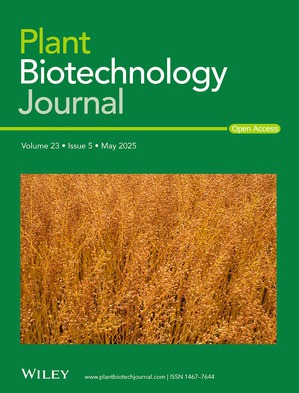 Figure 1
Peer Reviews
No public reviews on file for this paper yet. If you reviewed it on a platform where reviews are public (OpenReview, ICLR, NeurIPS, ICML), you can paste yours below so the community can read it here.
Videos
No videos yet. Explain this paper in a talk, walkthrough, or lecture? Add one.
Taxonomy
TopicsTransgenic Plants and Applications · Plant tissue culture and regeneration · Plant Gene Expression Analysis