The Michigan Model of Infant Mental Health Home Visiting increases preventative services while decreasing emergency services for children
Jerrica Pitzen, Danielle Rice, Barbara Durán, Jennifer Jester, Jessica Riggs, Megan Julian, Brendan Appold, Maria Muzik, Katherine Rosenblum, Emily Alfafara, Emily Alfafara, Carla Barron, Holly E. Brophy-Herb, Nora L. Erickson, Hiram E. Fitzgerald, Alissa C. Huth-Bocks

TL;DR
A home visiting program for infants and toddlers increases access to preventative healthcare and reduces emergency visits.
Contribution
The study shows that the Michigan Model of Infant Mental Health Home Visiting improves healthcare access and reduces emergency services use.
Findings
Families in the treatment group were more likely to receive and follow up on healthcare referrals.
Children in the treatment group had fewer emergency department visits compared to the control group.
Control group children were more likely to miss well-child visits at 12 months.
Abstract
This study examined the impact of a relationship-based intervention, the Michigan Model of Infant Mental Health Home Visiting (IMH-HV), on infant/child referrals and receipt of physical health services. Using a randomized controlled trial (RCT) design, participants included community-recruited mother-infant/toddler dyads who were randomized to treatment (IMH-HV) or control. Participant-reported healthcare, related service referrals received, and number of medical visits attended at baseline, 6-, and 12-month were examined. Families assigned to IMH-HV were more likely to receive (OR = 13.6, p = 0.001) and follow up on referrals (OR = 7.1, p = 0.00), and found them more helpful than the control group (OR = 3.9, p = 0.03). Children in the treatment group received services in the emergency department (ED; 14.7%) less often compared to control group (34.4%). At 12 months, control group…
Genes, proteins, chemicals, diseases, species, mutations and cell lines named across the full text — each resolved to its canonical identifier and authoritative record.
Click any figure to enlarge with its caption.
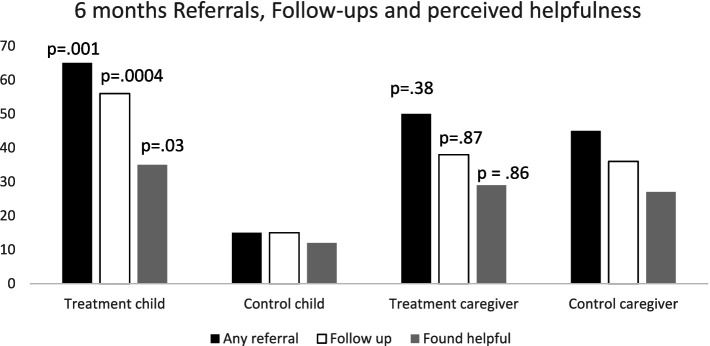 Figure 1
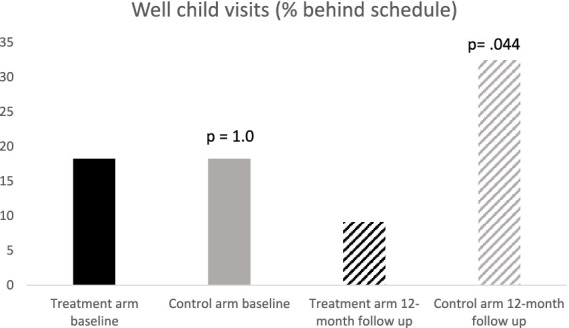 Figure 2
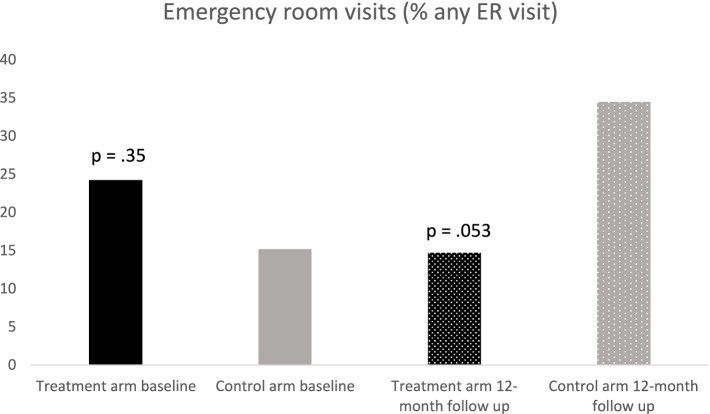 Figure 3
Peer Reviews
No public reviews on file for this paper yet. If you reviewed it on a platform where reviews are public (OpenReview, ICLR, NeurIPS, ICML), you can paste yours below so the community can read it here.
Videos
No videos yet. Explain this paper in a talk, walkthrough, or lecture? Add one.
Taxonomy
TopicsMaternal Mental Health During Pregnancy and Postpartum · Child and Adolescent Psychosocial and Emotional Development · Child and Adolescent Health