Ultrasensitive RNase H activity detection using the transcription-based hybrid probe and CRISPR/cas12a signal amplifier
Sheng Ding, Yinghua Wei, Minglong Yang, Jinyi Shi, Kaiyuan Ren, Xinli Li, Zhuo Tang

TL;DR
This paper introduces a highly sensitive method for detecting RNase H activity using a hybrid probe and CRISPR/Cas12a amplification, which could aid in diagnosing diseases linked to RNase H.
Contribution
The novel method combines a transcription-based hybrid probe with CRISPR/Cas12a for ultrasensitive RNase H detection.
Findings
The method detects RNase H activity as low as 9.02 × 10⁻¹⁰ U/μL, 1,000 times more sensitive than prior methods.
It successfully evaluated RNase H inhibitors and worked across biological samples like cell extracts and HIV reverse transcriptase.
Abstract
Ribonuclease H (RNase H), a critical functional protein in replication and genome stability, is emerging as a crucial therapeutic target for various diseases, including immune disorders. We present a transcription-based hybrid probe, referred to as Hybprobe, and a CRISPR/Cas12a signal amplifier for the rapid, sensitive, and low-cost detection of RNase H activity. In this method, the RNA strand of the Hybprobe is specifically cleaved by RNase H, releasing a single-stranded DNA activator that facilitates recognition and cleavage by the Cas12a/crRNA complex, triggering signal amplification via Cas12a′s trans-cleavage activity. The proposed method demonstrates ultra-high sensitivity, capable of detecting RNase H as low as 9.02 × 10⁻¹⁰ U/μL, making it approximately 1,000 times more sensitive than several previously reported methods. Furthermore, we demonstrated the application of this method…
Genes, proteins, chemicals, diseases, species, mutations and cell lines named across the full text — each resolved to its canonical identifier and authoritative record.
Click any figure to enlarge with its caption.
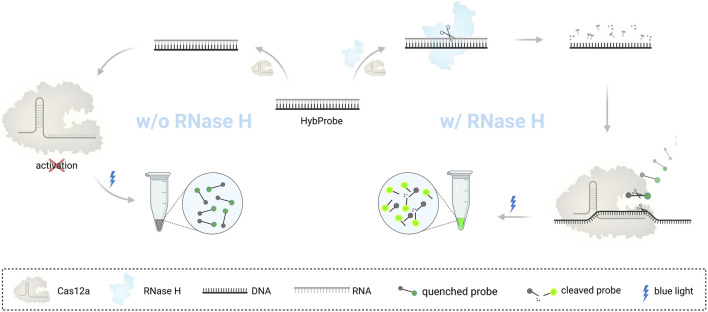 Figure 1
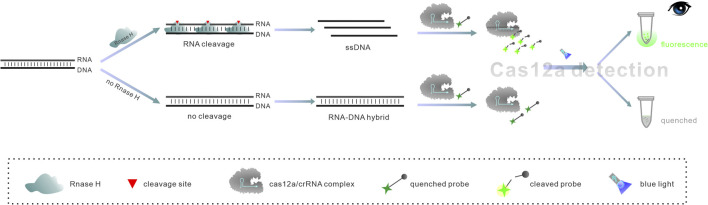 Figure 2
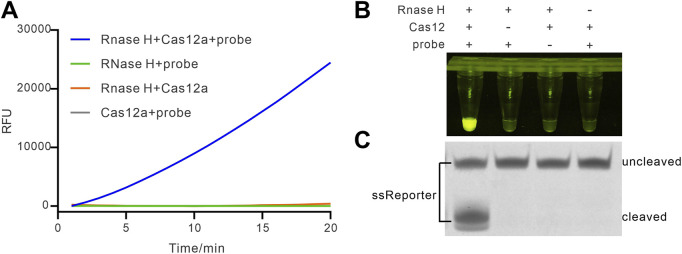 Figure 3
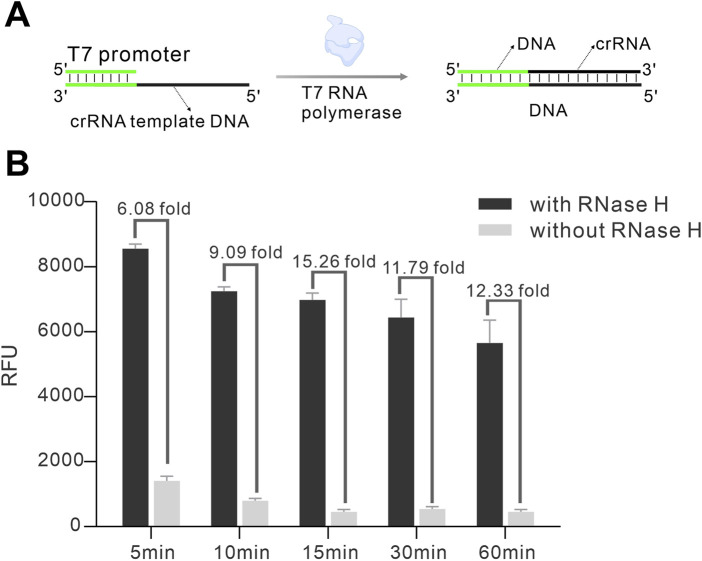 Figure 4
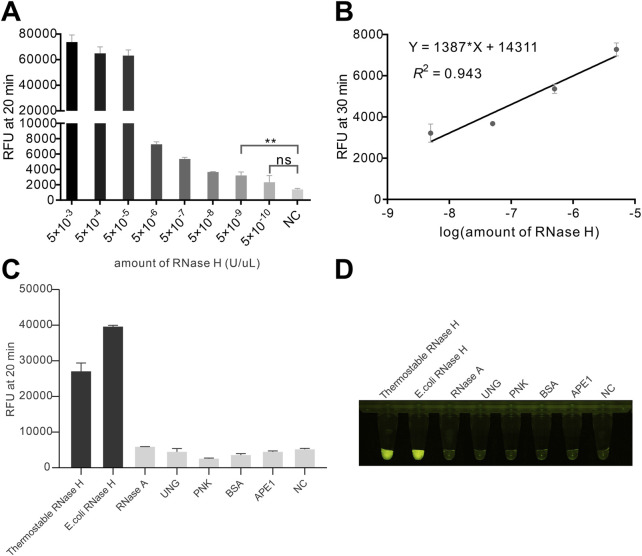 Figure 5
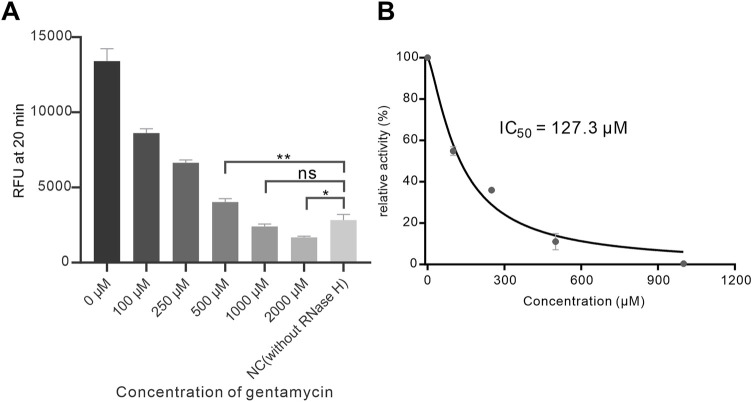 Figure 6
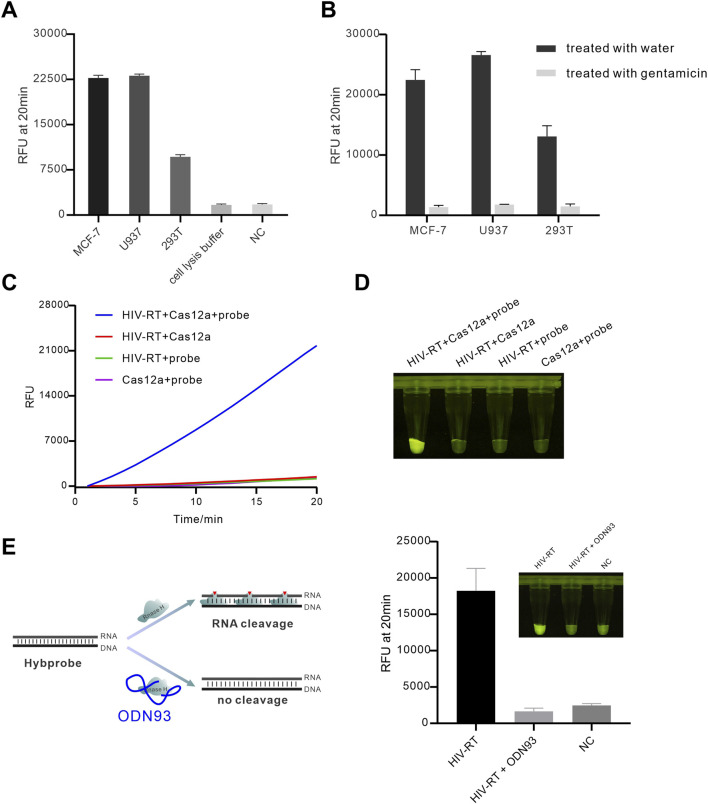 Figure 7
Peer Reviews
No public reviews on file for this paper yet. If you reviewed it on a platform where reviews are public (OpenReview, ICLR, NeurIPS, ICML), you can paste yours below so the community can read it here.
Videos
No videos yet. Explain this paper in a talk, walkthrough, or lecture? Add one.
Taxonomy
TopicsAdvanced biosensing and bioanalysis techniques · CRISPR and Genetic Engineering · RNA Interference and Gene Delivery