Comparative microRNAs profile of Schistosoma japonicum male worms derived from single-sex and bisexual infections: Implications of the multifunctional role of microRNA
Haoran Zhong, Danlin Zhu, Bowen Dong, Luobin Wu, Ke Lu, Zhiqiang Fu, Jinming Liu, Guiquan Guan, Yamei Jin

TL;DR
This study compares microRNA profiles in male Schistosoma japonicum worms from mated and single-sex infections to understand their role in parasite reproduction and development.
Contribution
The study identifies differentially expressed microRNAs in mated versus single-sex male schistosomes, revealing their potential regulatory roles in reproduction and host adaptation.
Findings
20 differentially expressed miRNAs were identified, with 9 upregulated in mated males and 11 in single-sex males.
These miRNAs may regulate intracellular transport, RNA processing, and cellular homeostasis.
The findings suggest miRNAs could be key regulators of schistosome development and host adaptation.
Abstract
Schistosoma japonicum is a dioecious parasite that requires constant pairing between male and female worms for female maturation and egg production. MicroRNAs (miRNAs) play crucial roles in regulating various biological processes, including parasite development and host–pathogen interactions, but their functions in schistosomes remain largely unexplored. This study aimed to investigate the differentially expressed miRNAs (DEMs) between mated male (MM) and single-sex male (SM) worms to gain insights into their regulatory roles in schistosome reproduction. Total RNA was extracted from 28-day-old MM and SM worms, followed by small RNA sequencing to identify DEMs. Bioinformatics analyses were used to predict the biological functions of DEM target genes. Comparative analysis with previously published miRNA datasets helped identify potentially significant miRNAs. Quantitative PCR (qPCR)…
Genes, proteins, chemicals, diseases, species, mutations and cell lines named across the full text — each resolved to its canonical identifier and authoritative record.
Click any figure to enlarge with its caption.
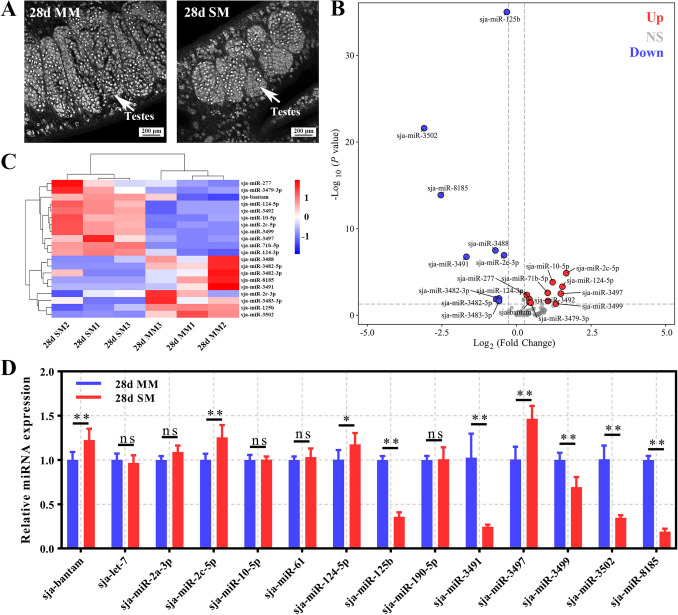 Figure 1
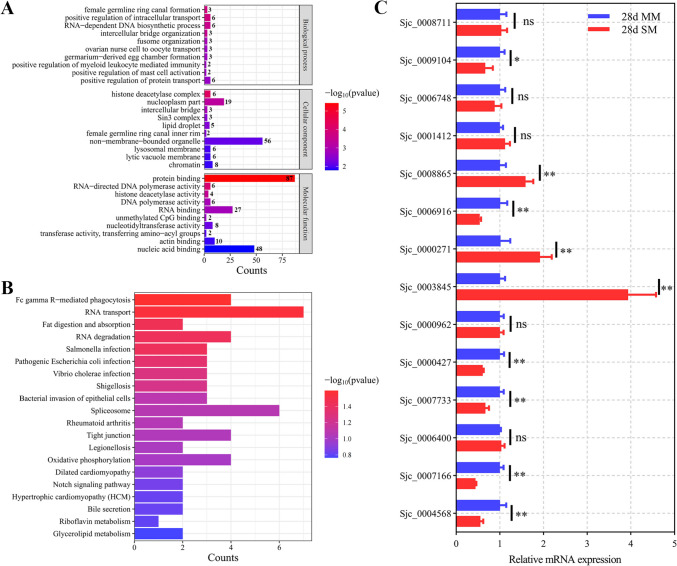 Figure 2
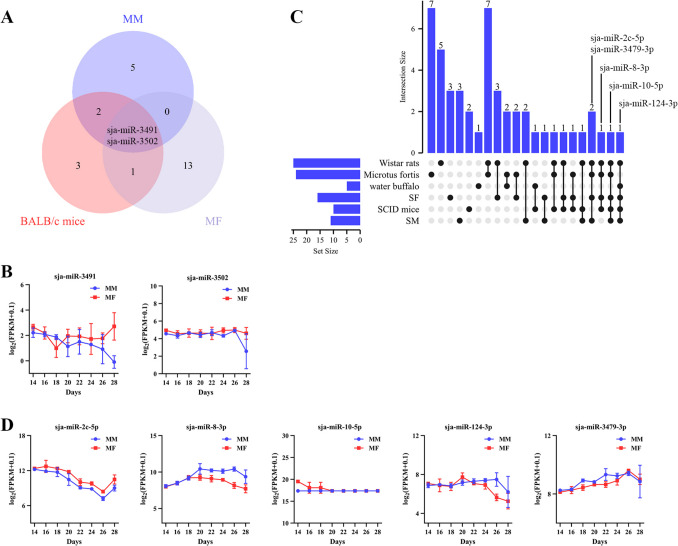 Figure 3
 Figure 4
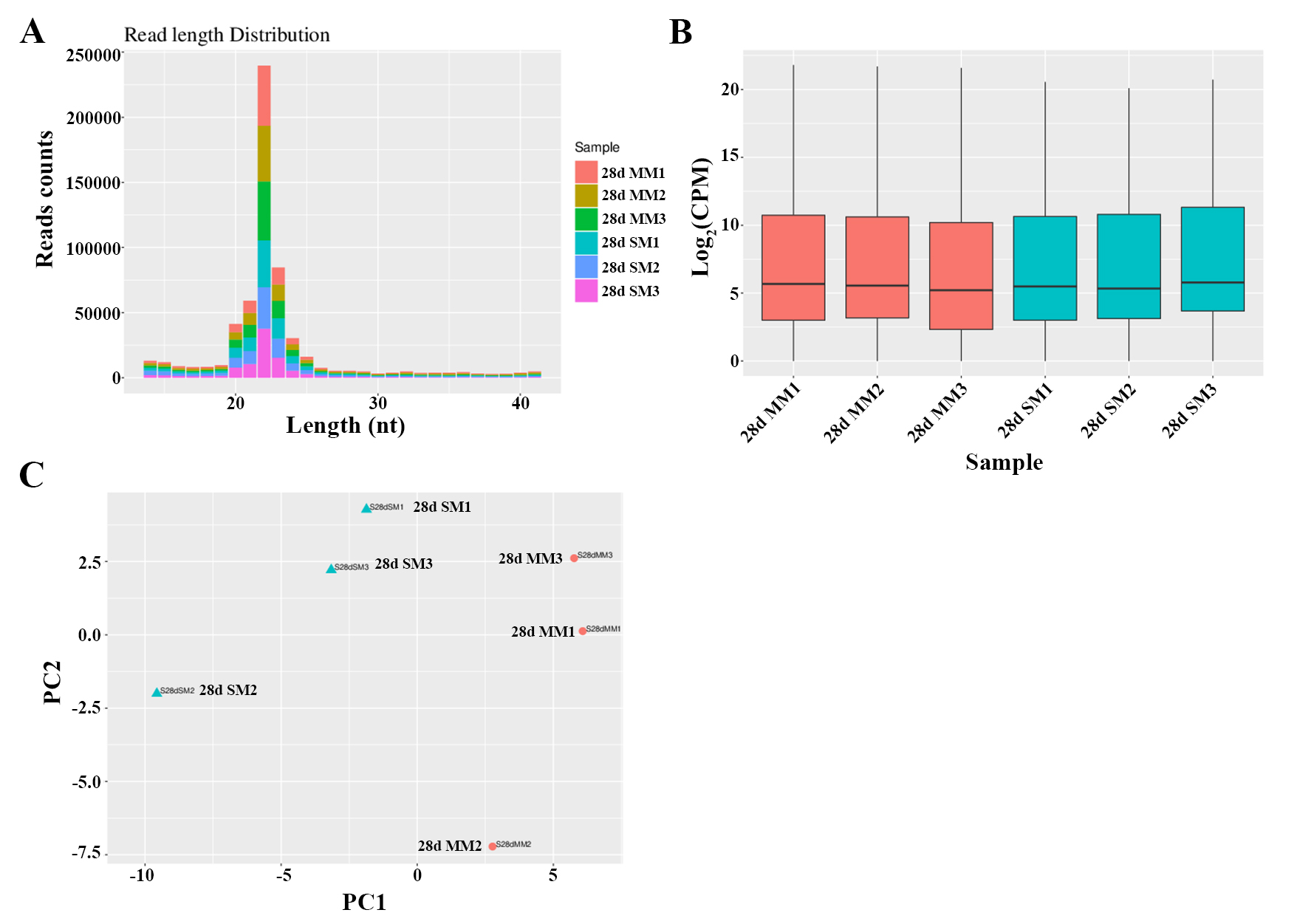 Figure 5
Peer Reviews
No public reviews on file for this paper yet. If you reviewed it on a platform where reviews are public (OpenReview, ICLR, NeurIPS, ICML), you can paste yours below so the community can read it here.
Videos
No videos yet. Explain this paper in a talk, walkthrough, or lecture? Add one.
Taxonomy
TopicsParasites and Host Interactions · Parasite Biology and Host Interactions · Parasitic infections in humans and animals