Sacral Alar-Iliac (SAI) screw diameter is not associated with pelvic fixation failure for neuromuscular scoliosis patients
Tyler A. Tetreault, Annika Y. Myers, Jaqueline Valenzuela-Moss, Tishya A. L. Wren, Michael J. Heffernan, Lindsay M. Andras

TL;DR
The study found that the diameter of sacral alar-iliac (SAI) screws does not increase the risk of pelvic fixation failure in children with neuromuscular scoliosis.
Contribution
This study is the first to show that smaller SAI screws are not linked to higher failure rates in pediatric neuromuscular scoliosis patients.
Findings
SAI screw diameter was not associated with pelvic fixation failure in pediatric neuromuscular scoliosis patients.
Smaller diameter SAI screws (7.5 mm) were most commonly used and did not lead to increased complications.
Only 0.4% of screws experienced fracture, and complications were not linked to screw size.
Abstract
Determine if Sacral Alar-Iliac (SAI) screw diameter is associated with pelvic fixation failure in pediatric patients with neuromuscular scoliosis (NMS) treated with posterior spinal fusion (PSF). NMS patients from a single institution who underwent PSF with bilateral SAI screw fixation from 2010 to 2021 were retrospectively reviewed. Clinical parameters, SAI screw sizes, and radiographic outcomes were analyzed. Patients with greater or less than two SAI screws, > 21 years old, or with < 2 years of radiographic follow-up were excluded. 142 patients had 284 SAI screws placed. Mean(± SD) age was 13.6 ± 2.7 years. Preoperative curve magnitude averaged 84.3 ± 29.1°. Mean patient weight was 36.4 ± 14.1kg and BMI was 18 ± 5.1. Radiographic follow-up averaged 4.6 ± 2.0 years. Most screws (234/284,82.4%) were < 8.5 mm and 7.5 mm screws were most frequently used (158/248,55.6%). Mean screw…
Genes, proteins, chemicals, diseases, species, mutations and cell lines named across the full text — each resolved to its canonical identifier and authoritative record.
Click any figure to enlarge with its caption.
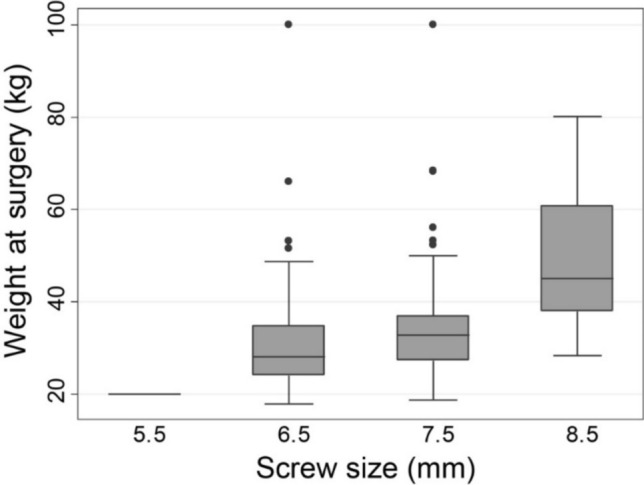 Figure 1
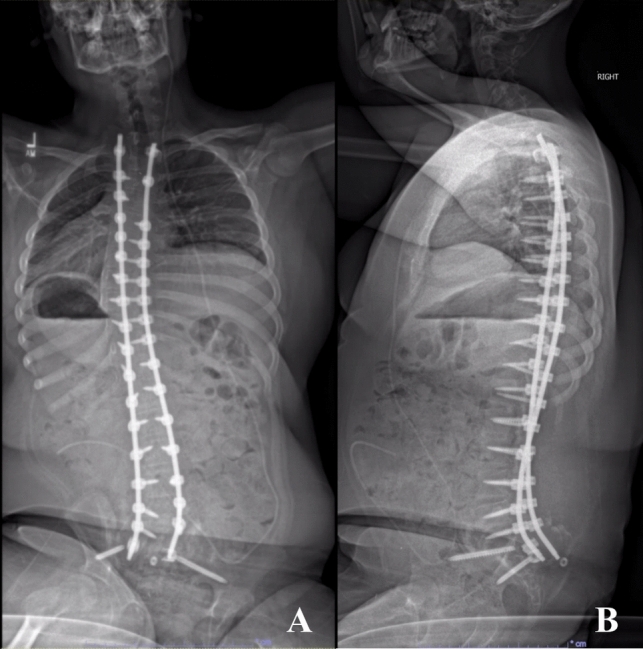 Figure 2
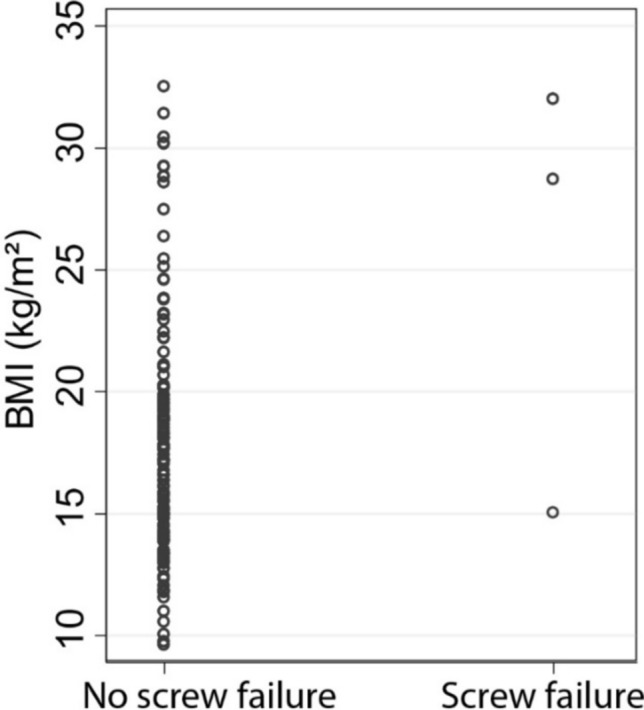 Figure 3
Peer Reviews
No public reviews on file for this paper yet. If you reviewed it on a platform where reviews are public (OpenReview, ICLR, NeurIPS, ICML), you can paste yours below so the community can read it here.
Videos
No videos yet. Explain this paper in a talk, walkthrough, or lecture? Add one.
Taxonomy
TopicsScoliosis diagnosis and treatment · Spinal Fractures and Fixation Techniques · Pelvic and Acetabular Injuries