Detection of Rickettsia spp. in questing ticks (Acari: Ixodidae) from forest fragments adjacent to agricultural and livestock farms in Casanare, Colombia
José Luis Rodríguez-Bautista, Patricia Fuya-Oviedo, Ard Menzo Nijhof, Lidia Chitimia-Dobler, Isaiah Obara, Adivaldo Fonseca

TL;DR
This study found Rickettsia bacteria in ticks from rural areas in Colombia, highlighting potential risks to human and animal health.
Contribution
The study reports the detection of a novel Rickettsia genotype, Rickettsia sp. genotype Yopal, in ticks from Colombia.
Findings
Rickettsia organisms were detected in 1.52% of ticks, including larvae, nymphs, and adults.
A novel Rickettsia genotype, phylogenetically related to Rickettsia canadensis, was identified in two A. mixtum males.
Multiple Rickettsia species were found, suggesting a need for further study on tropical febrile illnesses in the region.
Abstract
This study aimed to describe the diversity of ixodid tick species in rural forest areas of Yopal and Aguazul, Department of Casanare, Colombia, and to evaluate the presence of tick-borne Rickettsia sp., potentially impacting animal and human health. A cross-sectional study was conducted on questing ticks collected from forested farm areas that keep livestock and/or conduct agricultural activities. All ticks were subjected to DNA extraction and tested by PCR amplifying fragments of three rickettsial genes: gltA, htrA, and ompA. A total of 852 individual ticks (larvae, nymphs, and adults) and 15 additional larvae clusters were collected and identified as Amblyomma mixtum, Amblyomma cf. parvum, Amblyomma dissimile, Amblyomma spp., and Dermacentor spp. Rickettsia organisms were detected by PCR in 7.0% (16/230) of the individual larvae, 0.2% (1/488) of the nymphs, and 1.5% (2/134) of the…
Genes, proteins, chemicals, diseases, species, mutations and cell lines named across the full text — each resolved to its canonical identifier and authoritative record.
Click any figure to enlarge with its caption.
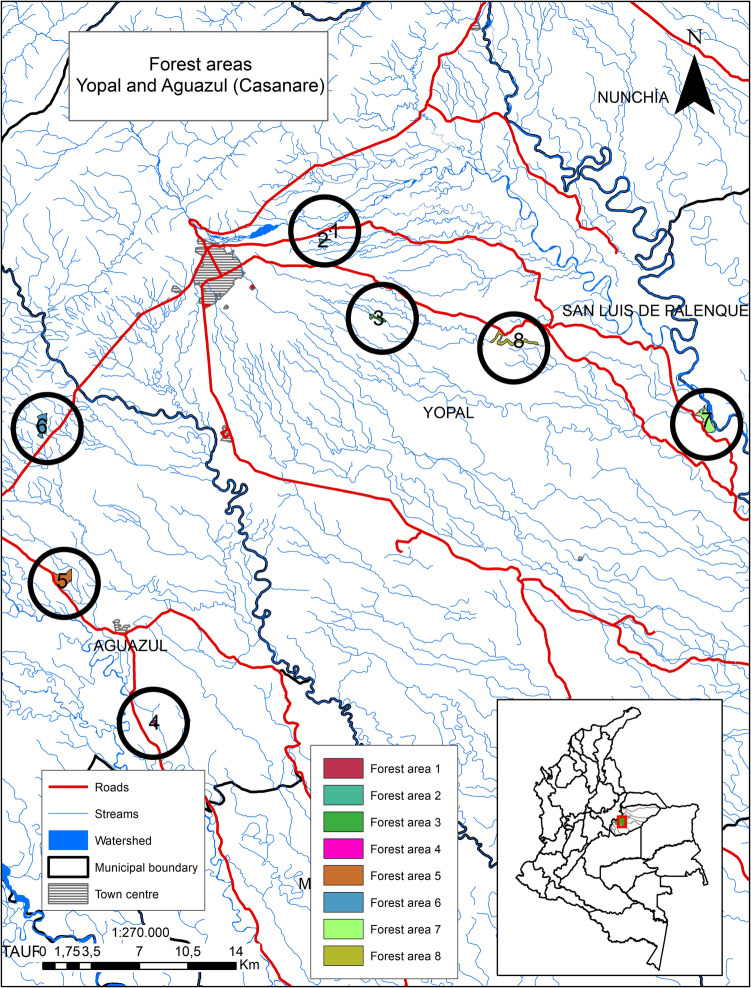 Figure 1
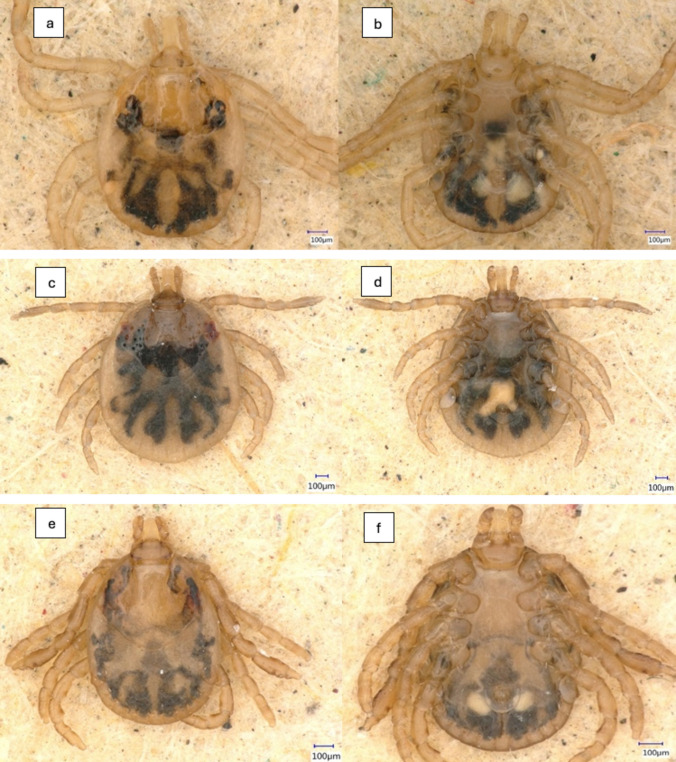 Figure 2
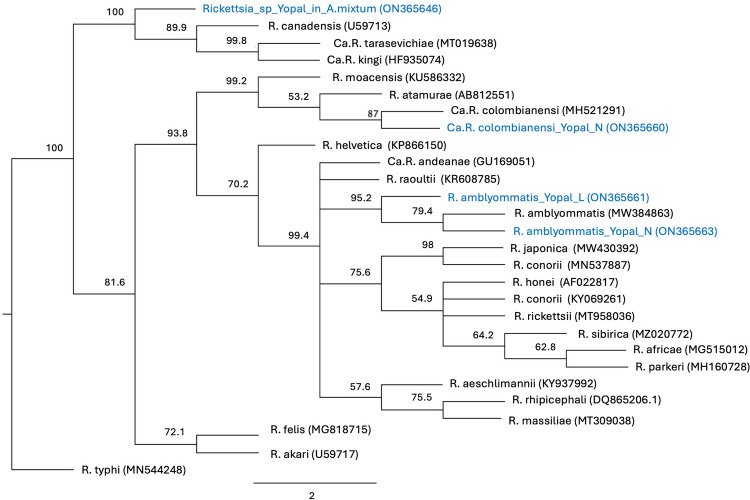 Figure 3
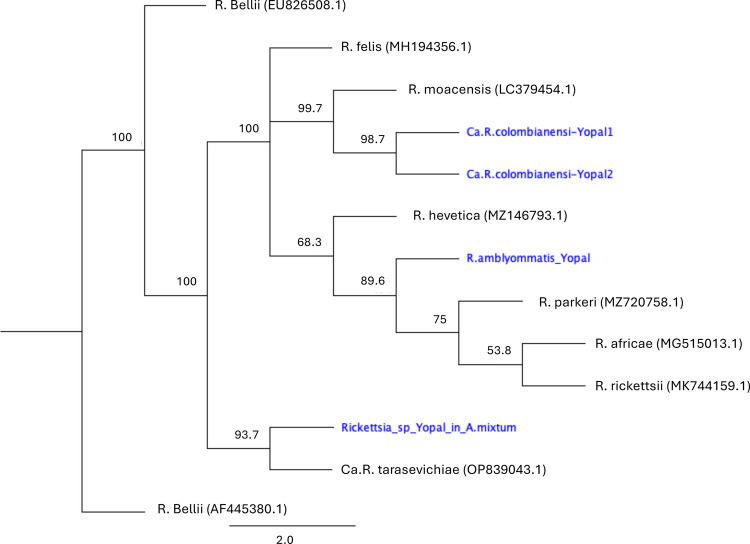 Figure 4
Peer Reviews
No public reviews on file for this paper yet. If you reviewed it on a platform where reviews are public (OpenReview, ICLR, NeurIPS, ICML), you can paste yours below so the community can read it here.
Videos
No videos yet. Explain this paper in a talk, walkthrough, or lecture? Add one.
Taxonomy
TopicsVector-borne infectious diseases · Viral Infections and Vectors · Dermatological diseases and infestations