Efficacy of 18F‐Fluoro‐2‐Deoxyglucose Positron Emission Tomography as a Predictor of Treatment Response to Neoadjuvant S‐1 + Oxaliplatin Chemotherapy for Gastric Cancer
Naoki Urakawa, Shingo Kanaji, Ryuichiro Sawada, Yasufumi Koterazawa, Taro Ikeda, Hitoshi Harada, Hironobu Goto, Hiroshi Hasegawa, Kimihiro Yamashita, Takeru Matsuda, Yoshihiro Kakeji

TL;DR
This study shows that FDG-PET scans can predict how well gastric cancer patients respond to a specific chemotherapy treatment before surgery.
Contribution
The study identifies optimal SUVmax reduction thresholds for predicting treatment response in gastric cancer patients undergoing SOX chemotherapy.
Findings
SUVmax decreased significantly after chemotherapy, especially in higher-grade tumors.
A 53% ΔSUVmax cut-off predicted Grade 1b or higher response, and 75% for Grade 2 or higher.
Patients with ΔSUVmax >50% had better recurrence-free survival.
Abstract
Neoadjuvant chemotherapy is widely recognized as the established treatment for advanced gastric cancer. However, predicting its efficacy before surgery remains challenging. The present study aimed to evaluate the effectiveness of 18F‐fluoro‐2‐deoxyglucose positron emission tomography (FDG‐PET) as a predictor of treatment response to the S‐1+Oxaliplatin regimen (SOX). Thirty patients who underwent gastrectomy following neoadjuvant SOX between January 2021 and July 2023 were included. Patients underwent FDG‐PET pre‐ and postsurgery. The maximum standardized uptake value (SUVmax) from FDG‐PET was examined in relation to histological tumor response and prognosis. SUVmax decreased significantly after chemotherapy in all patients (p < 0.001), especially in those with Grade 1a, 2, and 3 tumors (p < 0.05). SUV reduction increased stepwise with the histological response grade. Optimal cut‐off…
Genes, proteins, chemicals, diseases, species, mutations and cell lines named across the full text — each resolved to its canonical identifier and authoritative record.
Click any figure to enlarge with its caption.
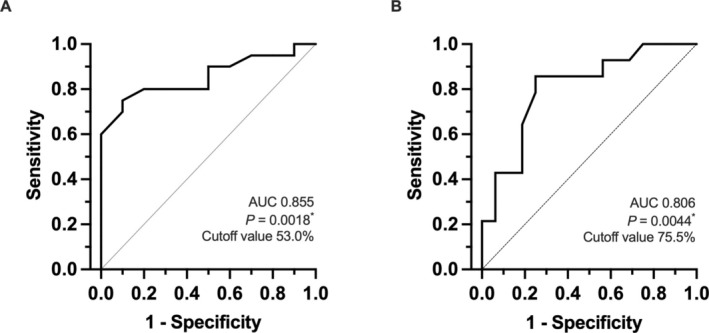 Figure 1
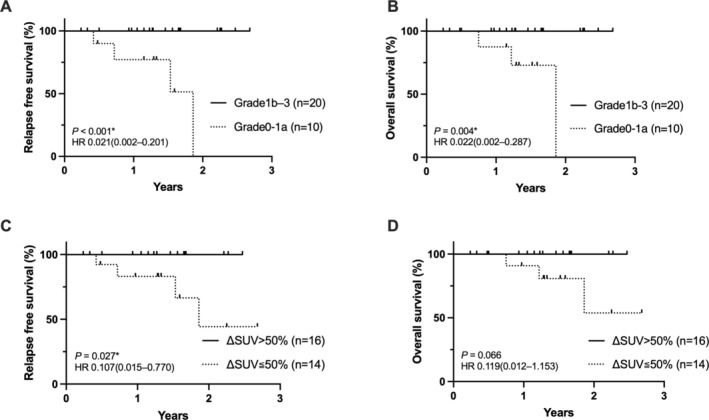 Figure 2
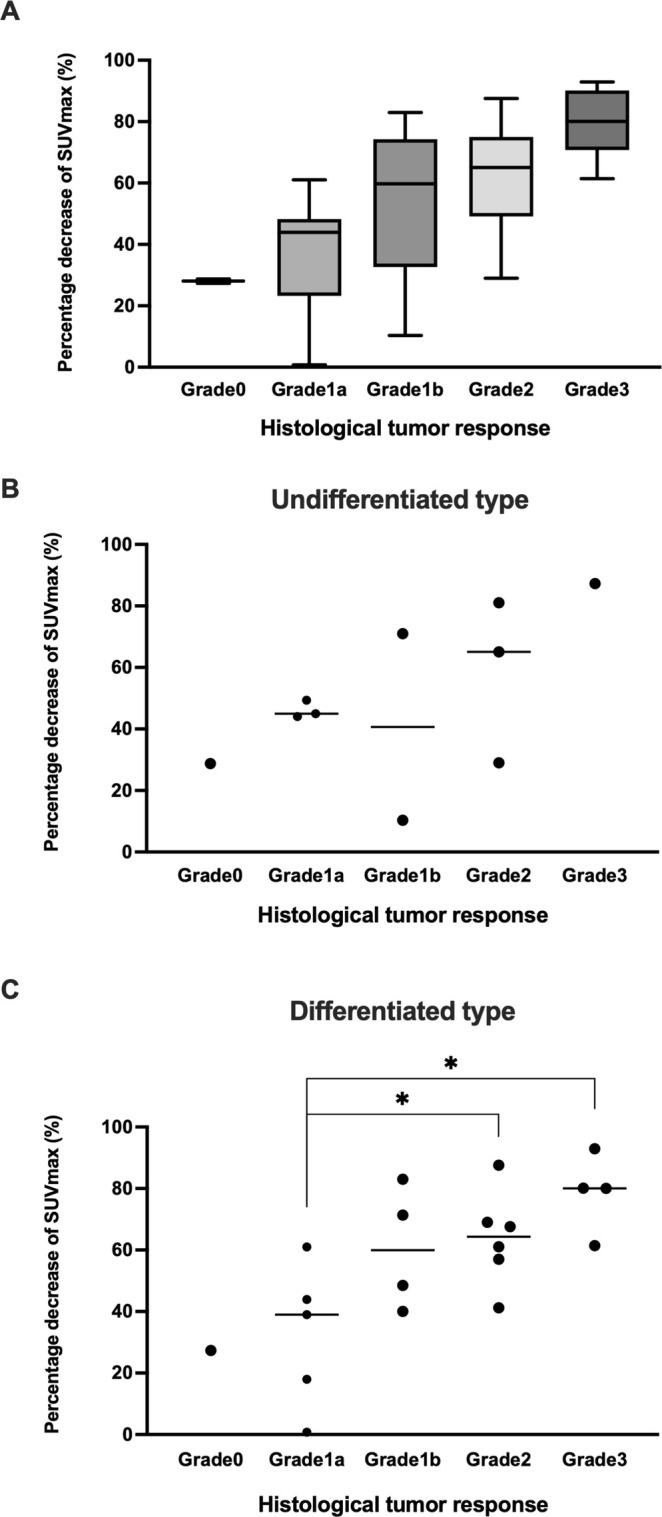 Figure 3
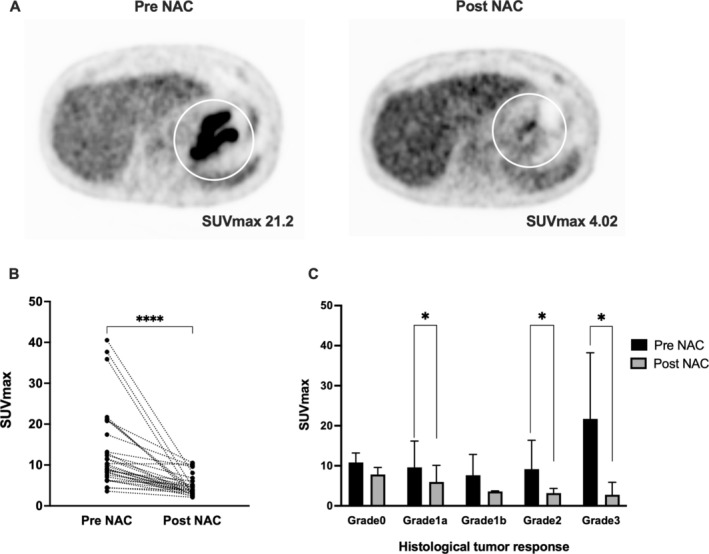 Figure 4
Peer Reviews
No public reviews on file for this paper yet. If you reviewed it on a platform where reviews are public (OpenReview, ICLR, NeurIPS, ICML), you can paste yours below so the community can read it here.
Videos
No videos yet. Explain this paper in a talk, walkthrough, or lecture? Add one.
Taxonomy
TopicsGastric Cancer Management and Outcomes · Gastrointestinal Tumor Research and Treatment · Metastasis and carcinoma case studies