Head-to-head comparison of 68Ga-PSMA-11 and 18F-FDG in delayed PET/CT imaging in prostate cancer diagnosis
Biyao Hu, Haonan Yu, Meijie Pan, Hailei Yang, Xiling Xing, Dong Li, Shaobo Yao, Qiusong Chen

TL;DR
This study compares the effectiveness of two PET/CT imaging methods for detecting prostate cancer lesions and finds that 68Ga-PSMA-11 is more sensitive and accurate than 18F-FDG in delayed imaging.
Contribution
The study provides a head-to-head comparison of PSMA and FDG PET/CT in delayed imaging for prostate cancer detection, highlighting their diagnostic performance differences.
Findings
68Ga-PSMA-11 showed higher sensitivity and diagnostic accuracy for primary prostate cancer lesions in delayed imaging compared to 18F-FDG.
Delayed FDG imaging improved diagnostic accuracy for primary lesions compared to early FDG imaging but was less effective for metastatic detection.
PSMA SUVmax correlated with Gleason score and PSA, while FDG SUVmax only correlated with PSA at 3 hours post-injection.
Abstract
Delayed PET/CT imaging with 68Ga-PSMA-11 is valuable in the detection of primary prostate (PCa) lesions and the differentiation of suspicious lesions. However, 18F-FDG PET/CT has been overlooked due to its low sensitivity to PCa during routine examination. This study aimed to compare the clinical impact of PSMA and FDG in delayed PET/CT imaging in PCa diagnosis. Between 2019 and 2024, 65 PCa patients who underwent early (1 h post-injection) and delayed (3 h p.i.) PSMA and FDG scans were retrospectively analyzed. The delayed scans were conducted to clarify unclear findings in early scans or to increase the tumor lesions uptake in negative early scans. All patients were asked to drink 1 L of water between early and delayed scans. The number of primary and metastatic lesions, sensitivity, specificity, diagnostic accuracy, lesions changes in SUVmax of early and delayed scans were…
Genes, proteins, chemicals, diseases, species, mutations and cell lines named across the full text — each resolved to its canonical identifier and authoritative record.
Click any figure to enlarge with its caption.
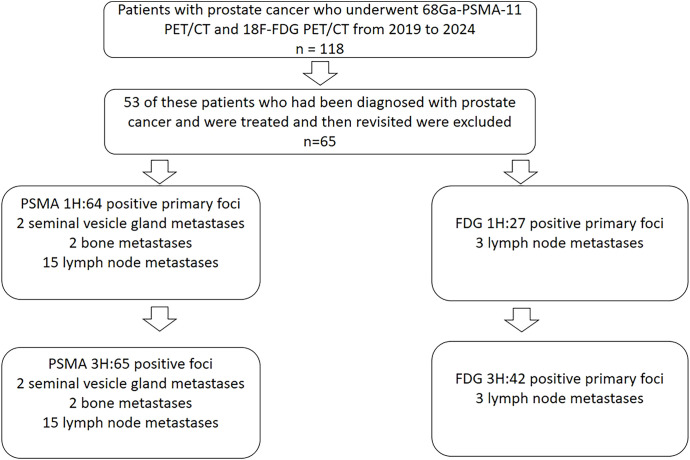 Figure 1
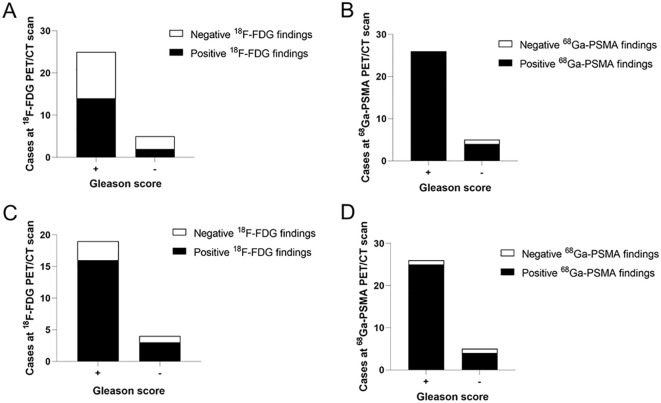 Figure 2
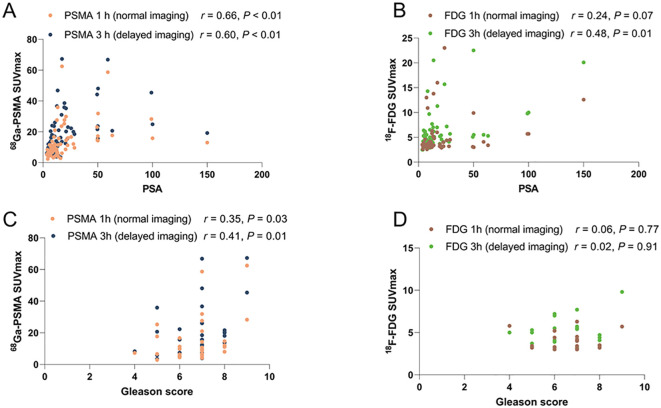 Figure 3
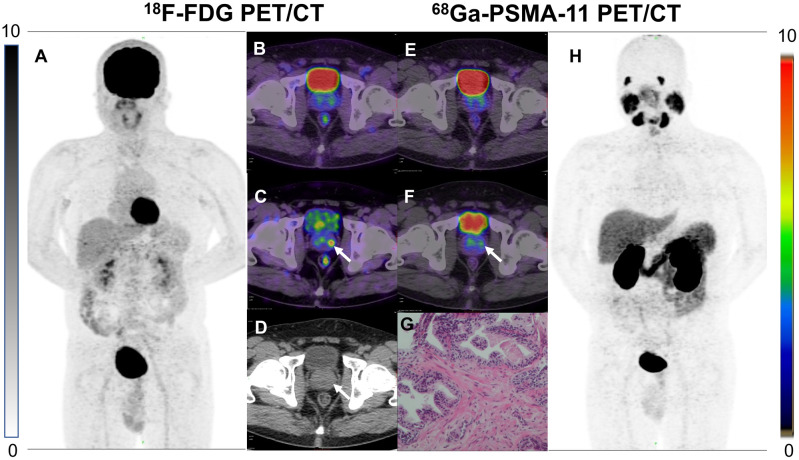 Figure 4
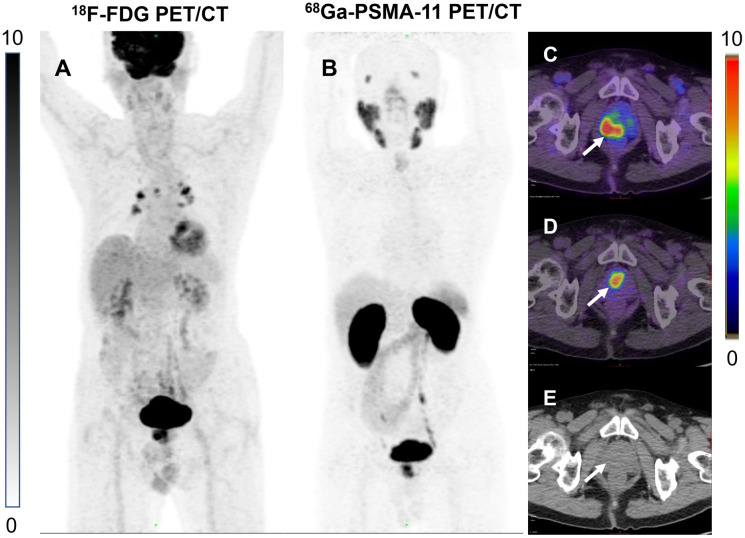 Figure 5
Peer Reviews
No public reviews on file for this paper yet. If you reviewed it on a platform where reviews are public (OpenReview, ICLR, NeurIPS, ICML), you can paste yours below so the community can read it here.
Videos
No videos yet. Explain this paper in a talk, walkthrough, or lecture? Add one.
Taxonomy
TopicsProstate Cancer Treatment and Research · Prostate Cancer Diagnosis and Treatment · Radiopharmaceutical Chemistry and Applications