Unexpected enzymatic function of an ancient nucleic acid-binding fold
Rylan R Watkins, Stella Bockelman, Anna Vradi, Kaylee Grabarkewitz, Alexa Pyun, Josephine Stark, Vicki H Wysocki, Juan D Alfonzo, Karin Musier-Forsyth

TL;DR
A protein with an ancient nucleic acid-binding fold was found to have an unexpected enzymatic function in deacylating Ala–tRNAs.
Contribution
Discovery of a novel enzymatic function in a protein with an ancient OB-fold, previously uncharacterized.
Findings
MCP1 deacylates Ala–tRNAs despite lacking known tRNA-editing domain homology.
The OB-fold in MCP1 contains the catalytic pocket, with three conserved residues critical for activity.
MCP1's deacylation activity is conserved across organisms, as shown with Saccharomyces cerevisiae Arc1p.
Abstract
Aminoacyl-tRNA synthetases (ARSs) are indispensable for all living organisms and their associated aminoacyl–tRNA editing domains ensure the fidelity of translation. In eukaryotes, ARSs form a multi-aminoacyl–tRNA synthetase complex (MSC), which is assembled together with several nonsynthetase scaffolding proteins. The MSC found in Trypanosoma brucei (Tb) includes two proteins with oligosaccharide/oligonucleotide-binding (OB) folds—MSC-associated protein 1 (MCP1) and MCP2—and one known trans-editing factor, MCP3, an Ala–tRNA deacylase. The activity of MCP1 was unexplored until now. Our study shows that recombinantly-expressed and purified MCP1 also deacylates Ala–tRNAs despite lacking known tRNA-editing domain homology. Domain deletion studies reveal that the OB-fold houses the catalytic pocket and mutation of any one of three conserved OB-fold residues (K326, R331, S335) abolishes…
Genes, proteins, chemicals, diseases, species, mutations and cell lines named across the full text — each resolved to its canonical identifier and authoritative record.
Click any figure to enlarge with its caption.
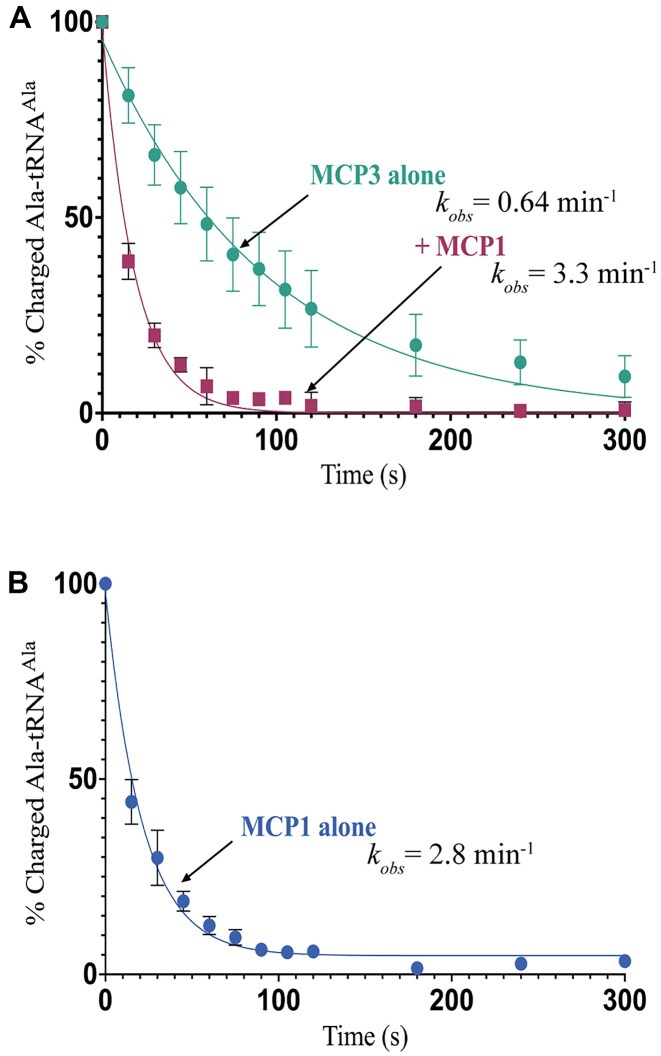 Figure 1
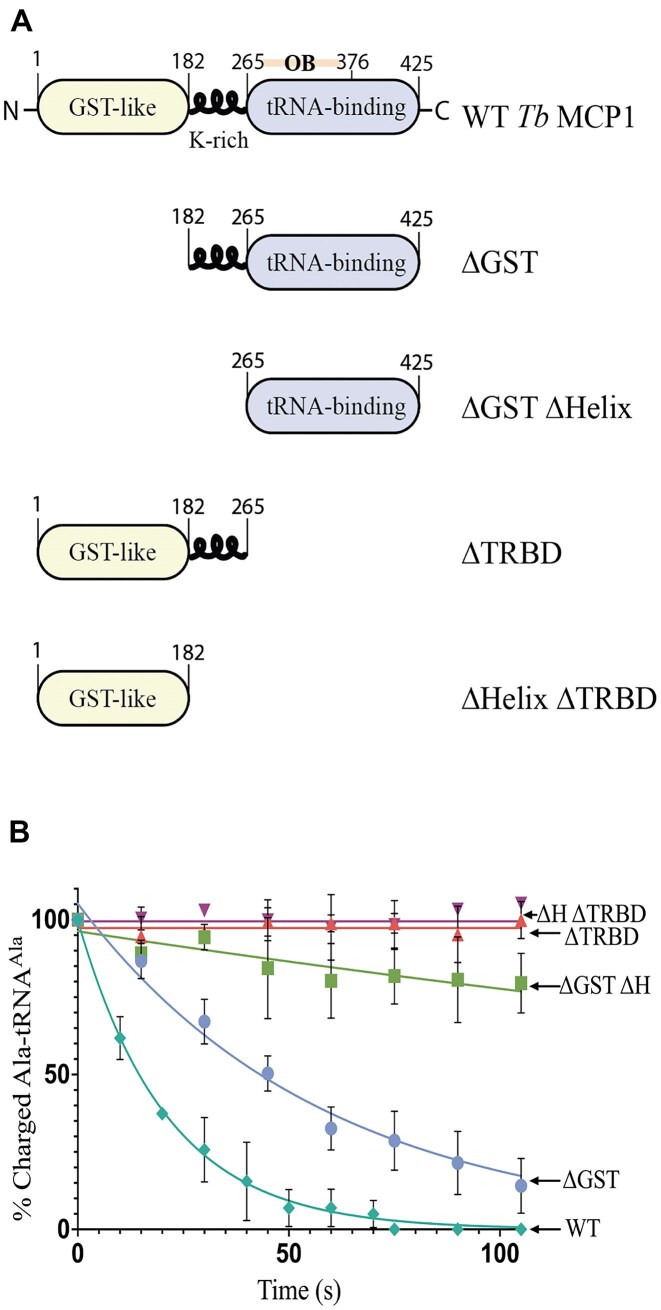 Figure 2
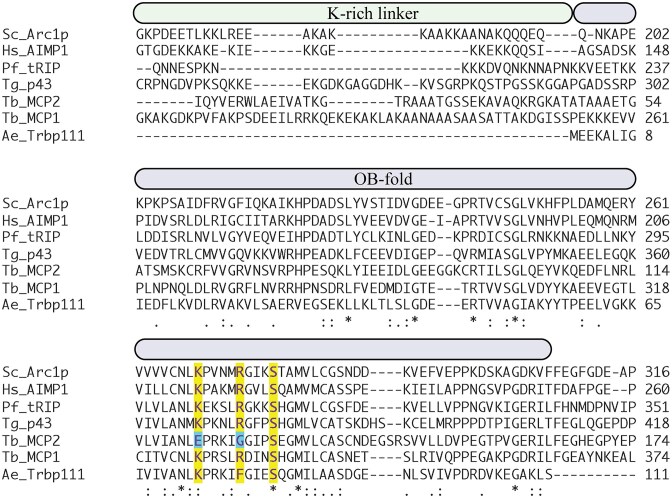 Figure 3
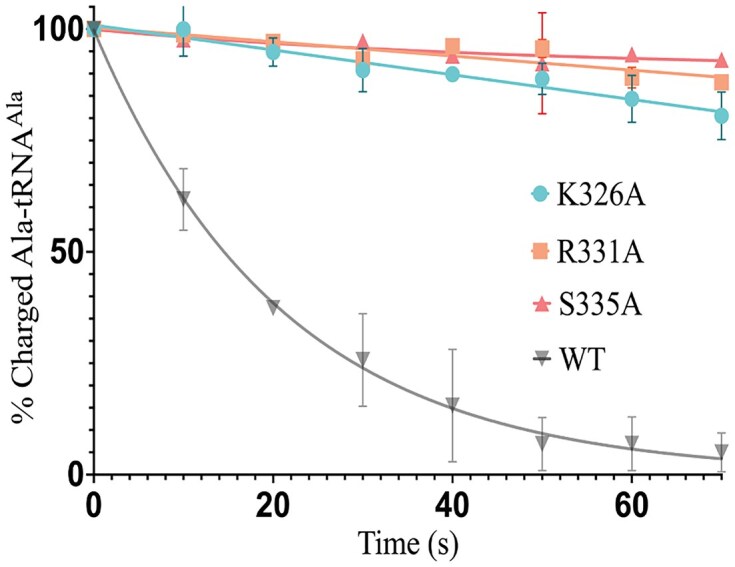 Figure 4
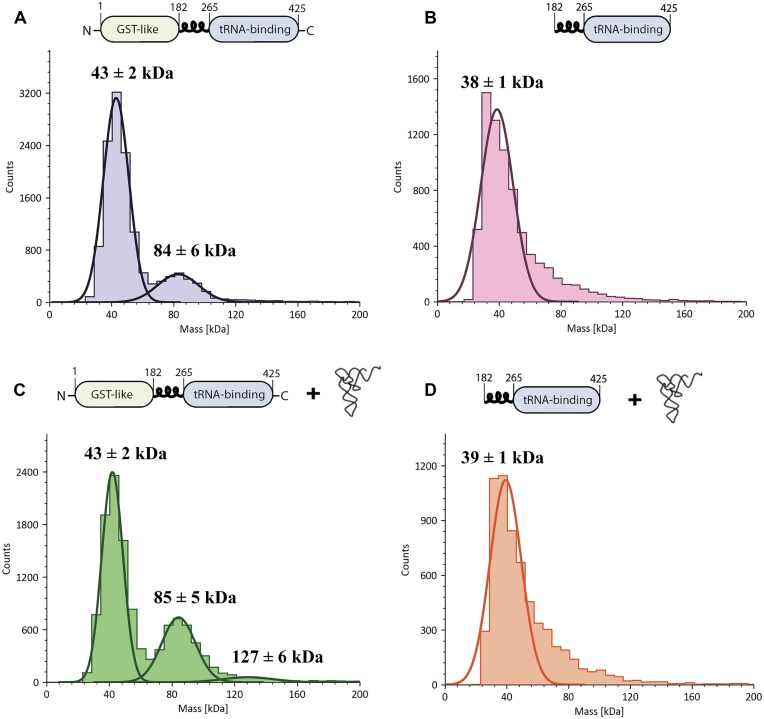 Figure 5
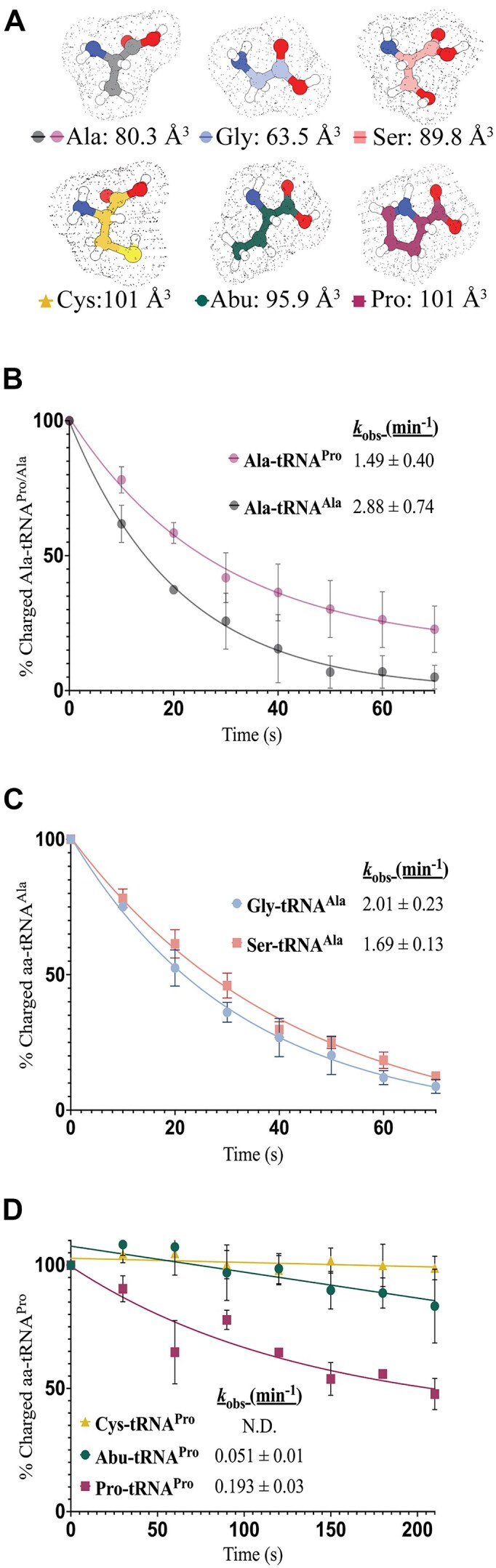 Figure 6
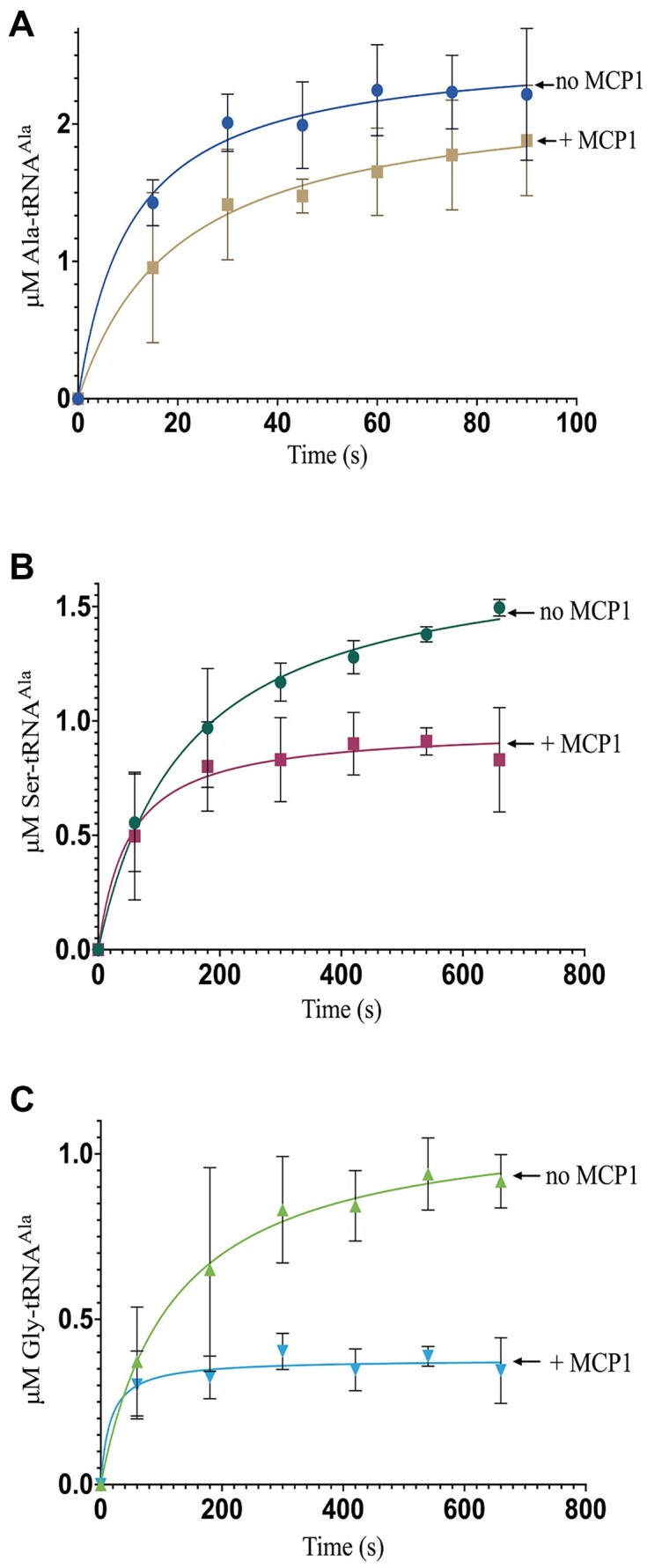 Figure 7
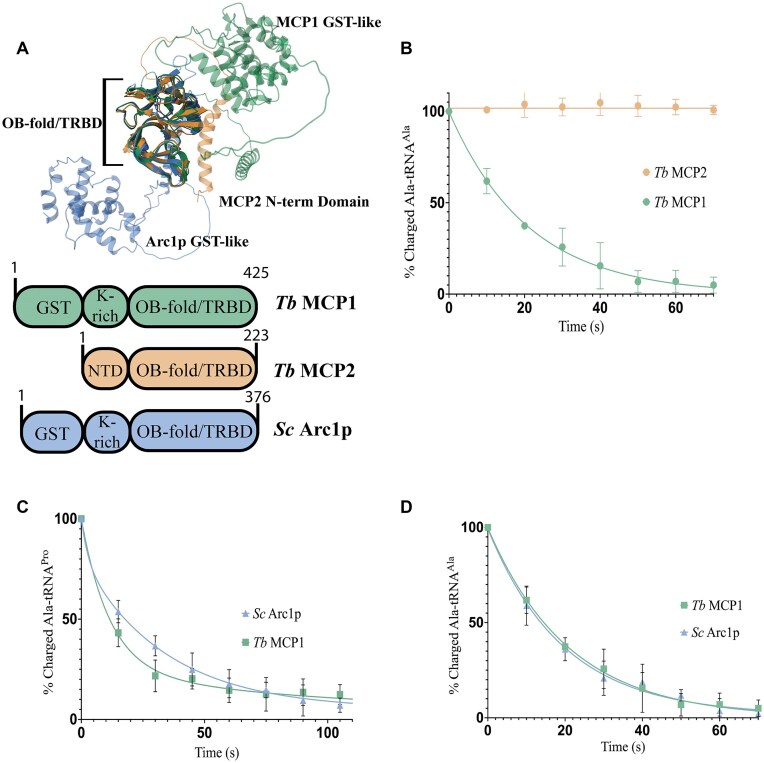 Figure 8
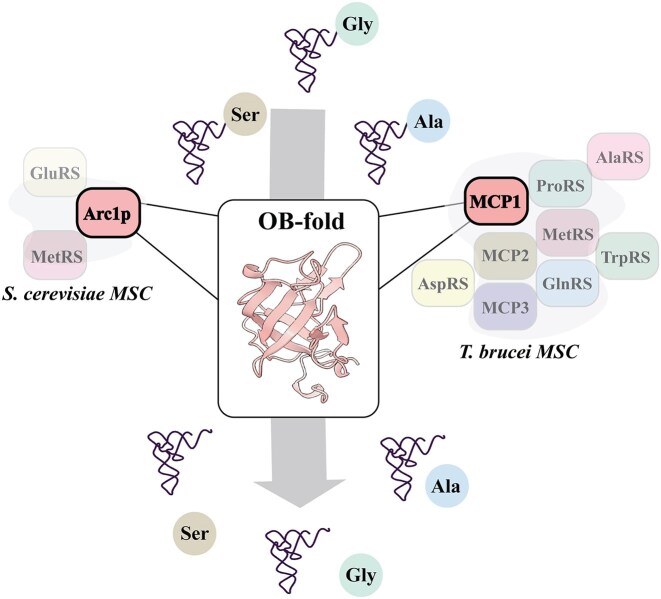 Figure 9
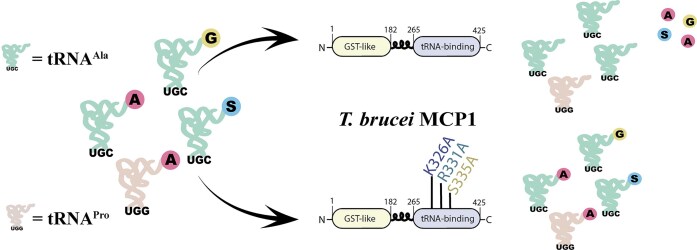 Figure 10
Peer Reviews
No public reviews on file for this paper yet. If you reviewed it on a platform where reviews are public (OpenReview, ICLR, NeurIPS, ICML), you can paste yours below so the community can read it here.
Videos
No videos yet. Explain this paper in a talk, walkthrough, or lecture? Add one.
Taxonomy
TopicsRNA and protein synthesis mechanisms · RNA modifications and cancer · RNA regulation and disease