Probabilistic classification of gene-by-treatment interactions on molecular count phenotypes
Yuriko Harigaya, Nana Matoba, Brandon D Le, Jordan M Valone, Jason L Stein, Michael I Love, William Valdar

TL;DR
This paper introduces a new method to classify gene-by-treatment interactions in molecular traits, improving interpretation of genetic effects under treatment conditions.
Contribution
A novel Bayesian method is introduced to classify and interpret gene-by-treatment interaction types in molecular QTL data.
Findings
The method uses Bayesian model selection to assign posterior probabilities to different G×T interaction types.
Nonlinear regression on log-scale counts better captures biological relationships between genotype and molecular traits.
The approach is validated through simulations and real datasets, showing improved interpretability of G×T interactions.
Abstract
Genetic variation can modulate response to treatment (G×T) or environmental stimuli (G×E), both of which can be highly consequential in biomedicine. An effective approach to identifying G×T signals and gaining insight into molecular mechanisms is mapping quantitative trait loci (QTL) of molecular count phenotypes, such as gene expression and chromatin accessibility, under multiple treatment conditions, which is termed response molecular QTL mapping. Although standard approaches evaluate the interaction between genetics and treatment conditions, they do not distinguish between meaningful interpretations such as whether a genetic effect is observed only in the treated condition or whether a genetic effect is observed always but accentuated in the treated condition. To address this gap, we have developed a downstream method for classifying response molecular QTLs into subclasses with…
Genes, proteins, chemicals, diseases, species, mutations and cell lines named across the full text — each resolved to its canonical identifier and authoritative record.
Click any figure to enlarge with its caption.
 Figure 1
 Figure 2
 Figure 3
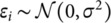 Figure 4
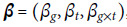 Figure 5
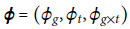 Figure 6
 Figure 7
 Figure 8
 Figure 9
 Figure 10
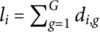 Figure 11
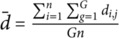 Figure 12
 Figure 13
 Figure 14
 Figure 15
 Figure 16
 Figure 17
 Figure 18
 Figure 19
 Figure 20
 Figure 21
 Figure 22
 Figure 23
 Figure 24
 Figure 25
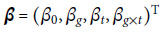 Figure 26
 Figure 27
 Figure 28
 Figure 29
 Figure 30
 Figure 31
 Figure 32
 Figure 33
 Figure 34
 Figure 35
 Figure 36
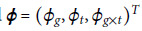 Figure 37
 Figure 38
 Figure 39
 Figure 40
 Figure 41
 Figure 42
 Figure 43
 Figure 44
 Figure 45
 Figure 46
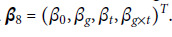 Figure 47
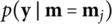 Figure 48
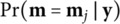 Figure 49
 Figure 50
Peer Reviews
No public reviews on file for this paper yet. If you reviewed it on a platform where reviews are public (OpenReview, ICLR, NeurIPS, ICML), you can paste yours below so the community can read it here.
Videos
No videos yet. Explain this paper in a talk, walkthrough, or lecture? Add one.
Taxonomy
TopicsGenetic Mapping and Diversity in Plants and Animals · Gene expression and cancer classification · Genetic Associations and Epidemiology