Gradient system characterization of a 1.5 T MR‐Linac with application to 4D UTE imaging for adaptive MR‐guided radiotherapy of lung cancer
Rosie Goodburn, Tom Bruijnen, Bastien Lecoeur, Prashant Nair, Merina Ahmed, Helen Barnes, Uwe Oelfke, Andreas Wetscherek

TL;DR
This paper describes a method to measure and correct gradient system imperfections in an MR-Linac to improve UTE imaging for lung cancer radiotherapy.
Contribution
A phantom-based method to measure and apply gradient system transfer functions for trajectory correction in UTE imaging on an MR-Linac.
Findings
The GSTF magnitude and phase were consistent across X/Y/Z axes up to 6 kHz and 3 kHz, respectively.
Trajectory correction improved UTE image quality by reducing artifacts and enhancing signal uniformity and contrast.
Later echo times did not benefit significantly from trajectory correction in terms of image quality.
Abstract
To measure the gradient system transfer function (GSTF) of an MR‐Linac (Elekta Unity, Stockholm, Sweden) using an accessible phantom‐based method and to apply trajectory corrections for UTE image reconstruction in the context of MR‐guided radiotherapy of lung cancer. The first‐order GSTF of a 1.5 T, split gradient Elekta Unity MR‐Linac was measured using a thin‐slice technique to characterize gradient system imperfections for each physical gradient axis (X, Y, Z). Repeatability measurements of the GSTF were performed 48 h apart. The GSTF was applied to trajectory correction in multi‐echo UTE image reconstruction (TEs = 0.176, 1.85, 3.52 ms) to allow for UTE‐Dixon inputs in the generation of synthetic CT. Images were acquired in an anthropomorphic phantom and in two free‐breathing lung cancer patients. For patient scans, respiratory‐correlated 4D‐MR images were reconstructed using…
Genes, proteins, chemicals, diseases, species, mutations and cell lines named across the full text — each resolved to its canonical identifier and authoritative record.
Click any figure to enlarge with its caption.
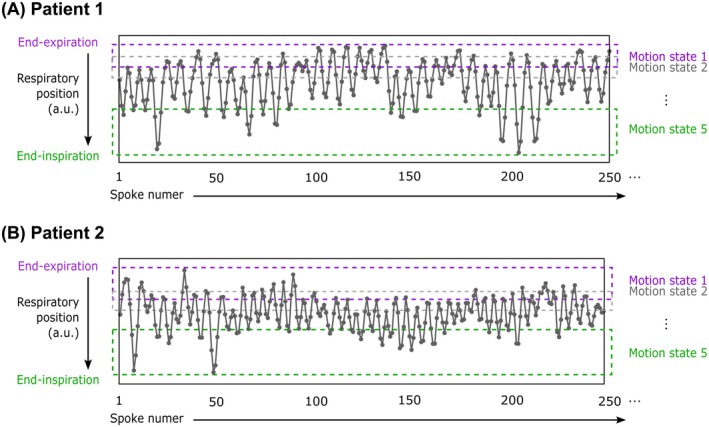 Figure 1
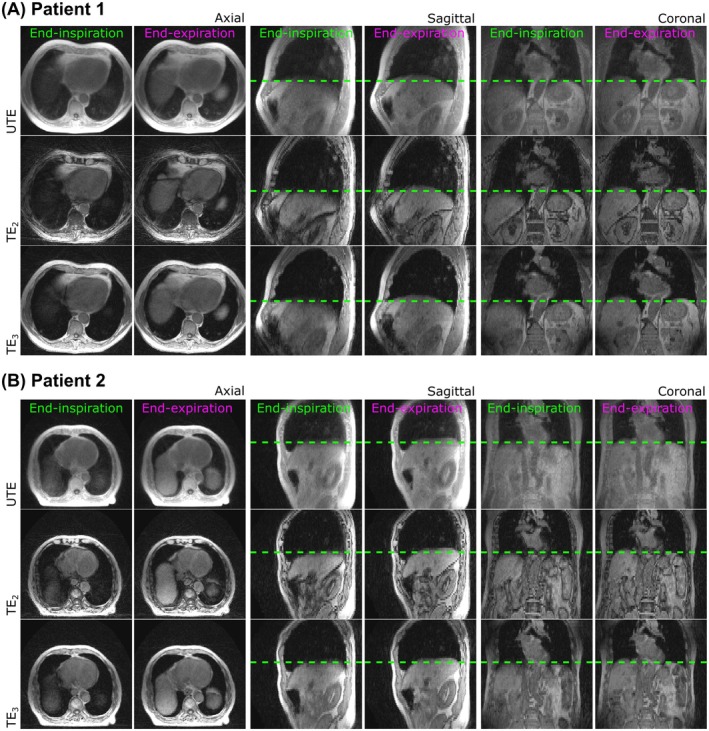 Figure 2
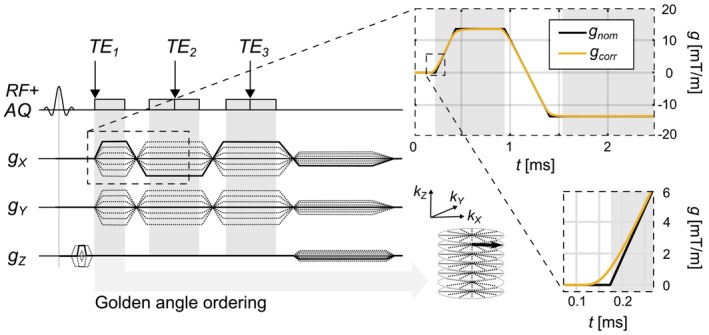 Figure 3
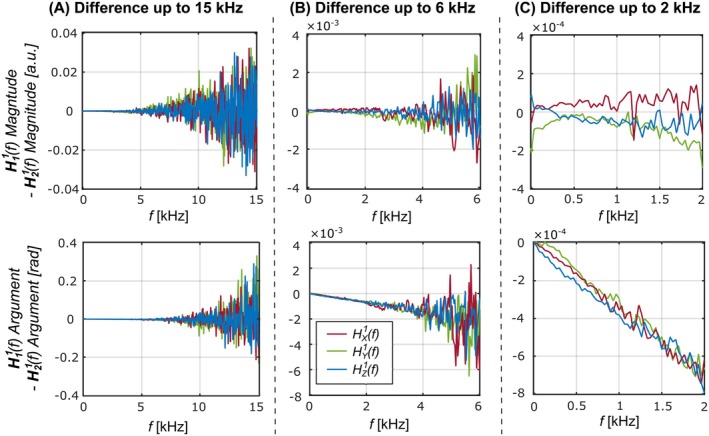 Figure 4
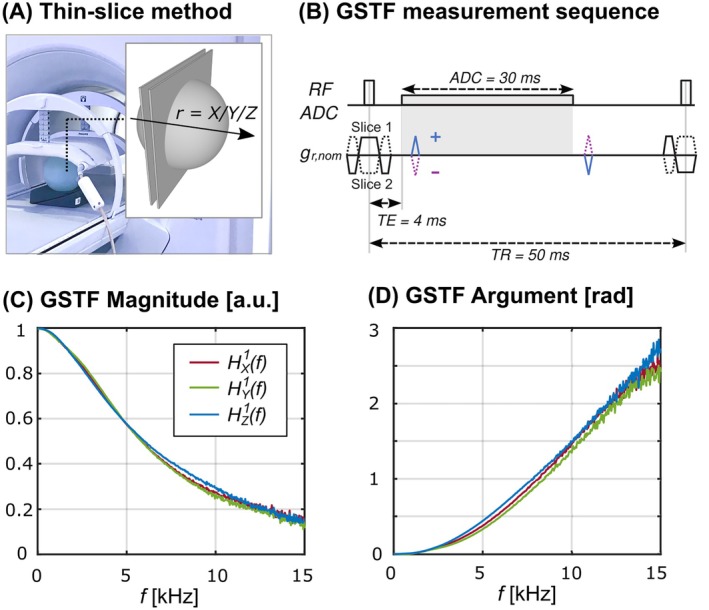 Figure 5
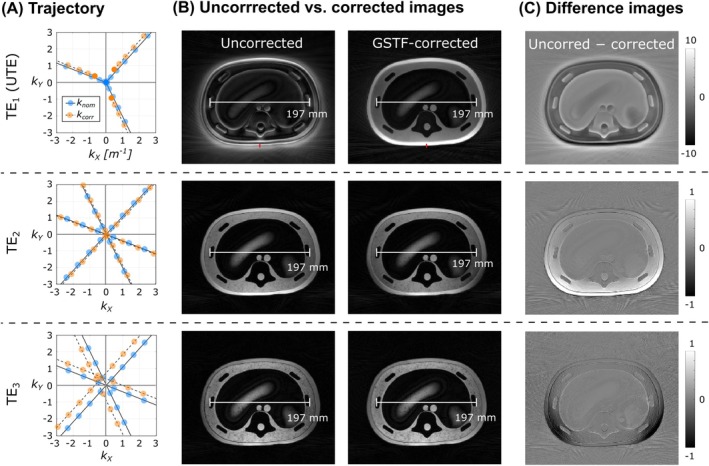 Figure 6
Peer Reviews
No public reviews on file for this paper yet. If you reviewed it on a platform where reviews are public (OpenReview, ICLR, NeurIPS, ICML), you can paste yours below so the community can read it here.
Videos
No videos yet. Explain this paper in a talk, walkthrough, or lecture? Add one.
Taxonomy
TopicsAdvanced MRI Techniques and Applications · Atomic and Subatomic Physics Research · Advanced NMR Techniques and Applications