Interprofessional Collaboration in Building In Situ Simulations to Identify Threats to Patient Safety Before Transitioning to a New Healthcare Environment: Neonatal Intensive Care as an Example
Ahmed Moussa, Audrey Larone Juneau, Charles-Olivier Chiasson, Laura Fazilleau, Justine Giroux, Marianne Lapointe, Émilie St-Pierre, Michael-Andrew Assaad, Jesse Bender, Beverley Robin

TL;DR
This study shows how teamwork and simulations can find and fix hidden safety risks before moving to a new neonatal ICU, improving patient safety and staff readiness.
Contribution
The study introduces a structured approach using interprofessional collaboration and in situ simulations to identify and resolve latent safety threats before transitioning to a new healthcare environment.
Findings
108 healthcare professionals identified 89 latent safety threats across eight themes during simulations.
76% of the identified threats were resolved before the transition to the new NICU.
Parental involvement improved patient-centered care and communication systems in the new environment.
Abstract
Background and objective While transitioning to a new healthcare environment (HCE) offers opportunities to enhance patient safety and outcomes, it can also introduce hidden risks. This study aimed to explore how interprofessional collaboration (IPC) and in situ simulations (ISS) can proactively identify and resolve these latent safety threats (LSTs) before transitioning to a new single-patient room neonatal ICU (NICU). Methodology We conducted a prospective, simulation-based intervention study involving healthcare professionals (HPs) and prior NICU parents. Three simulation activities were conducted to identify LSTs before the transition. The Canadian Interprofessional Competency Framework was employed to formulate realistic scenarios. Results A total of 108 HPs participated in six simulation sessions, identifying 89 LSTs across eight themes. The majority (76%) of these threats…
Genes, proteins, chemicals, diseases, species, mutations and cell lines named across the full text — each resolved to its canonical identifier and authoritative record.
Click any figure to enlarge with its caption.
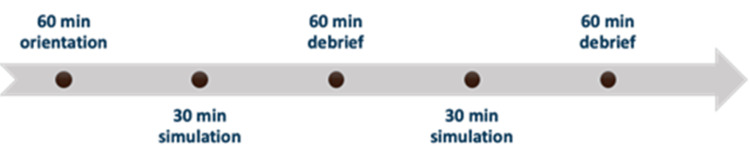 Figure 1
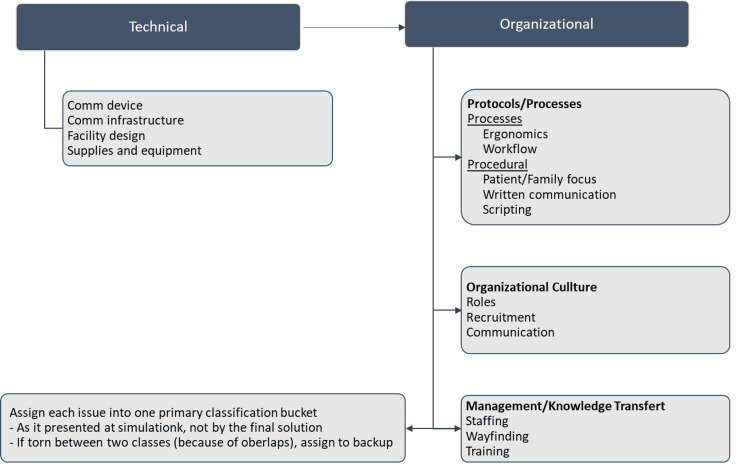 Figure 2
Peer Reviews
No public reviews on file for this paper yet. If you reviewed it on a platform where reviews are public (OpenReview, ICLR, NeurIPS, ICML), you can paste yours below so the community can read it here.
Videos
No videos yet. Explain this paper in a talk, walkthrough, or lecture? Add one.
Taxonomy
TopicsSimulation-Based Education in Healthcare · Patient Safety and Medication Errors · Family and Patient Care in Intensive Care Units