Do community-level factors play a role in HIV self-testing uptake, linkage to services and HIV-related outcomes? A mixed methods study of community-led HIV self-testing in rural Zimbabwe
Mary K. Tumushime, Nancy Ruhode, Melissa Neuman, Constancia Watadzaushe, Miriam Mutseta, Miriam Taegtmeyer, Cheryl C. Johnson, Karin Hatzold, Elizabeth L. Corbett, Frances M. Cowan, Euphemia L. Sibanda, Jennifer Tucker, Jeffrey William Eaton

TL;DR
This study shows that more cohesive communities in rural Zimbabwe were better at distributing HIV self-testing kits and identifying undiagnosed HIV cases.
Contribution
The study demonstrates the role of community cohesion in the success of community-led HIV self-testing programs.
Findings
Higher community cohesion was associated with increased new HIV diagnoses through self-testing.
Communities with higher cohesion had a higher HIV self-testing uptake compared to less cohesive ones.
Community-led HIV self-testing was more effective in identifying undiagnosed HIV in cohesive communities.
Abstract
Community-led interventions, where communities plan and lead implementation, are increasingly being adopted within public health programmes. We explore factors associated with successful community-led distribution of HIV self-test (HIVST) kits to guide future service delivery. Twenty rural communities were supported to distribute HIVST kits for 1-month between January and September 2019. Social science researchers observed communities during planning and HIVST distribution, documenting findings in a standard observation template. Three months post-intervention, a population-based survey measured self-reported new HIV diagnosis, HIVST uptake, linkage to post-test services; and collected blood samples for viral load testing. The survey also included questions related to community cohesion; respondents’ communities were grouped into low/medium/high based on community cohesion scores. We…
Genes, proteins, chemicals, diseases, species, mutations and cell lines named across the full text — each resolved to its canonical identifier and authoritative record.
Click any figure to enlarge with its caption.
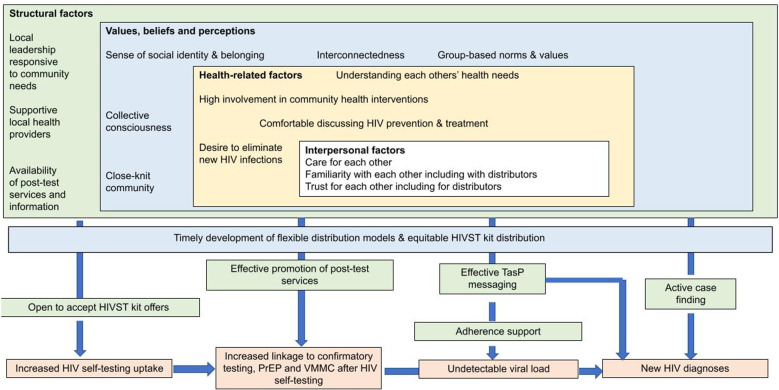 Figure 1
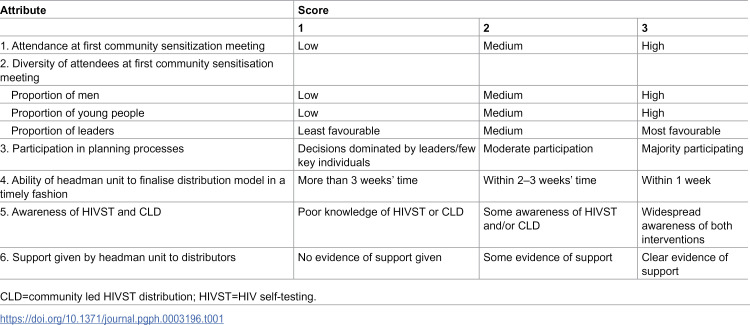 Figure 2
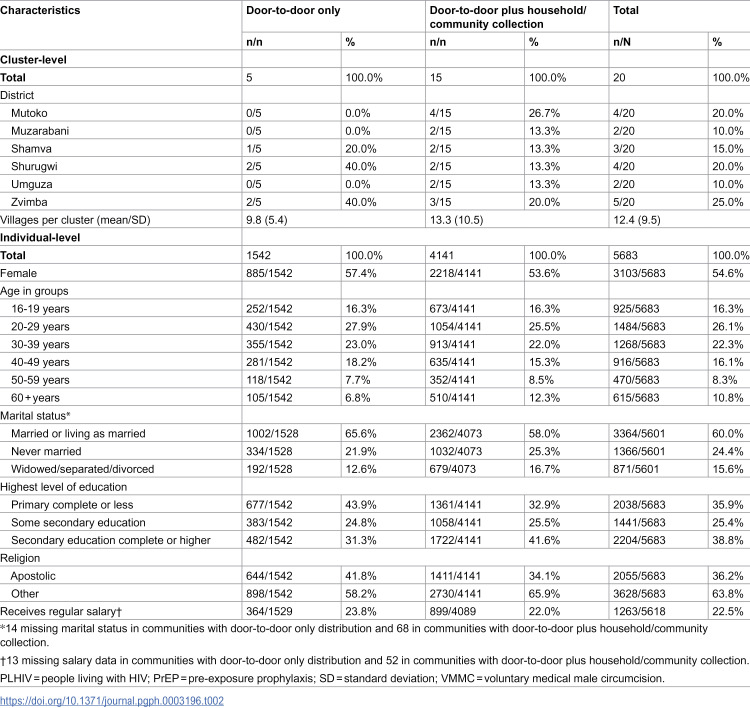 Figure 3
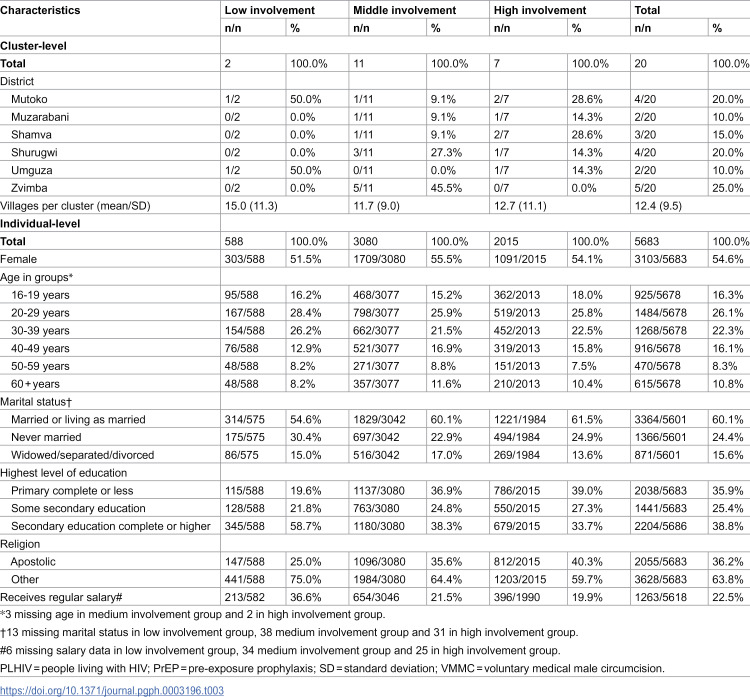 Figure 4
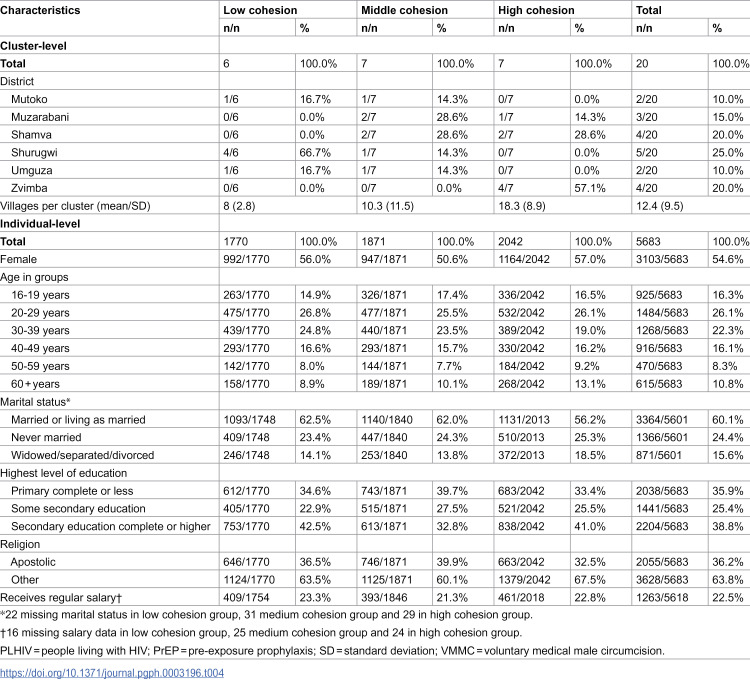 Figure 5
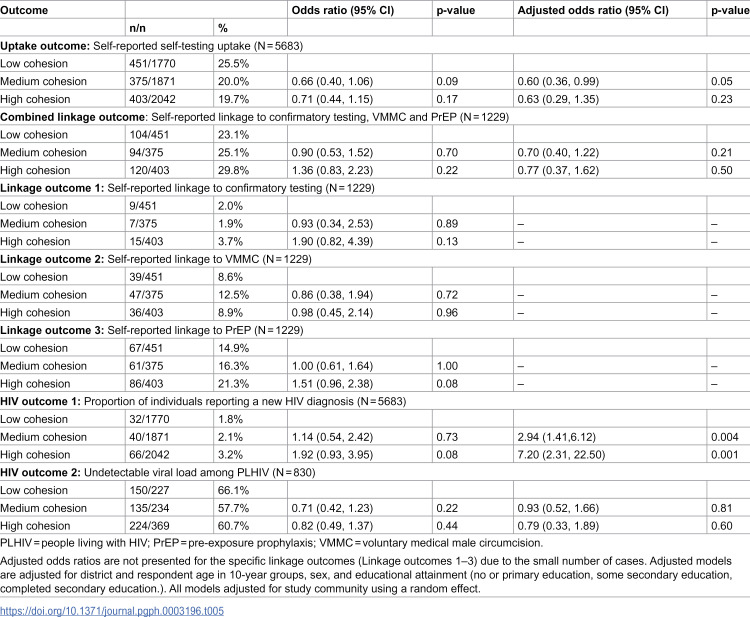 Figure 6
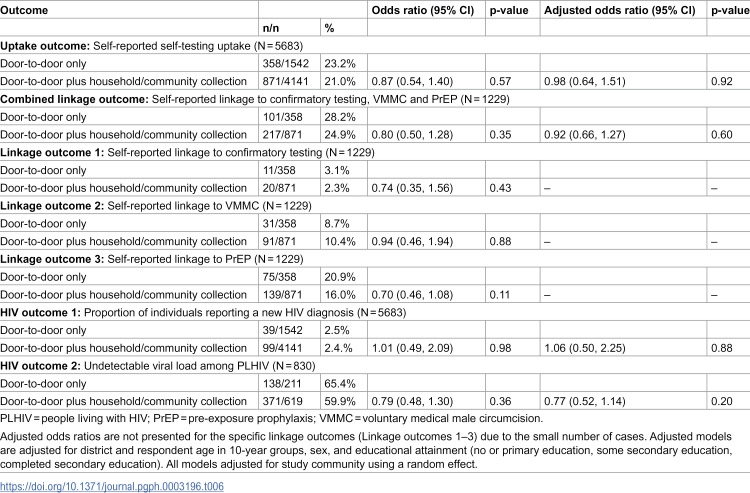 Figure 7
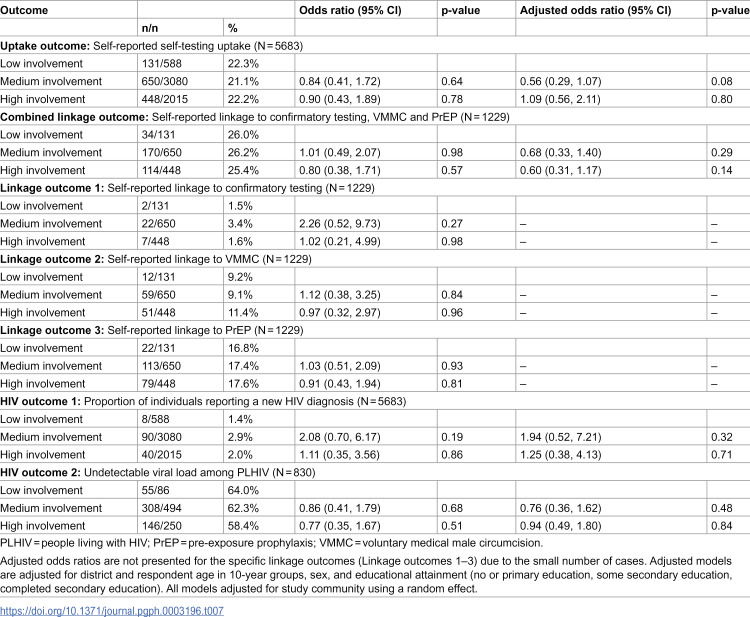 Figure 8
Peer Reviews
No public reviews on file for this paper yet. If you reviewed it on a platform where reviews are public (OpenReview, ICLR, NeurIPS, ICML), you can paste yours below so the community can read it here.
Videos
No videos yet. Explain this paper in a talk, walkthrough, or lecture? Add one.
Taxonomy
TopicsHIV/AIDS Research and Interventions · HIV, Drug Use, Sexual Risk · Adolescent Sexual and Reproductive Health