Efficient numerosity estimation under limited time
Joseph A. Heng, Michael Woodford, Rafael Polania

TL;DR
The paper explains how humans and animals can quickly estimate the number of items in a group, even with limited time and noisy information.
Contribution
The paper introduces a unified model that explains numerosity estimation through optimal encoding and decoding under time and noise constraints.
Findings
The model accurately predicts human numerosity estimation patterns based on temporal exposure.
The proposed mechanism outperforms existing models that focus on response limitations rather than encoding.
The model incorporates Brownian noise, logarithmic encoding, and Bayesian decoding in a single framework.
Abstract
The ability to rapidly estimate non-symbolic numerical quantities is a well-conserved sense across species with clear evolutionary advantages. However, despite its importance, this sense is surprisingly imprecise and biased, and a formal explanation for this seemingly irrational behavior remains unclear. We develop a unified normative theory of numerosity estimation that parsimoniously incorporates in a single framework information processing constraints alongside (i) Brownian diffusion noise to capture the effects of time exposure of sensory information, (ii) logarithmic encoding of numerosity representations, and (iii) optimal inference via Bayesian decoding. We show that for a given allowable biological capacity constraint our model naturally endogenizes time perception during noisy efficient encoding to predict the complete posterior distribution of numerosity estimates. This model…
Genes, proteins, chemicals, diseases, species, mutations and cell lines named across the full text — each resolved to its canonical identifier and authoritative record.
Click any figure to enlarge with its caption.
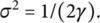 Figure 1
 Figure 2
 Figure 3
 Figure 4
 Figure 5
 Figure 6
 Figure 7
 Figure 8
 Figure 9
 Figure 10
 Figure 11
 Figure 12
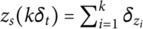 Figure 13
 Figure 14
 Figure 15
 Figure 16
 Figure 17
 Figure 18
 Figure 19
 Figure 20
 Figure 21
 Figure 22
 Figure 23
 Figure 24
 Figure 25
 Figure 26
 Figure 27
 Figure 28
 Figure 29
 Figure 30
 Figure 31
 Figure 32
 Figure 33
 Figure 34
 Figure 35
 Figure 36
 Figure 37
 Figure 38
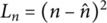 Figure 39
 Figure 40
 Figure 41
 Figure 42
 Figure 43
 Figure 44
 Figure 45
 Figure 46
 Figure 47
 Figure 48
 Figure 49
 Figure 50
Peer Reviews
No public reviews on file for this paper yet. If you reviewed it on a platform where reviews are public (OpenReview, ICLR, NeurIPS, ICML), you can paste yours below so the community can read it here.
Videos
No videos yet. Explain this paper in a talk, walkthrough, or lecture? Add one.
Taxonomy
TopicsCognitive and developmental aspects of mathematical skills · Evolutionary Algorithms and Applications · Neural Networks and Applications