An anticipatory mechanism enhances the cooperative behaviors of quorum sensing mutants in Pseudomonas aeruginosa
Min Yuan, Huifang Qiu, Xiaoqing Zhou, Weijun Dai

TL;DR
This study reveals how a regulatory mechanism involving PsdR and LasR228 stabilizes cooperation in Pseudomonas aeruginosa, preventing cheating and enhancing pathogenicity.
Contribution
A novel anticipatory regulatory mechanism involving PsdR and LasR228 is identified to stabilize cooperation in microbial populations.
Findings
Inactivation of PsdR restores function in LasR228 variant strains, enhancing cooperative behaviors.
PsdR-null-LasR228 strains exhibit increased cooperation and pathogenicity compared to LasR-null strains.
PsdR-mediated regulation serves as an anticipatory control against cheating LasR variant strains.
Abstract
Social interactions substantially influence the dynamics and functions of microbial communities. Cooperative behaviors serve to benefit populations, yet they are often exploited by cheating cells, thus creating a conflict between individuals in the microbial population. However, the underlying mechanisms by which cooperative behaviors are stabilized are incompletely elucidated. Here, we used quorum sensing (QS) as a model of cooperation, and functionally studied QS regulator LasR variant strains in the context of cooperative behaviors. We found that a LasR228 variant strain, bearing a non-conserved substitution in LasR, exhibited minimal LasR-dependent phenotypes. However, the function of this LasR228 variant strain was restored by inactivation of the transcriptional repressor PsdR, and the phenotypes of this variant strain were similar to the parental strain. Furthermore, we illustrate…
Genes, proteins, chemicals, diseases, species, mutations and cell lines named across the full text — each resolved to its canonical identifier and authoritative record.
Click any figure to enlarge with its caption.
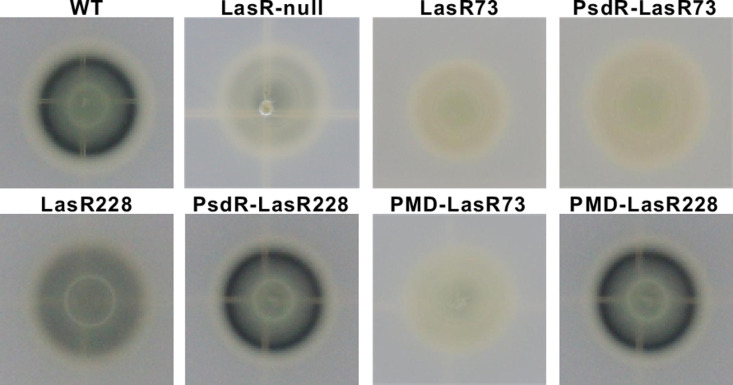 Figure 1
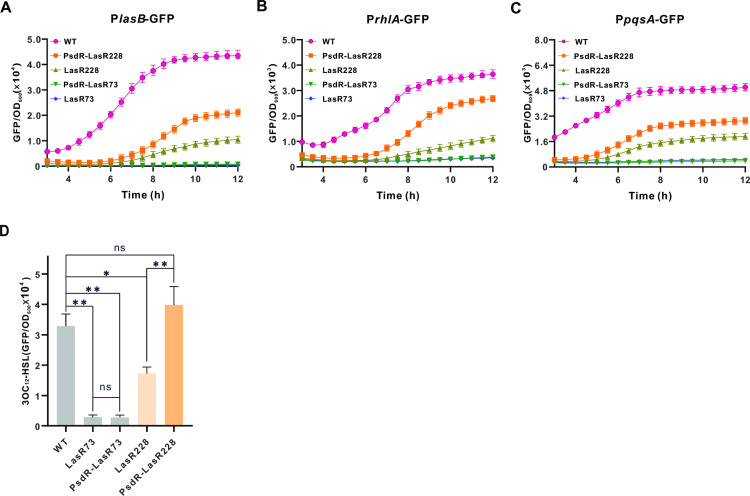 Figure 2
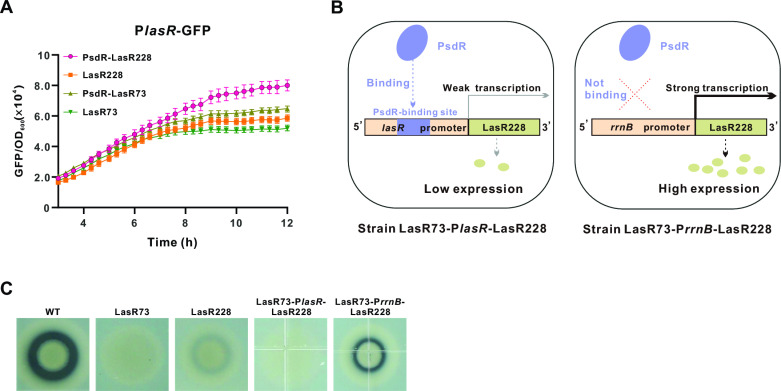 Figure 3
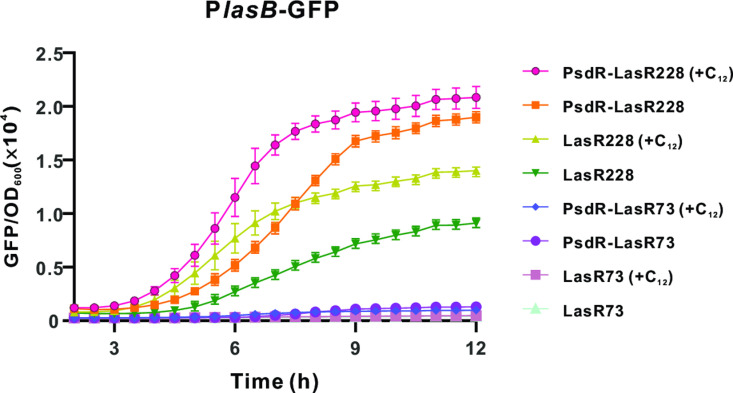 Figure 4
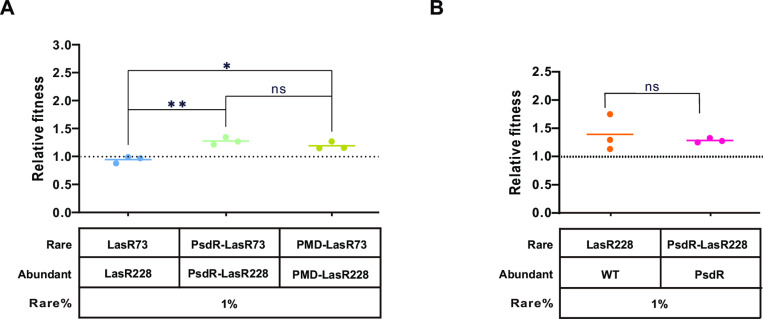 Figure 5
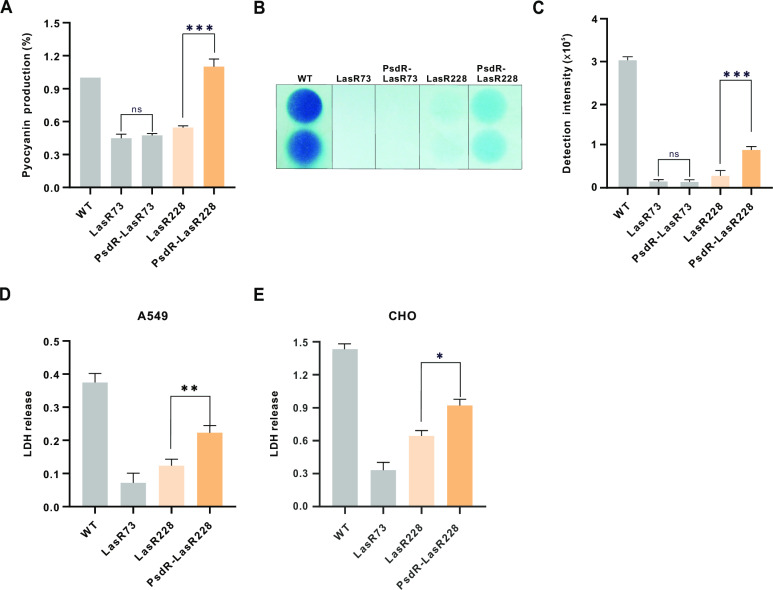 Figure 6
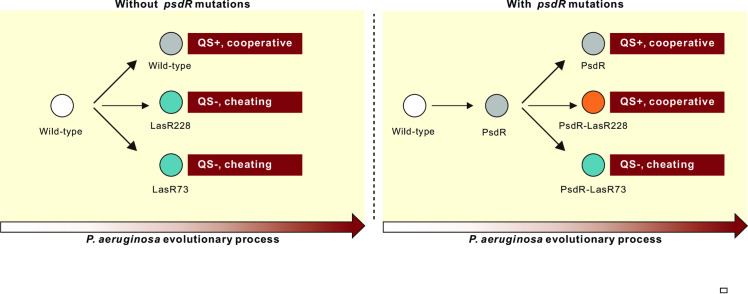 Figure 7
Peer Reviews
No public reviews on file for this paper yet. If you reviewed it on a platform where reviews are public (OpenReview, ICLR, NeurIPS, ICML), you can paste yours below so the community can read it here.
Videos
No videos yet. Explain this paper in a talk, walkthrough, or lecture? Add one.
Taxonomy
TopicsBacterial biofilms and quorum sensing · Bacterial Genetics and Biotechnology · Vibrio bacteria research studies