Progression of Subclinical Hypothyroidism in a Mexican Public Hospital Population: A Retrospective Cohort Study
Rafael Violante-Ortiz, Norma Fernández-Ordóñez, Emanuel Narvaez Gallifa, Erick E Hernandez Molina, Jose E Guerra Cardenas, Elizabeth Reyna-Beltrán, Dylan Castillo Hernández, Luis S Díaz Martínez, Izmene N Badillo Grijalva, Jaidy M Bautista Sánchez

TL;DR
This study found that most people with subclinical hypothyroidism in Mexico improved without treatment, but some progressed to full hypothyroidism, especially if their hormone levels were in a specific range.
Contribution
The study identifies a specific TSH range associated with higher risk of progression to overt hypothyroidism in a Mexican population.
Findings
71.2% of patients with subclinical hypothyroidism regressed to euthyroidism within three months.
Patients with initial TSH levels between 6.0 and 8.0 mIU/L had the highest progression rate to overt hypothyroidism (16%).
No association was found between symptoms and progression to overt hypothyroidism.
Abstract
Background and aim: Treatment of subclinical hypothyroidism (SCH) is controversial. The uncertainty of the levels of thyroid-stimulating hormone (TSH) that warrant treatment and the risk of progression to overt hypothyroidism may lead to overtreatment. This study aimed to assess the persistence of SCH and its short-term progression to overt hypothyroidism in patients referred to an outpatient endocrinology clinic in Southern Tamaulipas, Mexico, and to identify predictive factors for progression to overt hypothyroidism. Methods: This analytic, observational, and retrospective study analyzed records from 1100 patients at a Mexican public hospital between 2018 and 2019. Exclusion criteria included prior hypothyroidism, levothyroxine use, pregnancy, TSH ≥10.0 mIU/L, age <18 years, and non-completion of follow-up. A final sample of 222 patients with SCH (defined as TSH >4.2 and <10.0 mIU/L,…
Genes, proteins, chemicals, diseases, species, mutations and cell lines named across the full text — each resolved to its canonical identifier and authoritative record.
Click any figure to enlarge with its caption.
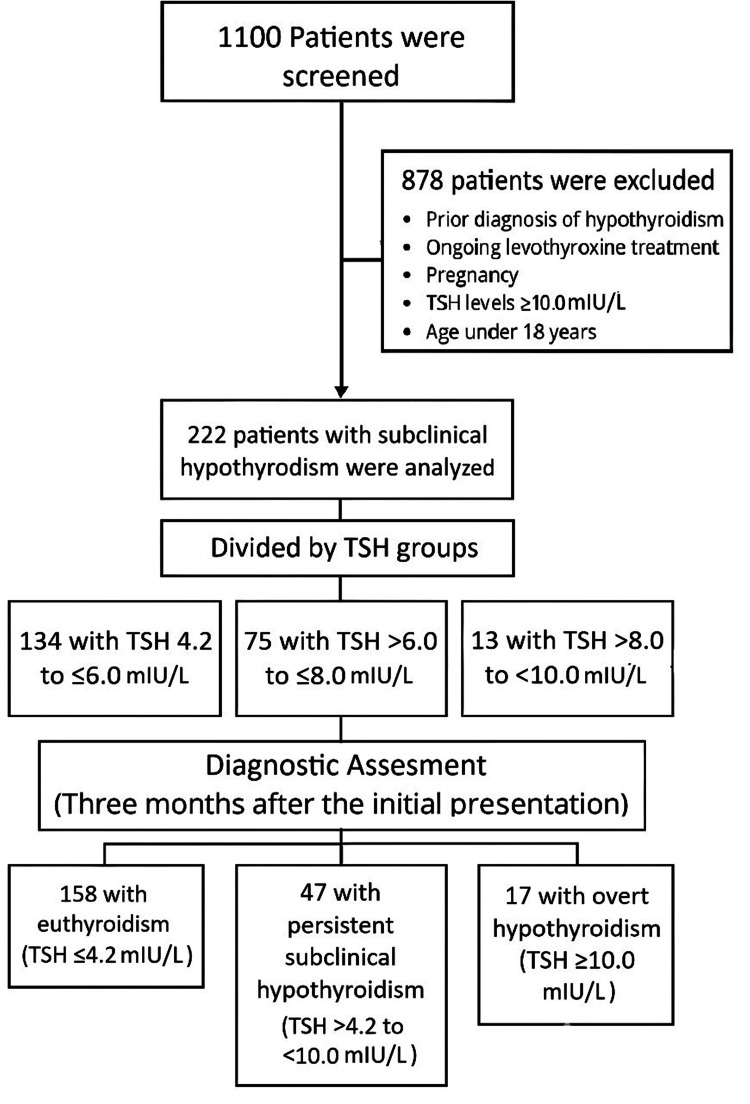 Figure 1
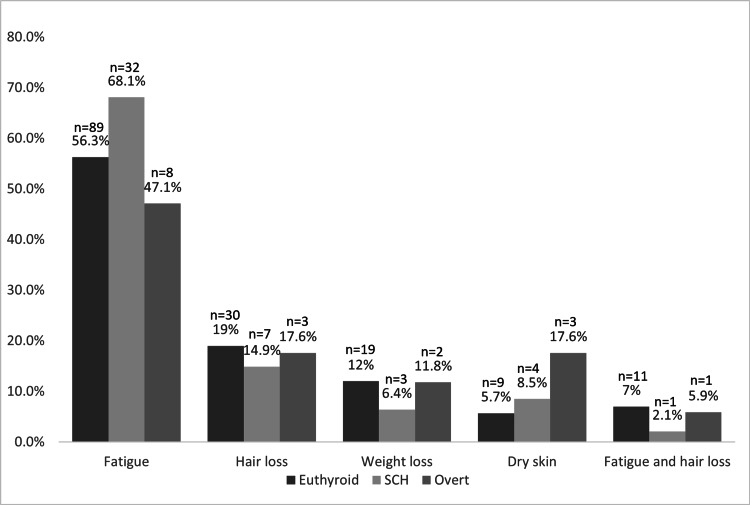 Figure 2
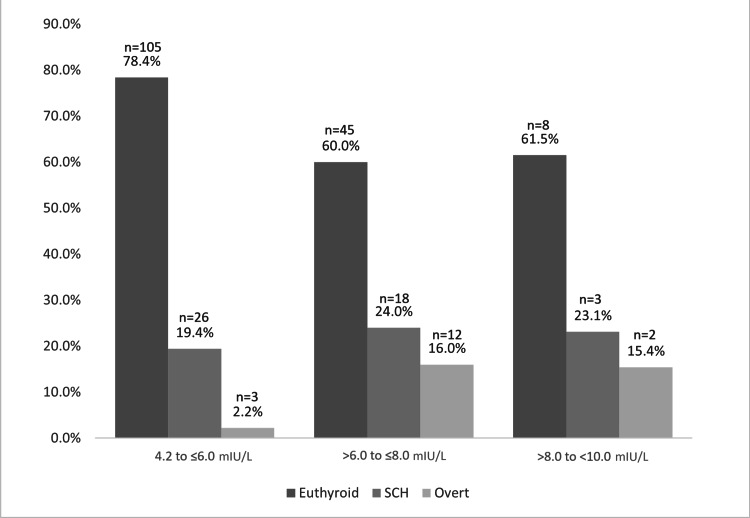 Figure 3
Peer Reviews
No public reviews on file for this paper yet. If you reviewed it on a platform where reviews are public (OpenReview, ICLR, NeurIPS, ICML), you can paste yours below so the community can read it here.
Videos
No videos yet. Explain this paper in a talk, walkthrough, or lecture? Add one.
Taxonomy
TopicsThyroid Disorders and Treatments · Neuroscience of respiration and sleep · Thyroid Cancer Diagnosis and Treatment