Normal locomotion in zebrafish lacking the sodium channel NaV1.4 suggests that the need for muscle action potentials is not universal
Chifumi Akiyama, Souhei Sakata, Fumihito Ono, Roland G Roberts, Roland G Roberts, Roland G Roberts

TL;DR
Zebrafish without the sodium channel NaV1.4 can still move normally, suggesting muscle action potentials may not be essential for contraction in all vertebrates.
Contribution
The study shows that zebrafish lacking NaV1.4 can contract muscles without action potentials, challenging the universal need for these signals in muscle function.
Findings
Zebrafish lacking NaV1.4 show normal escape responses to tactile stimuli.
Muscle fibers from zebrafish can contract without sodium channels when stimulated by acetylcholine.
Mathematical models suggest end-plate potentials can trigger muscle contraction without action potentials in zebrafish.
Abstract
Extensive studies over decades have firmly established the concept that action potentials (APs) in muscles are indispensable for muscle contraction. To re-examine the significance of APs, we generated zebrafish lacking APs by editing the scn4aa and scn4ab genes, which together encode NaV1.4 (NaVDKO), using the CRISPR-Cas9 system. Surprisingly, the escape response of NaVDKOs to tactile stimuli, both in the embryonic and adult stages, was indistinguishable from that of wild-type (WT) fish. Ca2+ imaging using the calcium indicator protein GCaMP revealed that myofibers isolated from WT fish could be excited by the application of acetylcholine (ACh), even in the presence of tetrodotoxin (TTX) indicating that NaVs are dispensable for skeletal muscle contraction in zebrafish. Mathematical simulations showed that the end-plate potential was able to elicit a change in membrane potential large…
Genes, proteins, chemicals, diseases, species, mutations and cell lines named across the full text — each resolved to its canonical identifier and authoritative record.
Click any figure to enlarge with its caption.
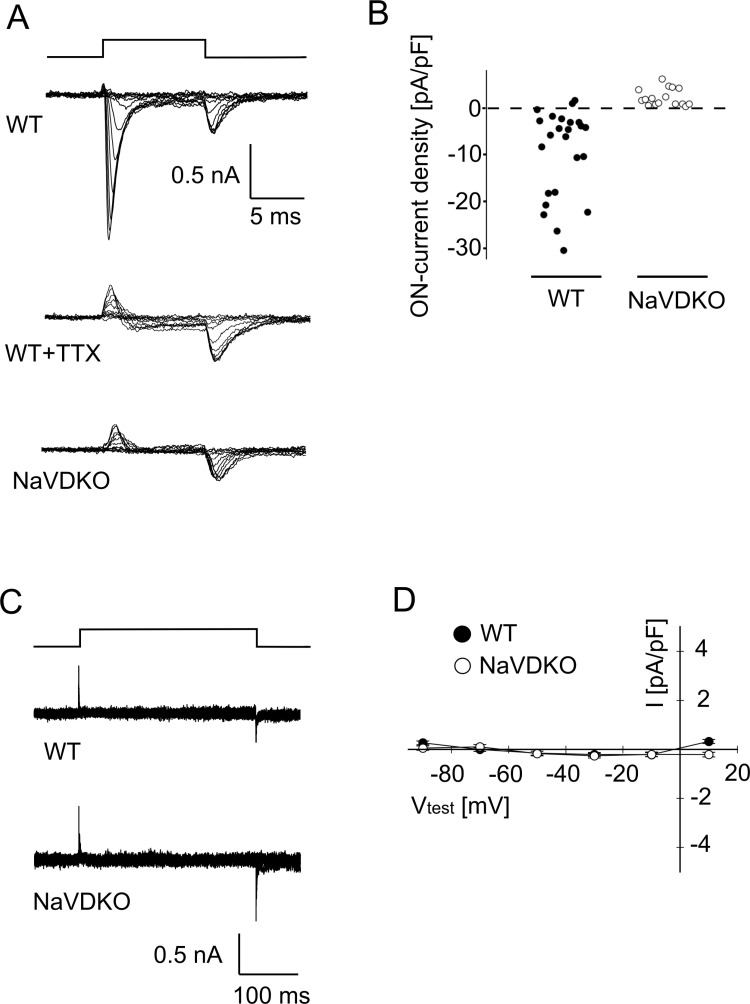 Figure 1
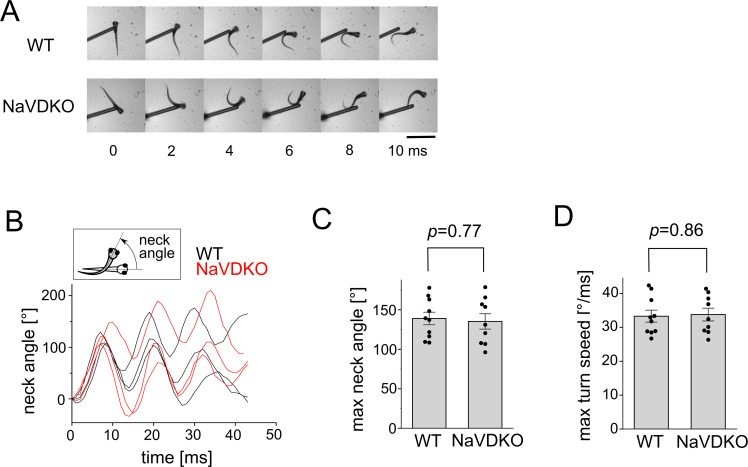 Figure 2
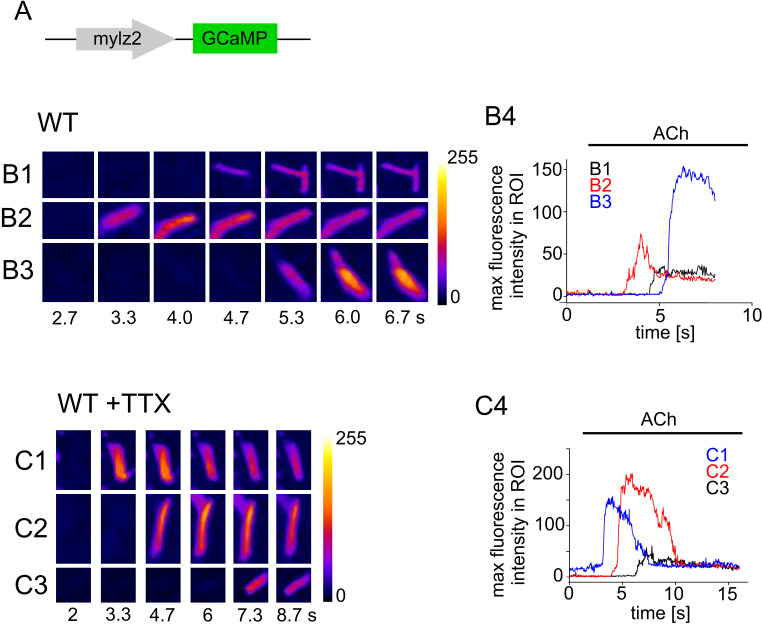 Figure 3
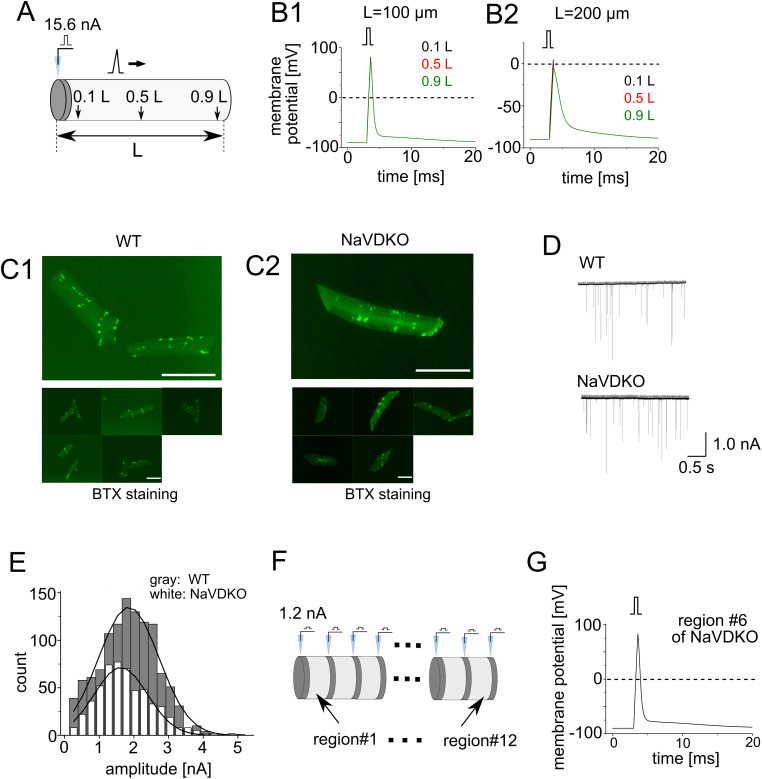 Figure 4
Peer Reviews
No public reviews on file for this paper yet. If you reviewed it on a platform where reviews are public (OpenReview, ICLR, NeurIPS, ICML), you can paste yours below so the community can read it here.
Videos
No videos yet. Explain this paper in a talk, walkthrough, or lecture? Add one.
Taxonomy
TopicsNeuroscience and Neural Engineering · Ion channel regulation and function · Muscle activation and electromyography studies