Suffering in silence: Accessing mental health care and repetitive transcranial magnetic stimulation (rTMS) for peripartum depression - A qualitative study
Huda F. Al-Shamali, Rachael Dong, Margot Jackson, Lisa Burback, Gina Wong, Bo Cao, Xin-Min Li, Andrew J. Greenshaw, Yanbo Zhang, Mu-Hong Chen, Mu-Hong Chen, Mu-Hong Chen

TL;DR
This study explores why people with peripartum depression struggle to access mental health care, including a treatment called rTMS, and finds that awareness and systemic issues are major barriers.
Contribution
The study identifies specific barriers and facilitators to accessing mental health treatment, particularly rTMS, for peripartum depression through qualitative analysis of patient and provider interviews.
Findings
Eighty-three percent of participants were unaware of rTMS, but 75% expressed willingness to use it after a brief explanation.
Five key themes emerged regarding barriers and facilitators to mental health care access, including stigma, systemic challenges, and the need for mom-centered care.
Risk factors for PPD include personal, clinical, situational, and social factors such as traumatic birth, homelessness, and domestic abuse.
Abstract
Peripartum depression (PPD) is a prevalent and serious mental health disorder that is often underdiagnosed and undertreated due to limited effective and safe treatment options. Repetitive transcranial magnetic stimulation (rTMS) has emerged as a non-invasive treatment for PPD, yet awareness among patients is low. This study aims to identify barriers and facilitators to accessing mental health treatment, particularly rTMS, for PPD. We conducted 36 interviews with individuals who experienced depressive symptoms during the peripartum period and health providers, followed by a descriptive interpretive thematic analysis. Key risk factors identified include personal (i.e., age), clinical (i.e., traumatic birth), situational (i.e., COVID-19, homelessness), and social (i.e., discrimination, domestic abuse). Five themes emerged regarding barriers and facilitators: 1) the need for mom-centered…
Genes, proteins, chemicals, diseases, species, mutations and cell lines named across the full text — each resolved to its canonical identifier and authoritative record.
Click any figure to enlarge with its caption.
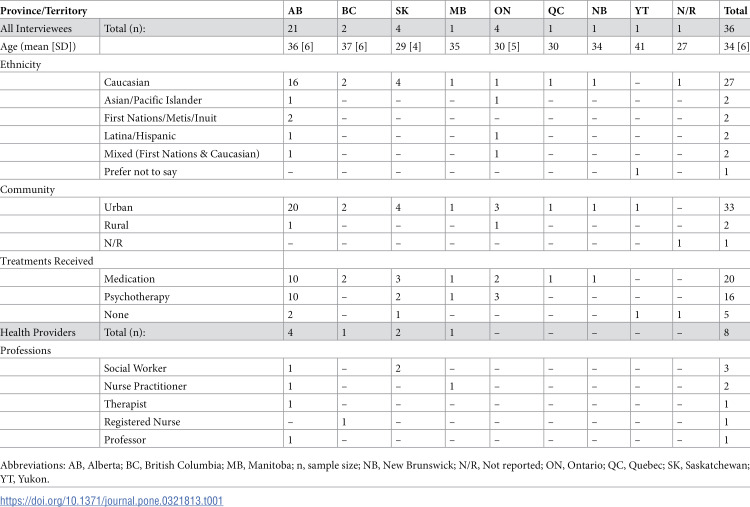 Figure 1
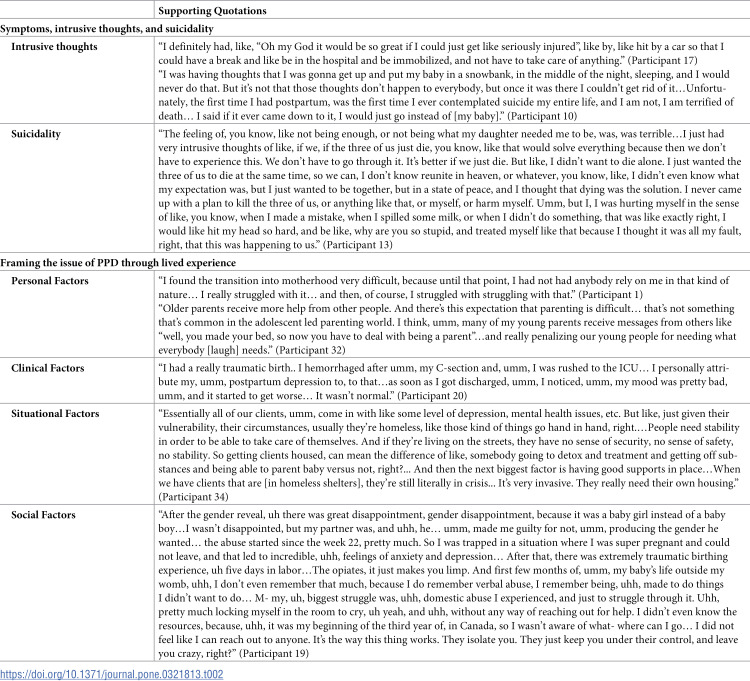 Figure 2
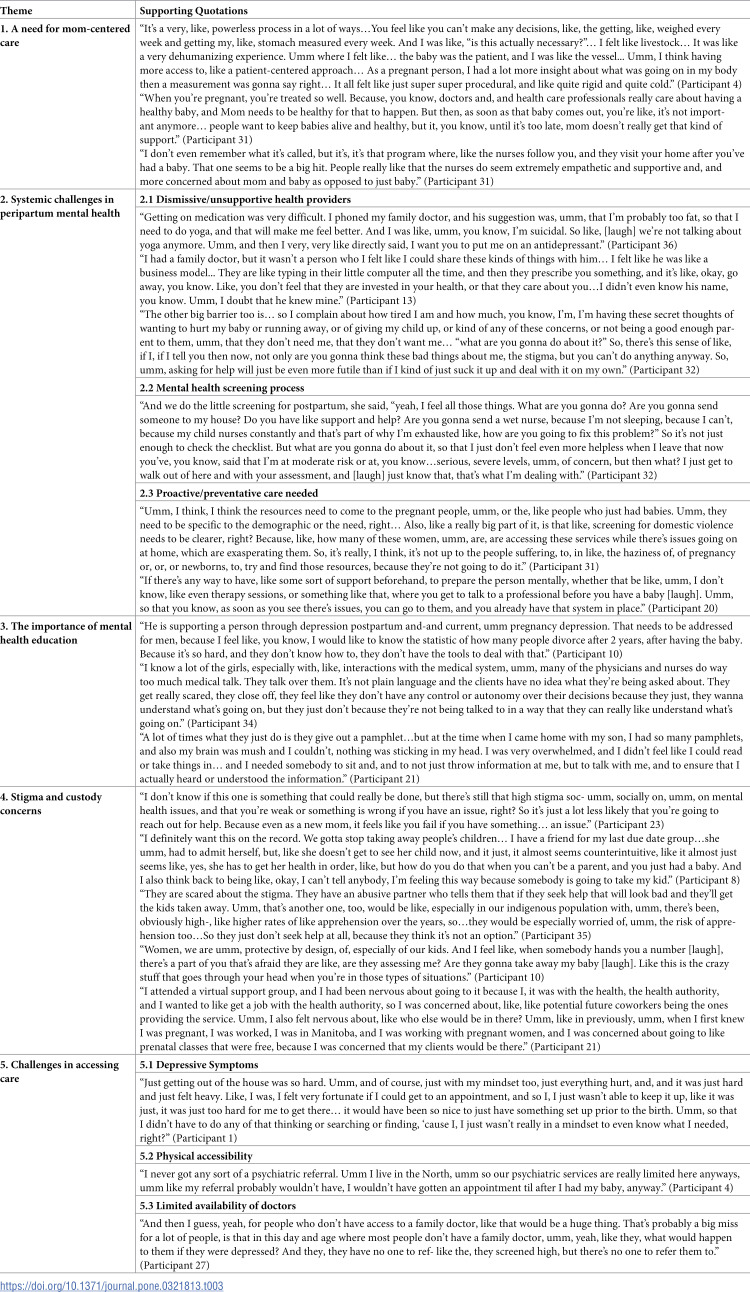 Figure 3
Peer Reviews
No public reviews on file for this paper yet. If you reviewed it on a platform where reviews are public (OpenReview, ICLR, NeurIPS, ICML), you can paste yours below so the community can read it here.
Videos
No videos yet. Explain this paper in a talk, walkthrough, or lecture? Add one.
Taxonomy
TopicsMaternal Mental Health During Pregnancy and Postpartum · Attachment and Relationship Dynamics · Adolescent and Pediatric Healthcare