Amyloid β induces hormetic-like effects through major stress pathways in a C. elegans model of Alzheimer’s Disease
James D. Lichty, Hrishikesh Mane, Victoria R. Yarmey, Adriana San Miguel

TL;DR
This study shows that amyloid beta, known for causing Alzheimer's, can also boost stress resistance in worms through stress pathways.
Contribution
The study reveals a novel beneficial role of Aβ in enhancing stress resistance via neuroendocrine signaling in a C. elegans model.
Findings
Aβ-expressing C. elegans showed increased resistance to heat and anoxia but not oxidative stress.
Transcriptomic analysis linked Aβ-induced stress resistance to Heat Shock Protein (HSPs) gene activation.
Neuropeptide signaling was found essential for Aβ to induce stress resistance in worms.
Abstract
Amyloid β (Aβ) is a peptide known for its characteristic aggregates in Alzheimer’s Disease and its ability to induce a wide range of detrimental effects in various model systems. However, Aβ has also been shown to induce some beneficial effects, such as antimicrobial properties against pathogens. In this work, we explore the influence of Aβ in stress resistance in a C. elegans model of Alzheimer’s Disease. We found that C. elegans that express human Aβ exhibit increased resistance to heat and anoxia, but not to oxidative stress. This beneficial effect of Aβ was driven from Aβ in neurons, where the level of induction of Aβ expression correlated with stress resistance levels. Transcriptomic analysis revealed that this selective stress resistance was mediated by the Heat Shock Protein (HSPs) family of genes. Furthermore, neuropeptide signaling was necessary for Aβ to induce stress…
Genes, proteins, chemicals, diseases, species, mutations and cell lines named across the full text — each resolved to its canonical identifier and authoritative record.
Click any figure to enlarge with its caption.
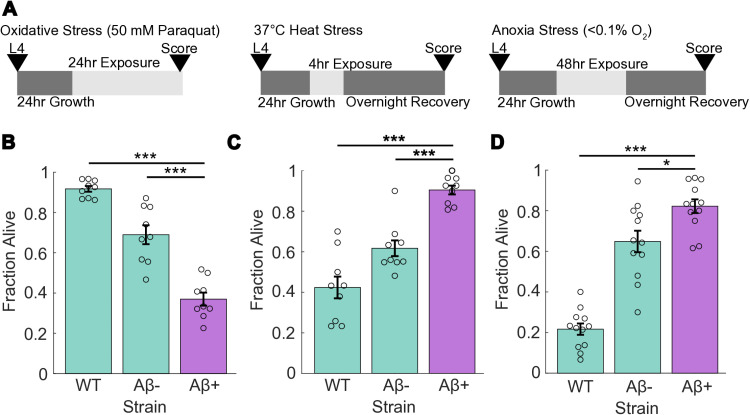 Figure 1
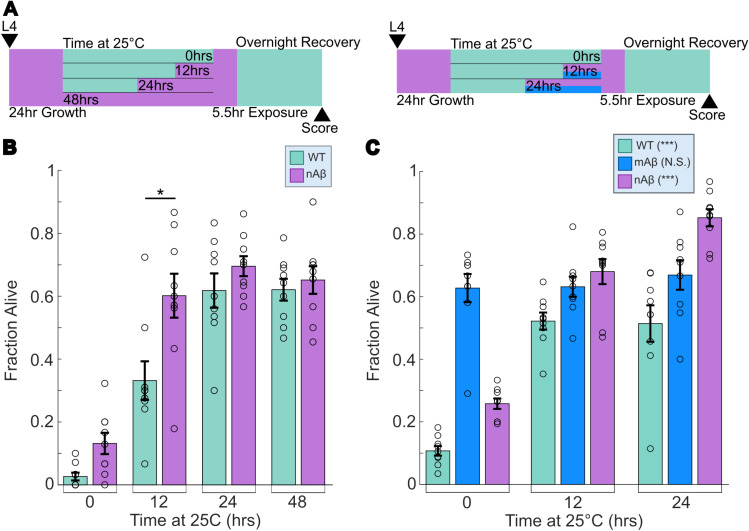 Figure 2
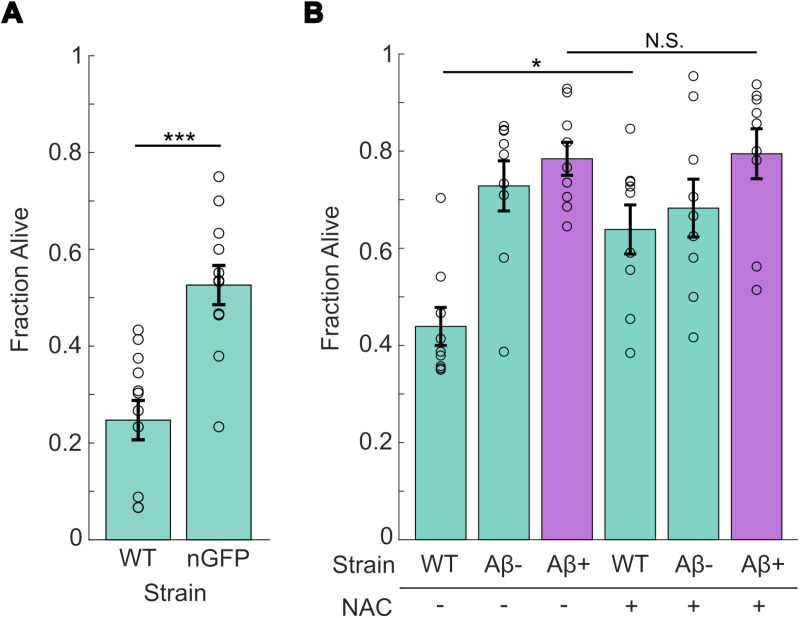 Figure 3
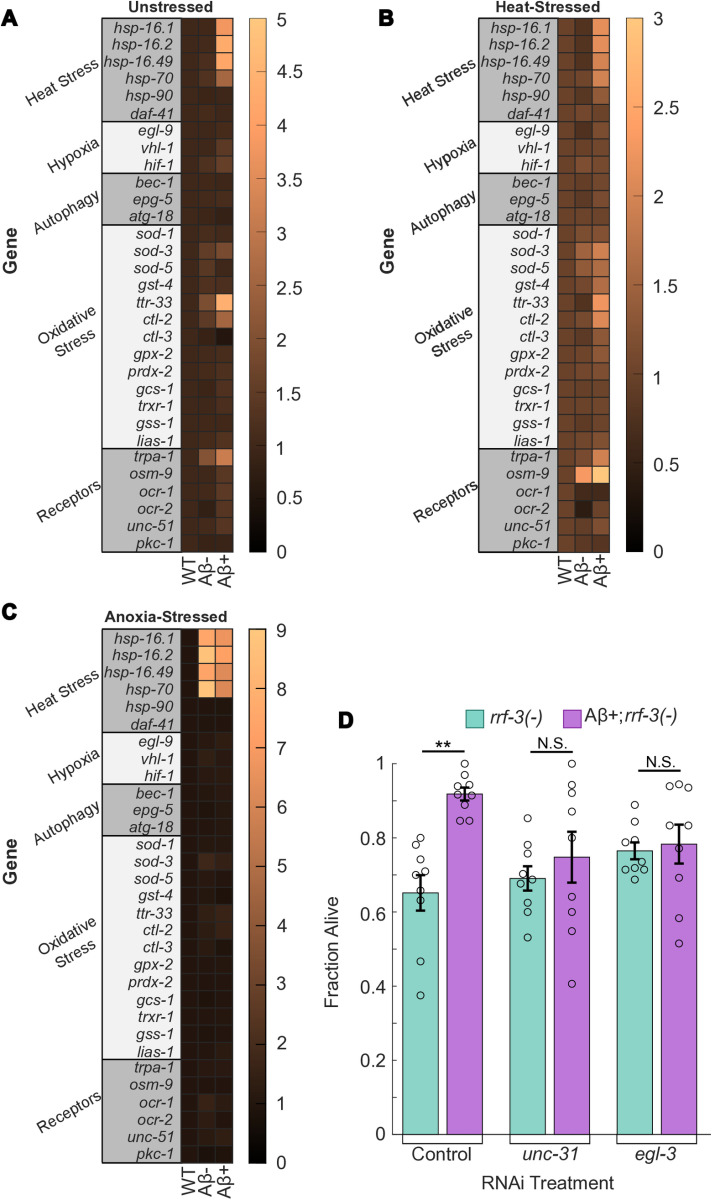 Figure 4
Peer Reviews
No public reviews on file for this paper yet. If you reviewed it on a platform where reviews are public (OpenReview, ICLR, NeurIPS, ICML), you can paste yours below so the community can read it here.
Videos
No videos yet. Explain this paper in a talk, walkthrough, or lecture? Add one.
Taxonomy
TopicsGenetics, Aging, and Longevity in Model Organisms · Circadian rhythm and melatonin · Tryptophan and brain disorders