Adaptive lift chiller units fault diagnosis model based on machine learning
Yang Guo, Zengrui Tian, Hong Wang, Mengyao Chen, Pan Chu, Yingjie Sheng

TL;DR
This paper introduces a new machine learning model for early fault detection in chiller units, improving accuracy and stability over traditional methods.
Contribution
A novel hybrid model combining HINGO, LSSVM, and IAdaBoost for enhanced early fault diagnosis in chillers.
Findings
HINGO improves the algorithm's search ability through strategies like Lévy flight and nonlinear decreasing factors.
The HINGO-LSSVM-IAdaBoost model outperforms traditional methods in early fault diagnosis of chiller units.
The model was validated using ASHRAE RP-1043 air conditioning fault samples.
Abstract
The early minor faults generated by the chiller in operation are not easy to perceive, and the severity will gradually increase with time. The traditional fault diagnosis method has low accuracy and poor stability for early fault diagnosis. In this paper, a fault diagnosis model of Chiller is designed by combining least squares support vector machine (LSSVM) optimized by hybrid improved northern goshawk optimization algorithm (HINGO) and improved IAdaBoost ensemble learning algorithm. HINGO enhances the uniformity of the initial population distribution by means of refraction opposition-based learning strategy in initialization, and improves the local and global search ability of the algorithm by means of sine and cosine strategy, Lévy flight and nonlinear decreasing factor in the search stage. The HINGO-LSSVM-IAdaBoost model is trained and validated on the typical air conditioning fault…
Genes, proteins, chemicals, diseases, species, mutations and cell lines named across the full text — each resolved to its canonical identifier and authoritative record.
Click any figure to enlarge with its caption.
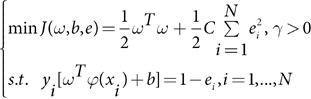 Figure 1
 Figure 2
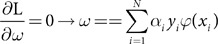 Figure 3
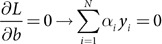 Figure 4
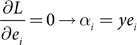 Figure 5
 Figure 6
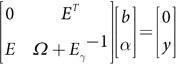 Figure 7
 Figure 8
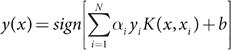 Figure 9
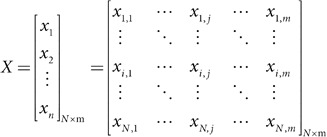 Figure 10
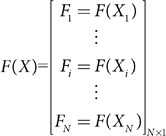 Figure 11
 Figure 12
 Figure 13
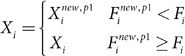 Figure 14
 Figure 15
 Figure 16
 Figure 17
 Figure 18
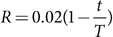 Figure 19
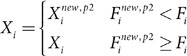 Figure 20
 Figure 21
 Figure 22
 Figure 23
 Figure 24
 Figure 25
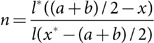 Figure 26
 Figure 27
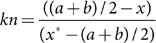 Figure 28
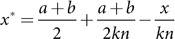 Figure 29
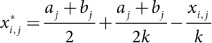 Figure 30
 Figure 31
 Figure 32
 Figure 33
 Figure 34
 Figure 35
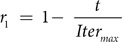 Figure 36
 Figure 37
 Figure 38
 Figure 39
 Figure 40
 Figure 41
 Figure 42
 Figure 43
 Figure 44
 Figure 45
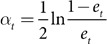 Figure 46
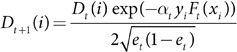 Figure 47
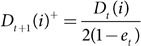 Figure 48
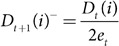 Figure 49
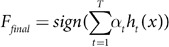 Figure 50
Peer Reviews
No public reviews on file for this paper yet. If you reviewed it on a platform where reviews are public (OpenReview, ICLR, NeurIPS, ICML), you can paste yours below so the community can read it here.
Videos
No videos yet. Explain this paper in a talk, walkthrough, or lecture? Add one.
Taxonomy
TopicsBuilding Energy and Comfort Optimization · Image Enhancement Techniques · Energy Load and Power Forecasting