UniMap: Type‐Level Integration Enhances Biological Preservation and Interpretability in Single‐Cell Annotation
Haitao Hu, Yue Guo, Fujing Ge, Hao Yin, Hao Zhang, Zhesheng Zhou, Fangjie Yan, Qing Ye, Jialu Wu, Ji Cao, Chang‐Yu Hsieh, Bo Yang

TL;DR
UniMap improves single-cell dataset integration by preserving biological variability and enhancing interpretability through a novel adversarial network.
Contribution
UniMap introduces a multiselective adversarial network for type-level integration in single-cell data.
Findings
UniMap outperforms existing methods in preserving biological variability during dataset integration.
It enhances interpretability by identifying shared and domain-specific cell types.
UniMap successfully creates high-resolution cell atlases and supports cross-species analysis.
Abstract
Integrating single‐cell datasets from multiple studies provides a cost‐effective way to build comprehensive cell atlases, granting deeper insights into cellular characteristics across diverse biological systems. However, current data integration methods struggle with interference in partially overlapping datasets and varying annotation granularities. Here, a multiselective adversarial network is introduced for the first time and present UniMap, which functions as a “discerner” to identify and exclude interfering cells from various data sources during dataset integration. Compared to other state‐of‐the‐art methods, UniMap emphasizes type‐level integration and proves to be the best model for preserving biological variability, achieving noticeably higher accuracy in single‐cell automated annotation under various circumstances. Additionally, it enhances interpretability by revealing shared…
Genes, proteins, chemicals, diseases, species, mutations and cell lines named across the full text — each resolved to its canonical identifier and authoritative record.
Click any figure to enlarge with its caption.
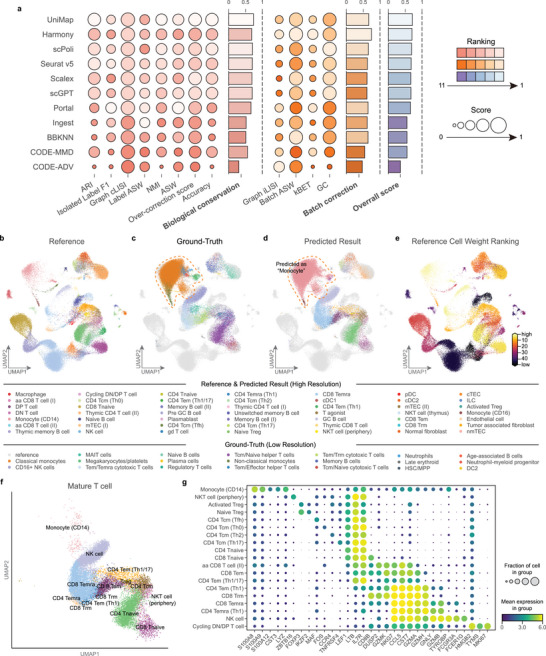 Figure 1
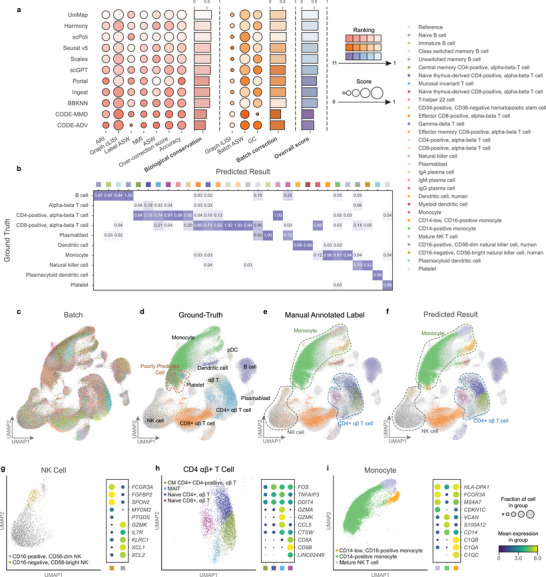 Figure 2
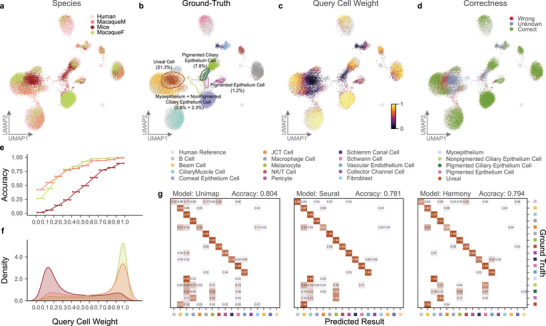 Figure 3
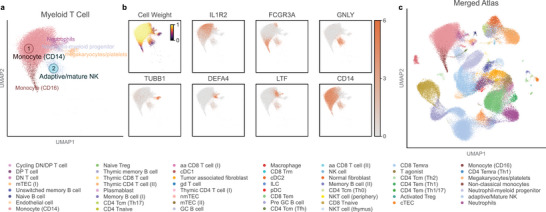 Figure 4
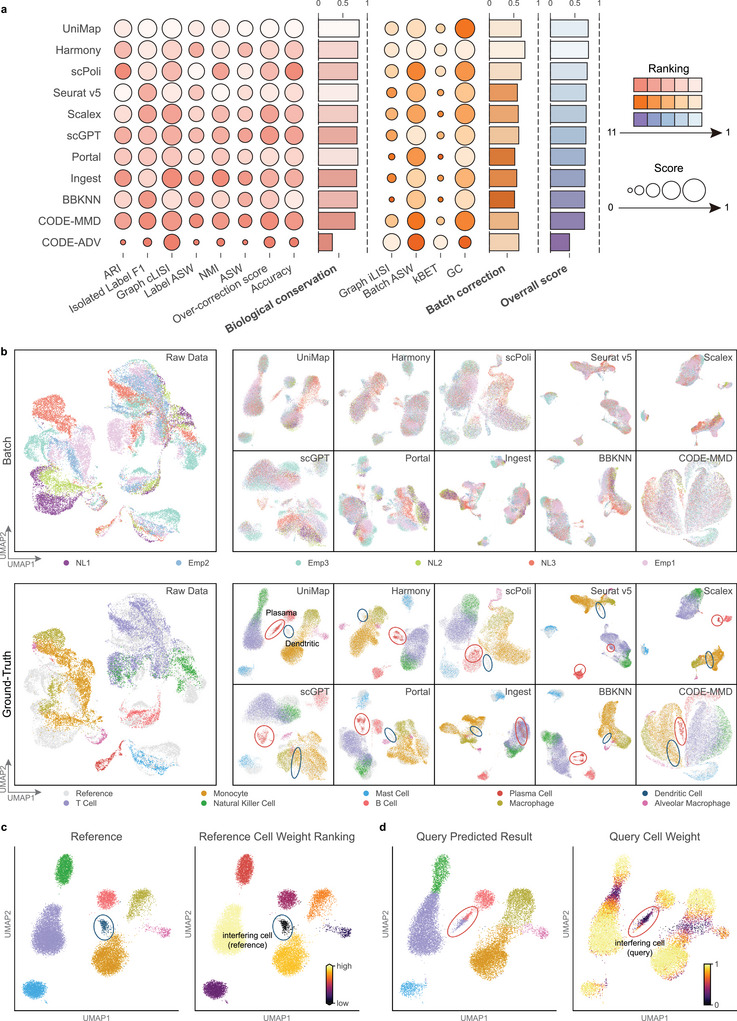 Figure 5
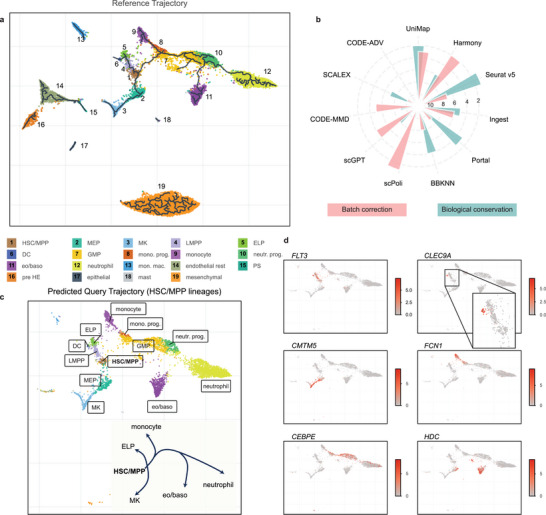 Figure 6
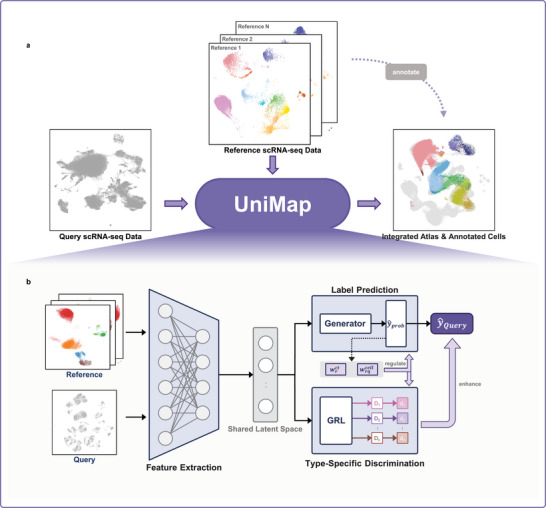 Figure 7
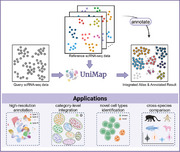 Figure 8
Peer Reviews
No public reviews on file for this paper yet. If you reviewed it on a platform where reviews are public (OpenReview, ICLR, NeurIPS, ICML), you can paste yours below so the community can read it here.
Videos
No videos yet. Explain this paper in a talk, walkthrough, or lecture? Add one.
Taxonomy
TopicsSingle-cell and spatial transcriptomics · Cell Image Analysis Techniques · Microfluidic and Bio-sensing Technologies