Differential benefit of adjuvant everolimus according to endocrine therapy backbone in the randomized UNIRAD trial
M. Saint-Ghislain, S. Chabaud, F. Dalenc, D. Allouache, D. Cameron, M. Martinez, J. Grenier, P. Barthelemy, M. Brunt, L. Kaluzinski, A. Mailliez, E. Legouffe, A.-C. Hardy-Bessard, S. Giacchetti, M.-A. Mouret-Reynier, J.-L. Canon, J. Bliss, J. Lemonnier, F. Andre, T. Bachelot

TL;DR
The UNIRAD trial found that adding everolimus to tamoxifen may improve outcomes for high-risk premenopausal breast cancer patients.
Contribution
The study suggests that everolimus may provide additional benefit when combined with tamoxifen in premenopausal patients.
Findings
Premenopausal patients treated with tamoxifen and everolimus showed improved 3-year disease-free survival.
Early discontinuation of treatment was less frequent in tamoxifen-treated patients.
Tamoxifen alone may be suboptimal for high-risk premenopausal breast cancer patients.
Abstract
The randomized, double-blind UNIRAD trial evaluating the addition of 2 years of everolimus to endocrine therapy in patients with high-risk, early luminal breast cancer failed to demonstrate a benefit. We report the subgroup analyses. We randomly assigned 1278 patients in a 1 : 1 ratio to receive 2 years of placebo or everolimus, added to endocrine therapy for up to 4 years after initiation. Randomization was stratified by endocrine therapy agent, prior adjuvant versus neoadjuvant therapy, progesterone receptor expression, and lymph node involvement. Subgroup analyses by each stratification factor were pre-specified. Post hoc analyses were carried out according to menopausal status and age. Treatment adherence was also analyzed. We observed a limited trend toward more favorable prognostic features in tamoxifen-treated patients, with more frequent estrogen receptor-positive/progesterone…
Genes, proteins, chemicals, diseases, species, mutations and cell lines named across the full text — each resolved to its canonical identifier and authoritative record.
Click any figure to enlarge with its caption.
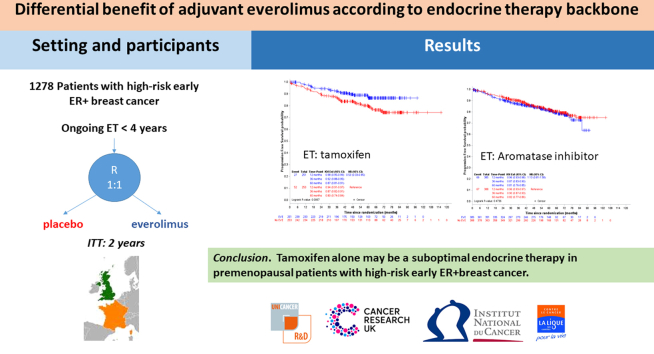 Figure 1
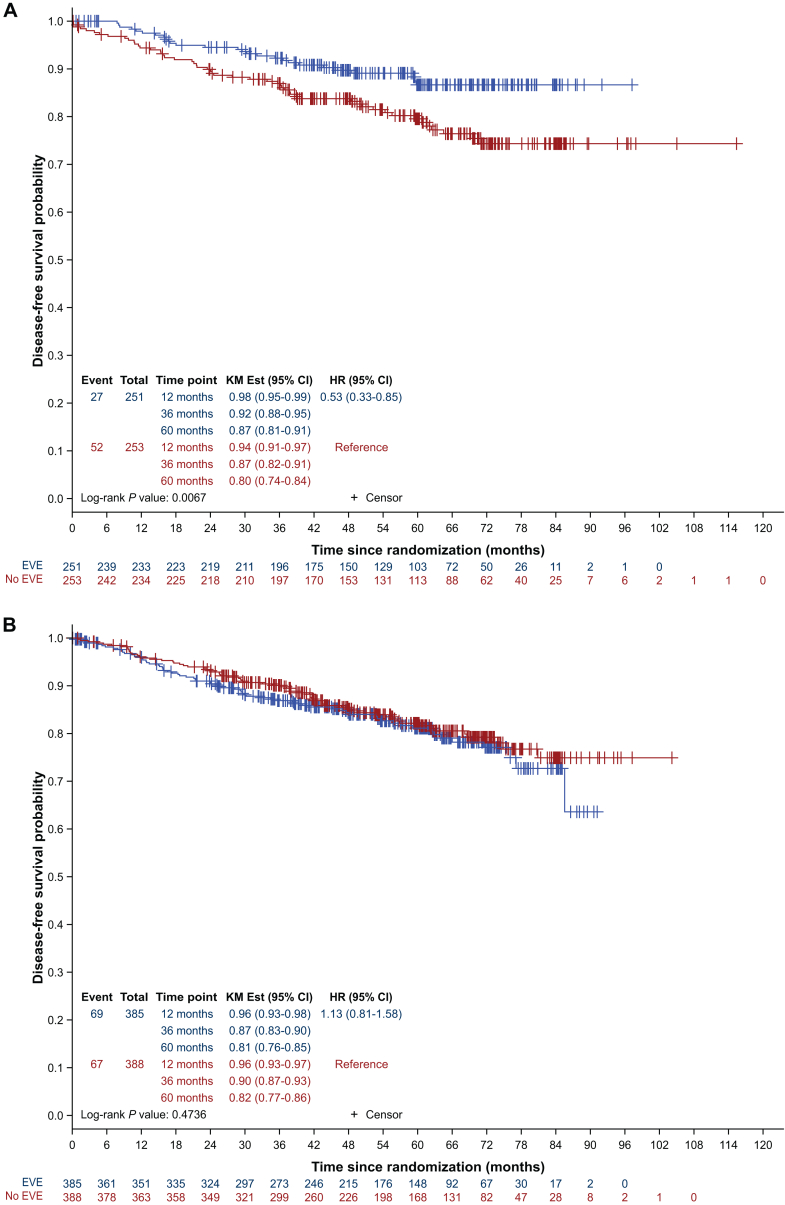 Figure 2
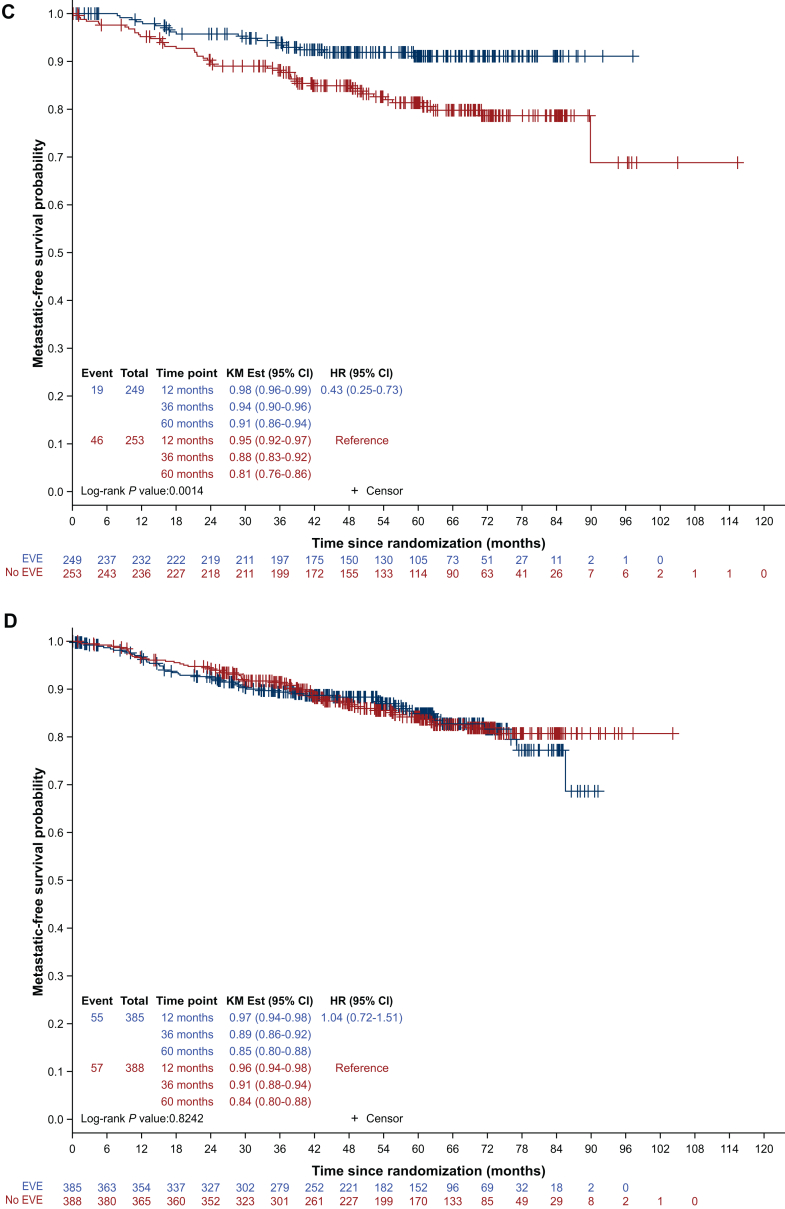 Figure 3
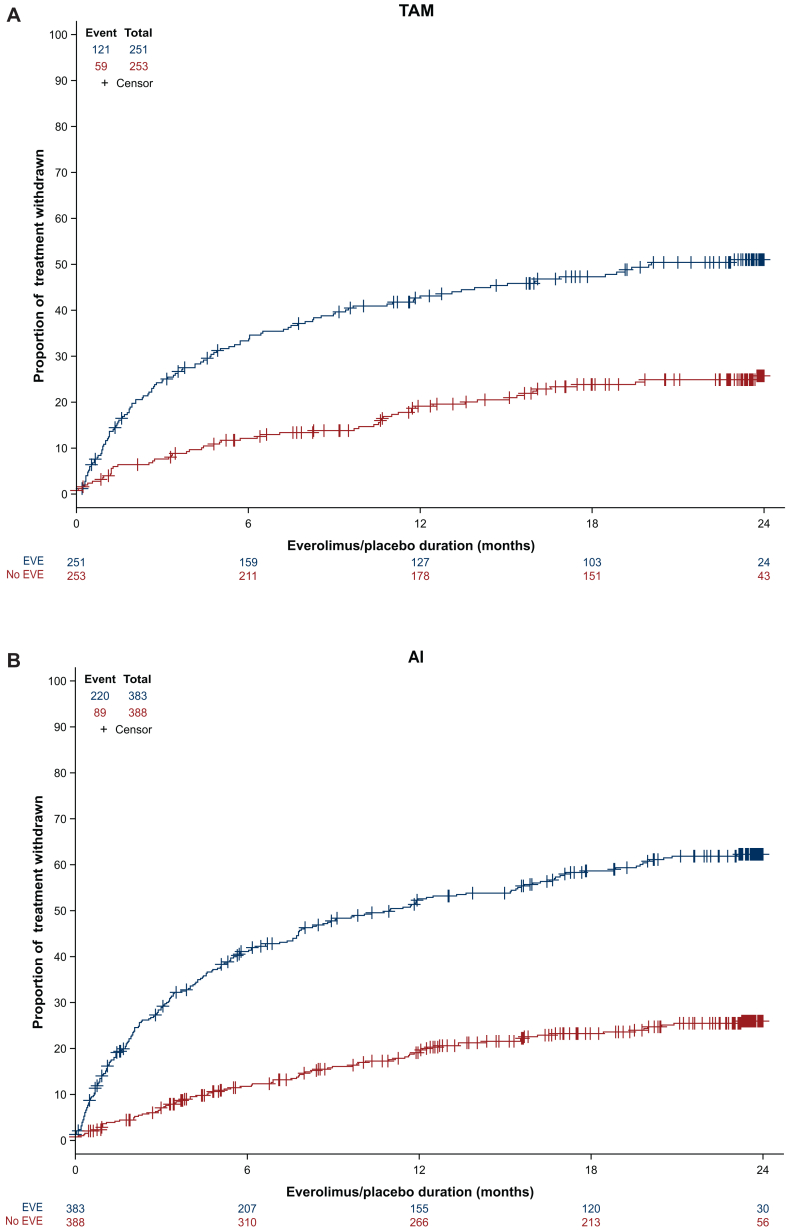 Figure 4
Peer Reviews
No public reviews on file for this paper yet. If you reviewed it on a platform where reviews are public (OpenReview, ICLR, NeurIPS, ICML), you can paste yours below so the community can read it here.
Videos
No videos yet. Explain this paper in a talk, walkthrough, or lecture? Add one.
Taxonomy
TopicsAdvanced Breast Cancer Therapies · Chronic Lymphocytic Leukemia Research · PI3K/AKT/mTOR signaling in cancer