Assessment of the Pennation Angle of the Medial Gastrocnemius Muscle in Road Runners and Non-runners
Lara Barros Cecílio Mendes, Carlos Henrique Fernandes, Paulo Santoro Bellangero, Benno Ejnisman, Moisés Cohen

TL;DR
This study found that road runners have a smaller pennation angle in their medial gastrocnemius muscle compared to non-runners when standing upright.
Contribution
The study provides new empirical evidence on muscle structure differences between runners and non-runners.
Findings
Runners had significantly lower pennation angles in the medial gastrocnemius muscle during orthostasis.
Male runners showed higher pennation angles in the right limb during both orthostasis and maximum plantar flexion.
A significant correlation between orthostasis and maximum plantar flexion was found in the right lower limb of non-runners.
Abstract
Objective To evaluate the pennation angle (PA) of the medial gastrocnemius muscle (MGM) in orthostasis and bilateral maximum plantar flexion (BMPF) in road runners and non-runners. Methods We assessed 31 runners and 31 non-runners from both genders between January and April 2019. We measured the MGM's PA on both sides by ultrasound during orthostasis and BMPF. Results The groups were homogeneous regarding the dominant side, gender, and age. During orthostasis, the mean right-sided PA was 19.46° in runners and 22.5° in non-runners ( p < 0.004). On the left side, the mean PA was 20.79° in runners and 22.83° in non-runners ( p < 0.029). During BMPF, the right-side PA was 40.06° in runners and 40.89° in non-runners, and, on the left side, the mean PA was 40.01° in runners and 40.52° in non-runners. The MGM's PA of the right limb from male runners was statistically significantly…
Genes, proteins, chemicals, diseases, species, mutations and cell lines named across the full text — each resolved to its canonical identifier and authoritative record.
Click any figure to enlarge with its caption.
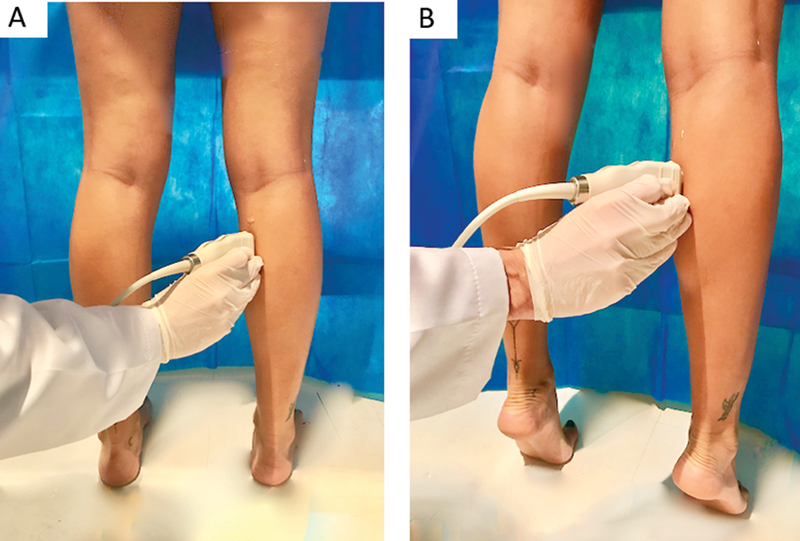 Figure 1
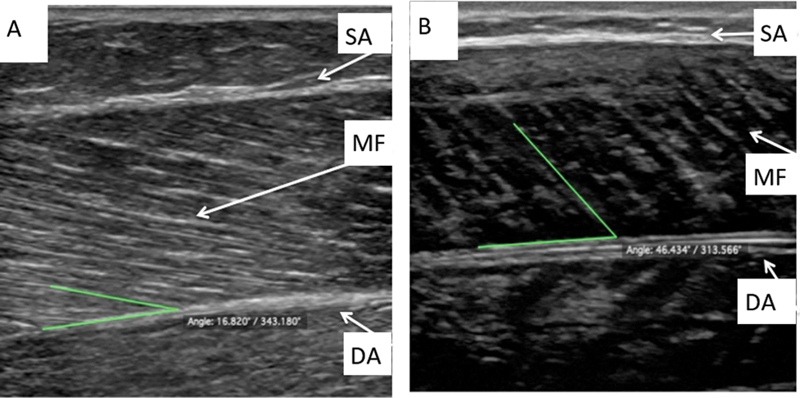 Figure 2
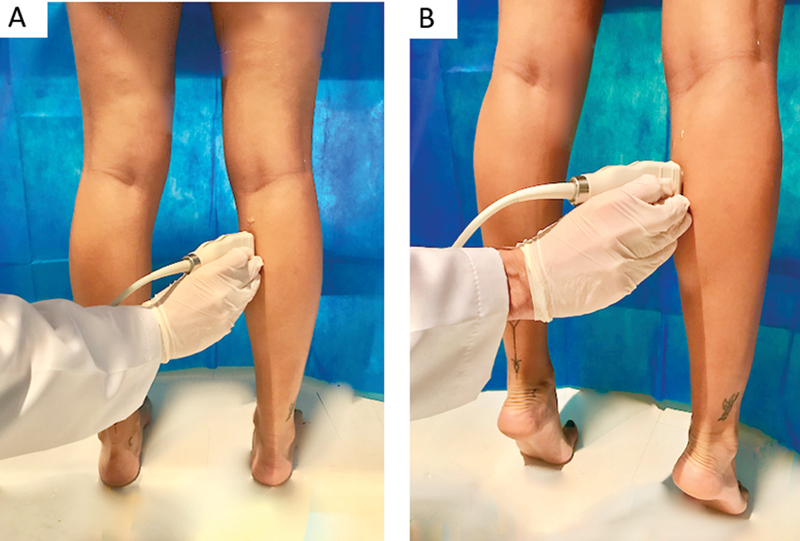 Figure 3
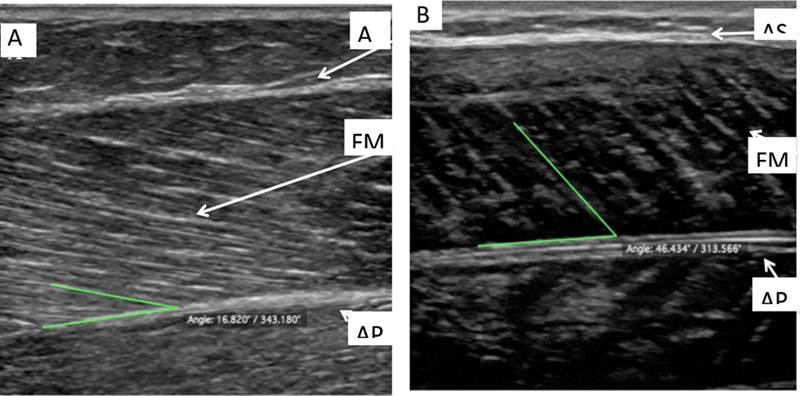 Figure 4
Peer Reviews
No public reviews on file for this paper yet. If you reviewed it on a platform where reviews are public (OpenReview, ICLR, NeurIPS, ICML), you can paste yours below so the community can read it here.
Videos
No videos yet. Explain this paper in a talk, walkthrough, or lecture? Add one.
Taxonomy
TopicsSports injuries and prevention · Musculoskeletal pain and rehabilitation · Shoulder Injury and Treatment