Effects of aging and valence on emotional response inhibition: conclusions from a novel stop-signal task
Jill D. Waring, Stephanie N. Hartling

TL;DR
This study explores how aging affects the ability to inhibit emotional responses, finding that older adults struggle more with response execution but not inhibition.
Contribution
The study introduces a novel stop-signal task to examine emotional response inhibition in older and younger adults.
Findings
Older adults showed less efficient stopping than younger adults in emotional response inhibition tasks.
Emotional valence did not affect stopping efficiency in either age group.
Aging and emotion interacted during response execution, with older adults performing worse on unpleasant go-image trials.
Abstract
Emotional and cognitive processes interact in myriad ways during daily life, and the relation between emotion and cognition changes across the lifespan. Aging is associated with decreasing cognitive control and inhibition alongside improvements in emotional control and regulation. However, little is known about how aging impacts response inhibition within emotionally relevant contexts. The current study examined how aging impacts emotional response inhibition by comparing older and younger adults’ ability to stop responses to emotional images. Participants completed a novel stop-signal task where pleasant and unpleasant scene images appeared on a minority of trials, while participants developed a pre-potent ‘go’ response during trials presenting neutral shapes. Notably, in each task block only one of the two types of emotional scene images served as a task-relevant stop cue, e.g.,…
Genes, proteins, chemicals, diseases, species, mutations and cell lines named across the full text — each resolved to its canonical identifier and authoritative record.
Click any figure to enlarge with its caption.
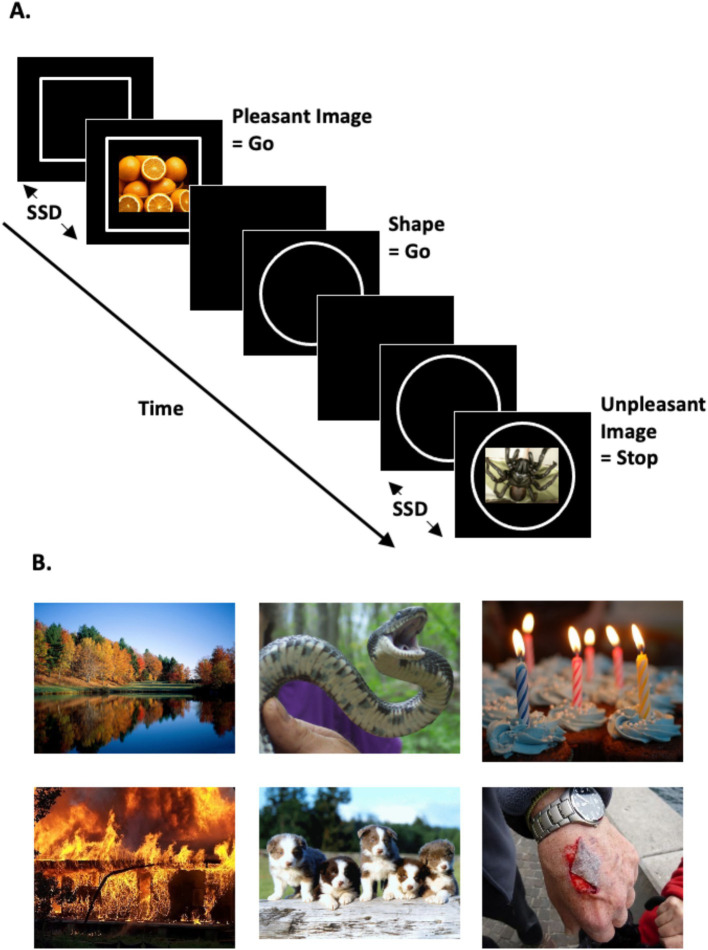 Figure 1
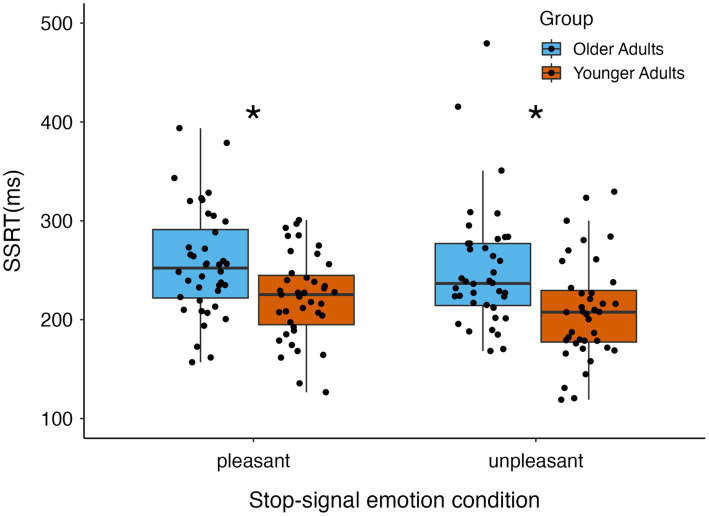 Figure 2
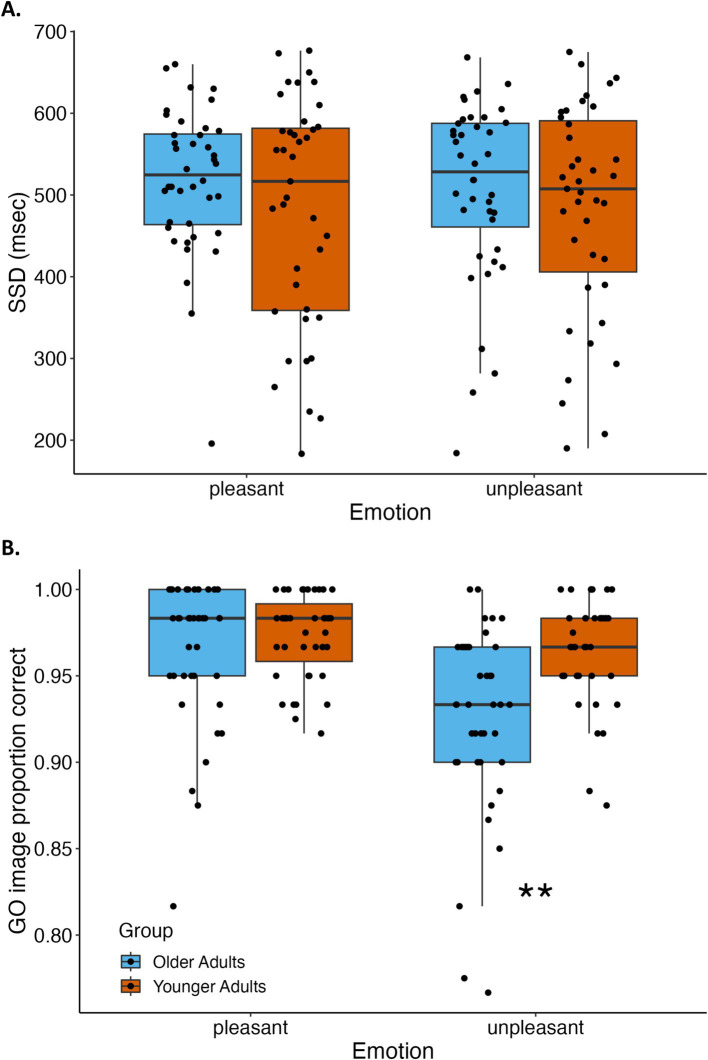 Figure 3
Peer Reviews
No public reviews on file for this paper yet. If you reviewed it on a platform where reviews are public (OpenReview, ICLR, NeurIPS, ICML), you can paste yours below so the community can read it here.
Videos
No videos yet. Explain this paper in a talk, walkthrough, or lecture? Add one.
Taxonomy
TopicsNeural and Behavioral Psychology Studies · Aging and Gerontology Research · Face Recognition and Perception