Fluorescent Self-Supporting Composite Film Formed from Chitosan and the Neutral Poly(3-hexylthiophene-co-1,4-phenylene) Polymer with Enhanced Dispersion Properties for a Small Molecule
Alessandra S. Menandro, Cornelia Bohne, Laura O. Péres

TL;DR
A new composite film made from chitosan and a polymer shows improved ability to detect and adsorb a small molecule through fluorescence changes.
Contribution
A novel composite film combining chitosan and a neutral conjugated polymer enhances small molecule dispersion and sensing.
Findings
The composite film shows better dispersity of 4-AAB compared to pure chitosan films.
Fluorescence quenching and emission changes in the film correlate with 4-AAB concentration.
PTPh increases free volume and enables faster isomerization of 4-AAB in the composite film.
Abstract
A composite film of chitosan (Ch) with a neutral conjugated polymer, poly(3-hexylthiophene-co-1,4-phenylene) (PTPh), was developed to combine the adsorption capacity of Ch with the fluorescence sensitivity of PTPh. Characterization of the films using thermogravimetric analysis, microscopy, and infrared, absorption, and fluorescence spectroscopies revealed that the dispersity of the target small molecule, 4-aminoazobenzene (4-AAB), was improved in the composite film compared to the pristine Ch film as evidenced in microscopy studies. In the presence of 4-AAB, the Ch/PTPh film exhibited fluorescence quenching at low 4-AAB concentrations and changes in emission spectra at higher concentrations. Photoisomerization studies suggested that the improved dispersity of 4-AAB in the composite film is due to an increase in the free volume provided by PTPh, with faster cis-to-trans isomerization…
Genes, proteins, chemicals, diseases, species, mutations and cell lines named across the full text — each resolved to its canonical identifier and authoritative record.
Click any figure to enlarge with its caption.
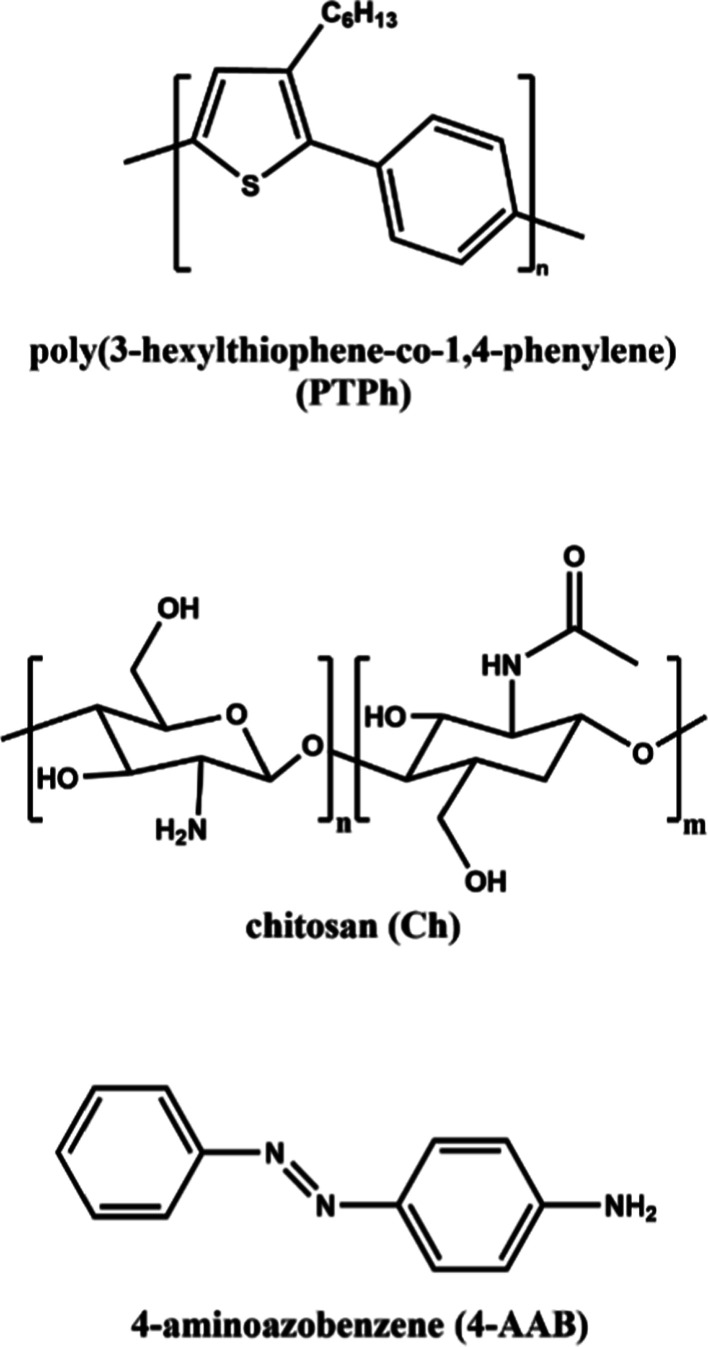 Figure 1
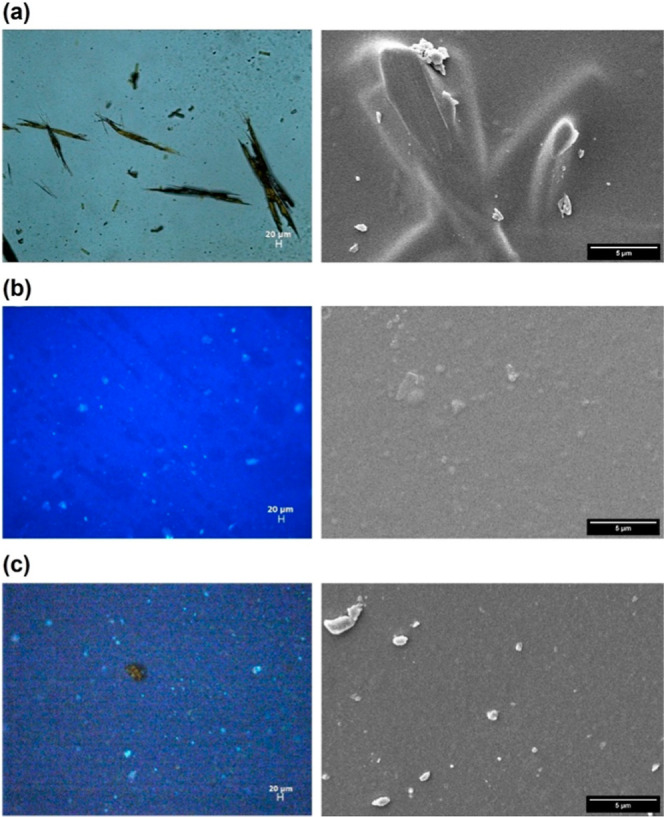 Figure 2
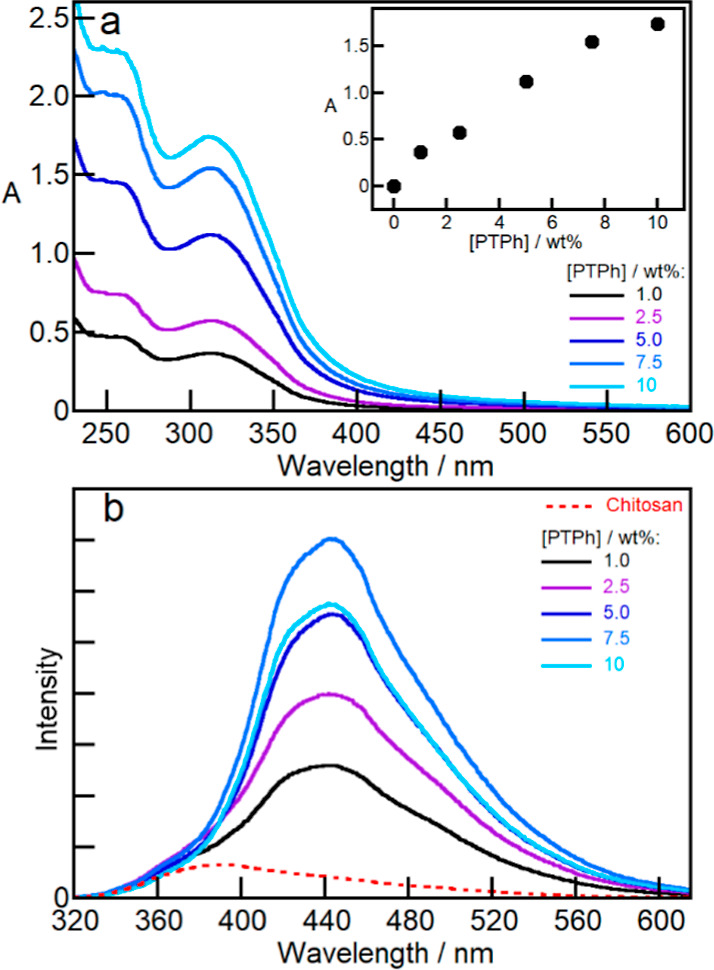 Figure 3
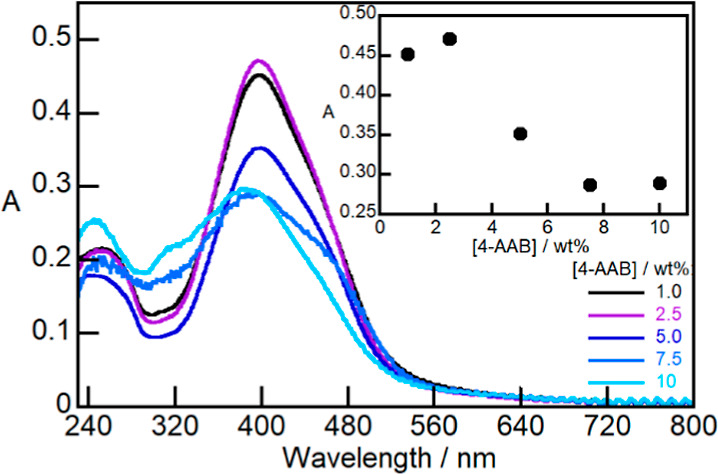 Figure 4
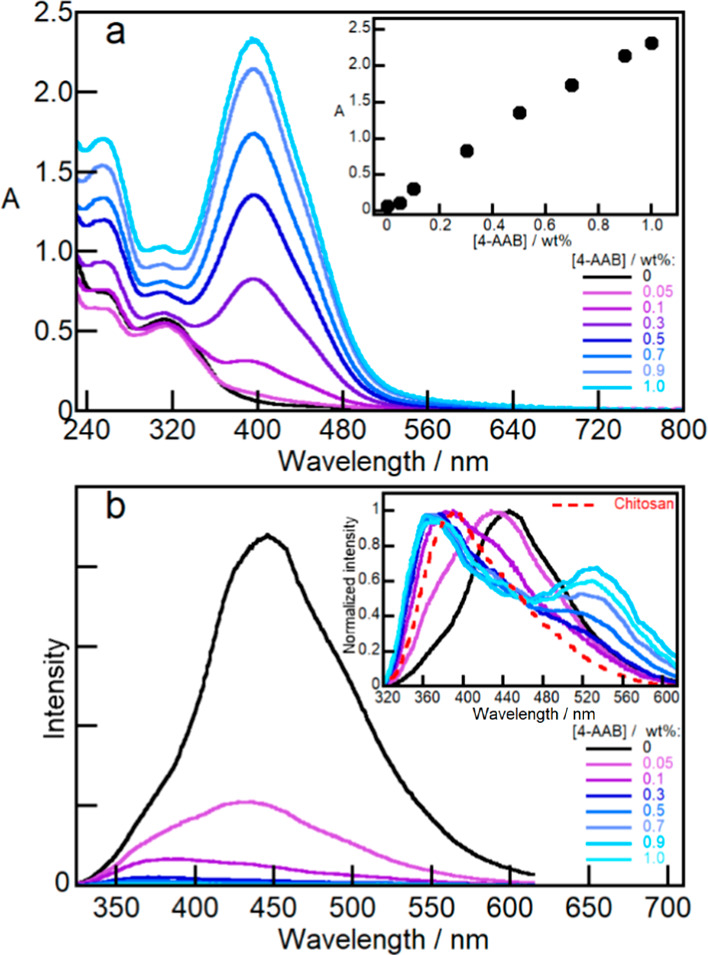 Figure 5
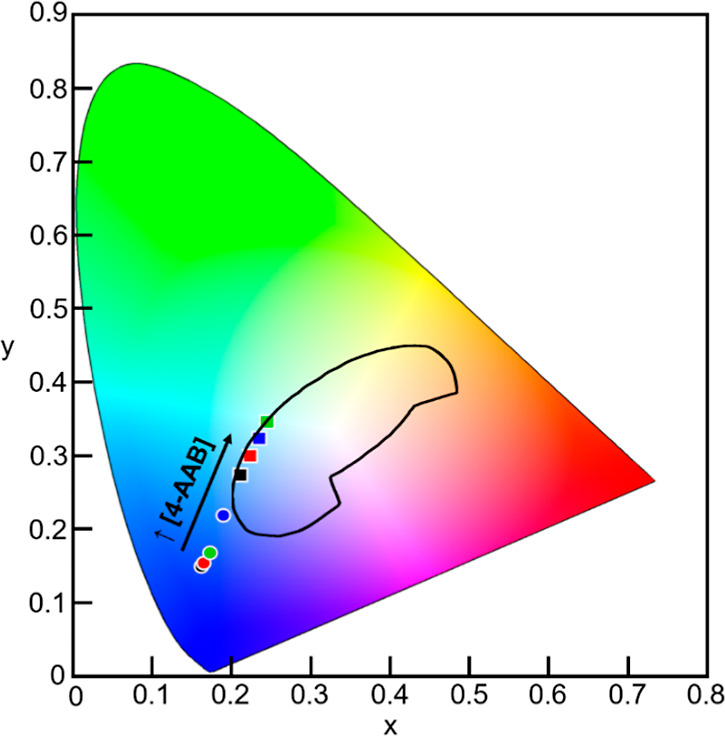 Figure 6
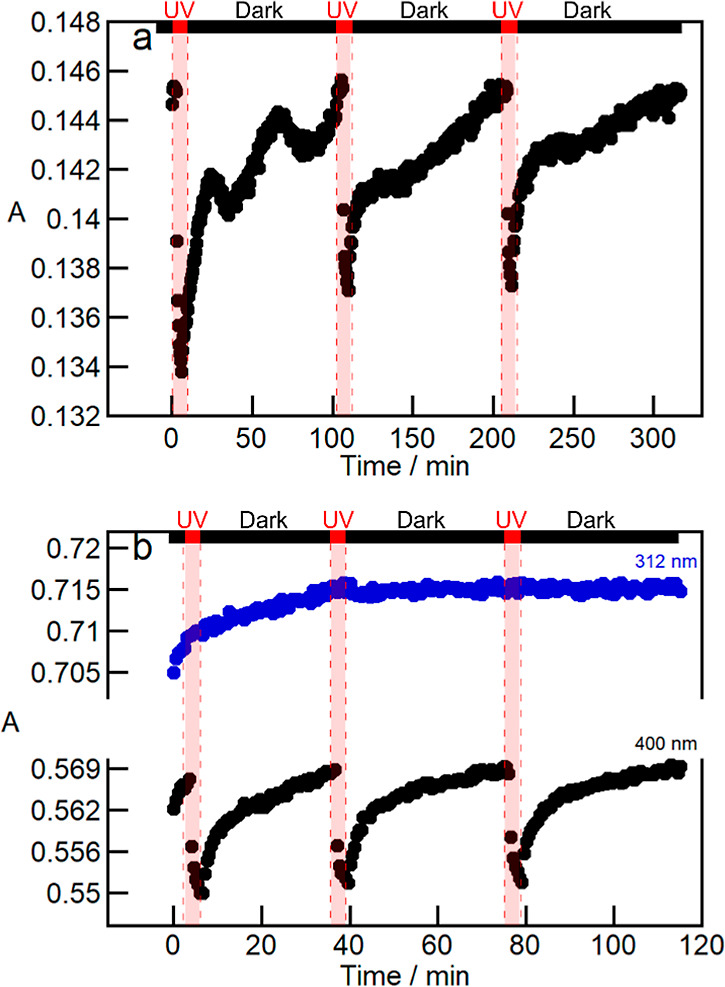 Figure 7
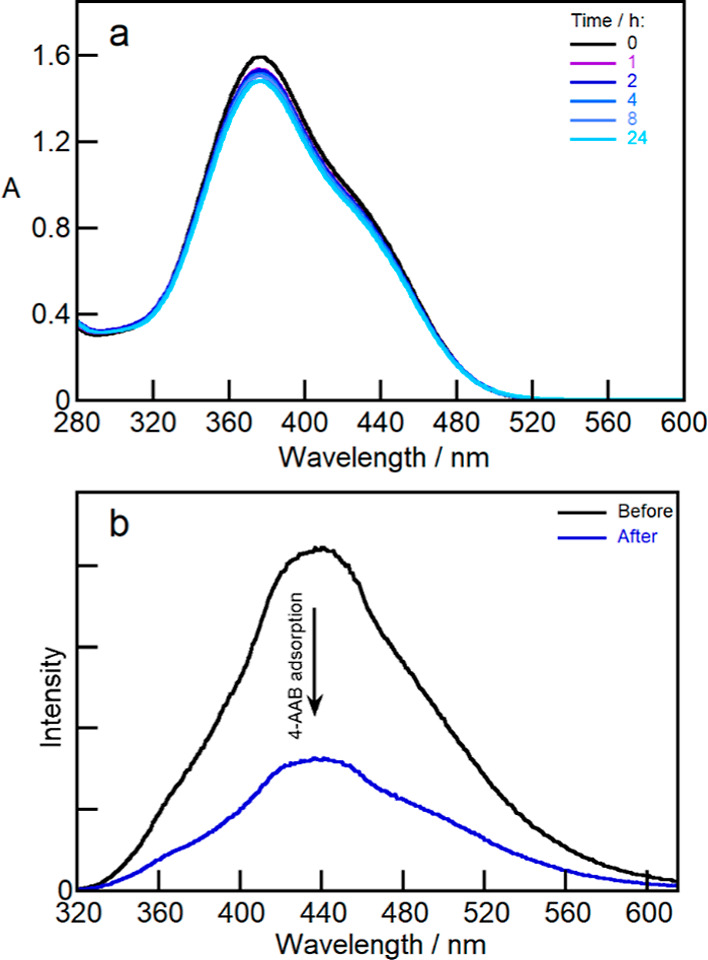 Figure 8
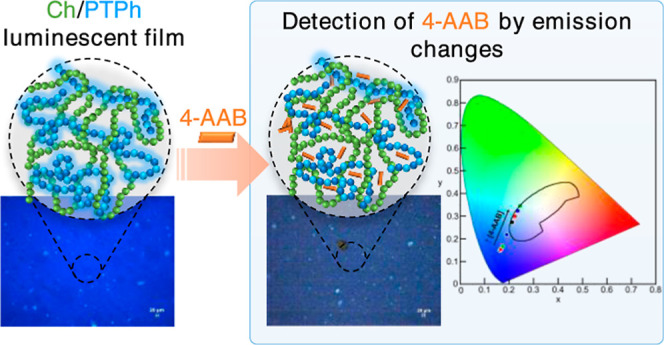 Figure 9
Peer Reviews
No public reviews on file for this paper yet. If you reviewed it on a platform where reviews are public (OpenReview, ICLR, NeurIPS, ICML), you can paste yours below so the community can read it here.
Videos
No videos yet. Explain this paper in a talk, walkthrough, or lecture? Add one.
Taxonomy
TopicsConducting polymers and applications · Luminescence and Fluorescent Materials · Polydiacetylene-based materials and applications