Chaperone-assisted E3 ligase-engineered mesenchymal stem cells target hyperglycemia-induced p53 for ubiquitination and proteasomal degradation ameliorates self-renewal
Ayaz Ali, Wei-Wen Kuo, Chia-Hua Kuo, Jeng-Feng Lo, Dennis Jine-Yuan Hsieh, Peiying Pai, Tsung-Jung Ho, Marthandam Asokan Shibu, Shinn-Zong Lin, Chih-Yang Huang

TL;DR
This study shows that increasing CHIP in stem cells can reverse the harmful effects of high blood sugar on their self-renewal ability.
Contribution
The study reveals that CHIP regulates hyperglycemia-induced p53 degradation to restore stem cell self-renewal.
Findings
Hyperglycemia reduces CHIP and promotes p53 accumulation, impairing stemness in WJMSCs.
CHIP overexpression decreases phosphorylated p53 levels and enhances self-renewal factors.
CHIP facilitates ubiquitination and proteasomal degradation of p53, rescuing stem cell function.
Abstract
Stem cell therapies may potentially be used in regenerative and reconstructive medicine due to their ability for self-renewal and differentiation. Stressful conditions, such as hyperglycemia, adversely affect stem cell functions, impairing their function and promoting differentiation by opposing self-renewal. The carboxyl terminus of HSP70 interacting protein (CHIP), which is a cochaperone and E3 ligase, maintains protein homeostasis and performs quality control of the cell via ubiquitylation. However, the role of CHIP in regulating stemness remains unknown. Hyperglycemia downregulated CHIP-induced p53, arrested the cell cycle at the gap (G1) phase, and promoted the loss of stemness in WJMSCs. Quantitative real-time polymerase chain reaction (qRT-PCR), Western blotting, immunofluorescence, and cell cycle analysis showed that CHIP-overexpressing WJMSCs downregulated the expression of…
Genes, proteins, chemicals, diseases, species, mutations and cell lines named across the full text — each resolved to its canonical identifier and authoritative record.
Click any figure to enlarge with its caption.
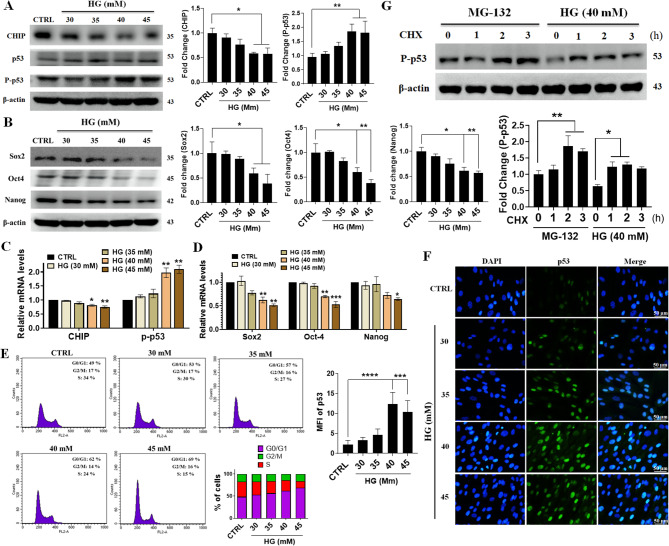 Figure 1
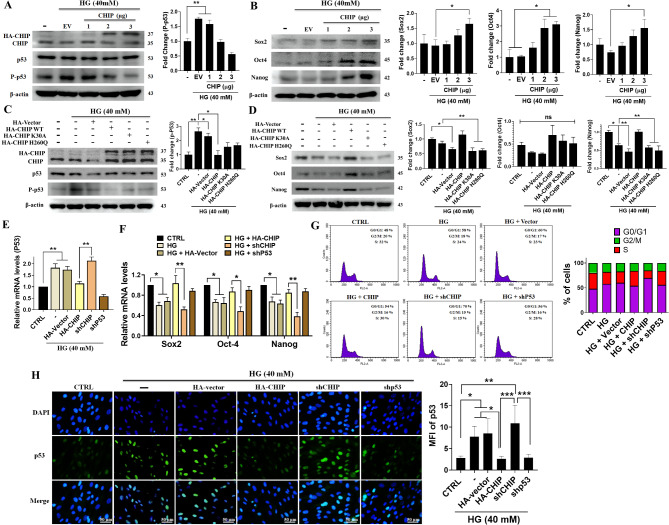 Figure 2
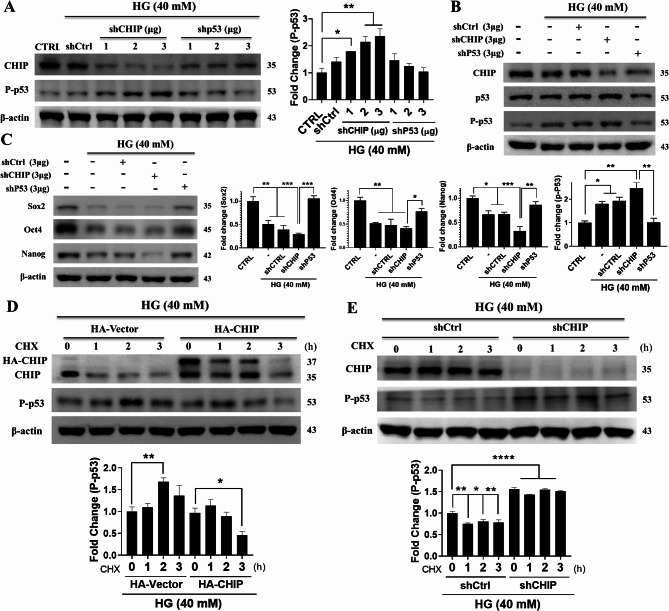 Figure 3
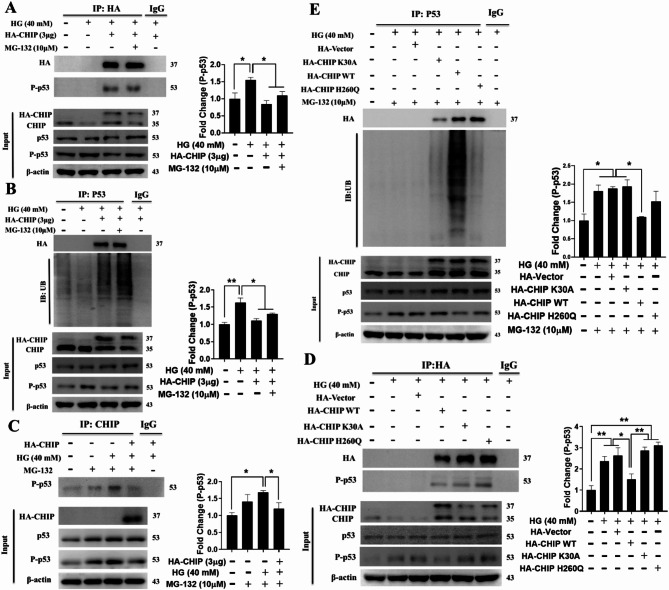 Figure 4
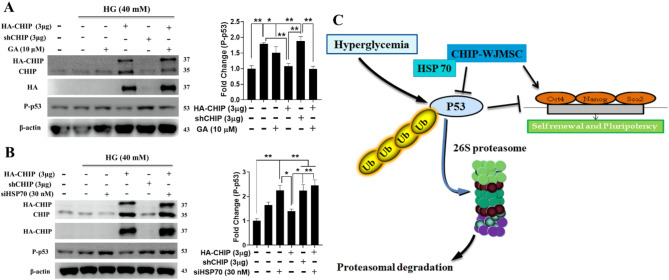 Figure 5
Peer Reviews
No public reviews on file for this paper yet. If you reviewed it on a platform where reviews are public (OpenReview, ICLR, NeurIPS, ICML), you can paste yours below so the community can read it here.
Videos
No videos yet. Explain this paper in a talk, walkthrough, or lecture? Add one.
Taxonomy
TopicsCancer-related Molecular Pathways · Ubiquitin and proteasome pathways · FOXO transcription factor regulation